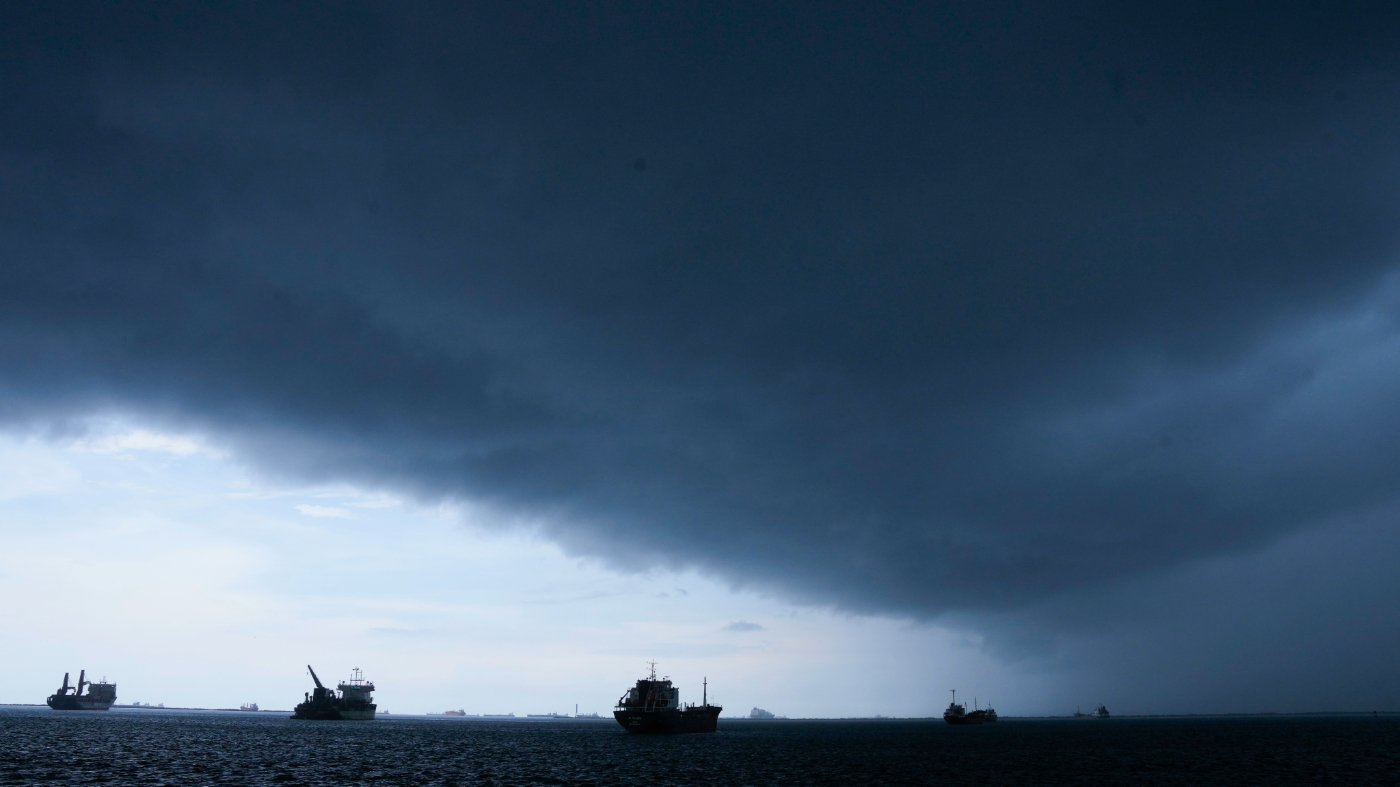
The Pacific Ocean is flashing a warning to Washington: a super El Niño is on the horizon, and lawmakers must decide whether to gut the agency that tracks it.
Every two to seven years, the Pacific trade winds weaken and water temperatures shift, triggering a global climate event known as El Niño. This year, data suggests a potentially record-breaking super El Niño could develop, with severe economic consequences.

The Trump administration has proposed slashing NOAA’s budget by $1.6 billion, a move critics say would cripple the agency’s ability to monitor weather patterns. NOAA operates the Tropical Atmosphere Ocean Array—a network of buoys in the Pacific that provides real-time data crucial for predicting El Niño events.
“If lawmakers choose to hollow out this agency, the consequences for American communities and the national economy will be dire,” said Jeff Watters, vice president of external affairs at Ocean Conservancy, in a recent call to action.
NOAA’s work is invisible to most Americans, who benefit daily from weather apps, flood warnings, and hurricane forecasts. But those tools depend on NOAA’s upstream machinery: satellites, ships, aircraft, and meteorologists who convert raw data into usable alerts.
The economic stakes are enormous. According to a National Weather Service analysis, weather variability accounts for 3 to 6 percent of annual U.S. GDP fluctuations—up to $1.3 billion. Previous super El Niños in 1997–1998 and 2015–2016 cost the global economy $2.1 trillion and $3.9 trillion, respectively, with effects lingering for three years.
Without NOAA’s data, farmers cannot adjust planting decisions, fisheries cannot track shifting ocean temperatures, and utilities cannot update heating and cooling models. Ports face storm delays, and regions like Texas and New England must prepare for floods or droughts.
Private weather companies build on NOAA’s public data, but the agency’s integrated system is irreplaceable. As Watters noted, “Adopting the administration’s proposed budget would be like funding an ambulance but not the 911 call center.”
NOAA’s operating costs represent just 0.1 percent of the federal budget, making cuts a negligible saving with outsized risks. The Pacific’s message is clear: fully fund NOAA or pay the price.
As Washington grapples with budget priorities, the looming super El Niño underscores the need for robust climate monitoring. For more on how weather intersects with policy, see how security concerns are rising ahead of major national events.