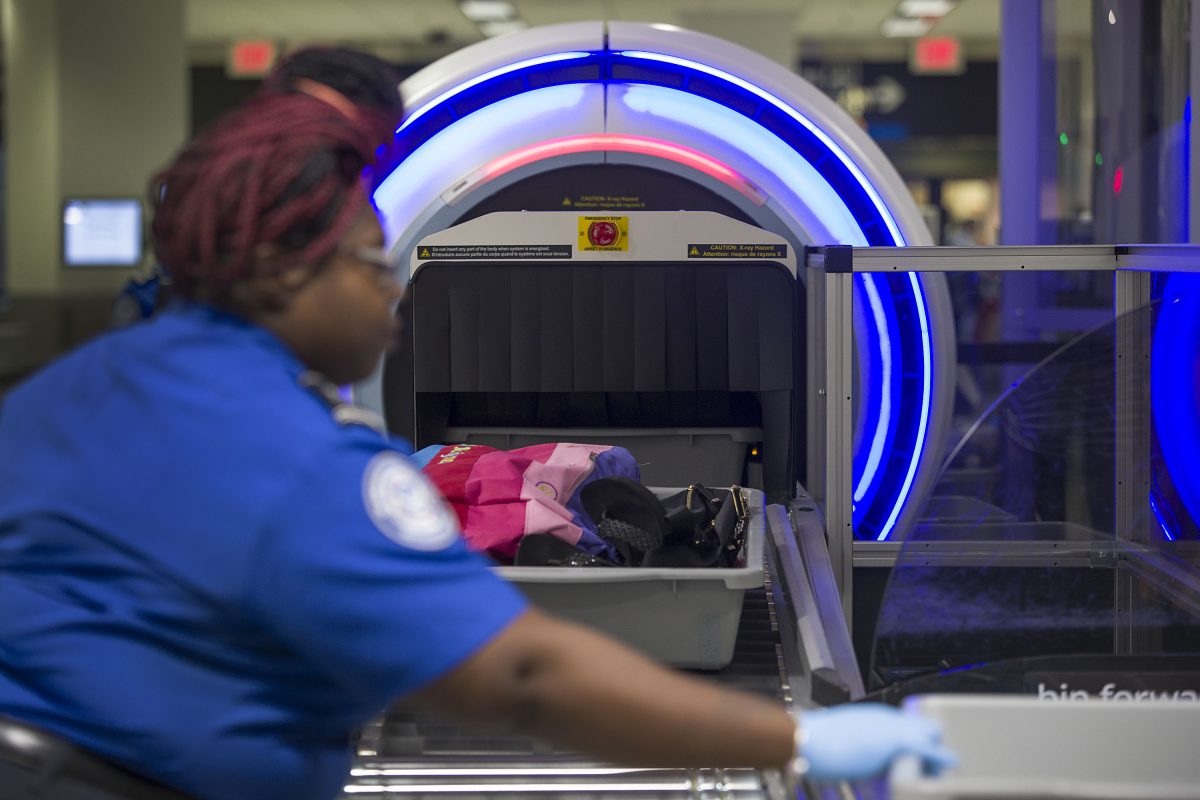
The Transportation Security Administration is rolling out advanced computed tomography (CT) scanners at nearly 300 airports nationwide, a costly upgrade that promises sharper threat detection but could also create a logistical headache—and unexpected expense—for passengers with bulky carry-on bags.
The new machines produce three-dimensional X-ray images, allowing TSA officers to rotate scans for a clearer view of luggage contents. They also use sophisticated algorithms to automatically flag potential explosives or other dangerous items, the agency said in a recent press release.

“The use of CT technology by our officers significantly enhances our ability to detect threats at the checkpoint,” said Peter Duffy, a TSA federal security director, in the announcement.
For travelers, the most immediate change may be the ability to leave laptops, tablets, and liquids that comply with the 3-1-1 rule inside their bags at screening lanes equipped with CT scanners. The TSA touts this as an improvement to the passenger experience. But there’s a catch: the CT units have a slightly smaller entry tunnel than older X-ray machines.
“CT units have a slightly smaller entry tunnel, and not all larger carry-on bags will fit into the units,” the TSA warned. “TSA recommends that large carry-on items be checked with the airline.” That means travelers who typically stuff oversized roller bags into overhead bins may face an unexpected gate-check fee or a trip back to the ticket counter.
The rollout comes as debates over security policy and federal spending continue to roil Washington. Some lawmakers have raised concerns about the cost of the CT scanner program, which is part of a broader push to modernize airport security. Meanwhile, the political landscape remains fractured, as seen in recent party infighting over direction and strategy.
The TSA emphasizes that the CT technology is already in place at major hubs like Miami International Airport, where agents began using the scanners in 2019. The agency plans to expand the program to additional airports over the next several years, though it has not disclosed a timeline for full nationwide deployment.
For now, passengers flying through airports with CT-equipped checkpoints should measure their carry-on bags before heading to the airport. Those with bags that are too large may need to check them, potentially incurring fees from airlines that have tightened their baggage policies in recent years.
The shift also underscores how technological upgrades can have unintended consequences for travelers, even as they improve security. As the TSA continues to balance efficiency with safety, passengers may need to adapt to a new set of rules—and a new set of potential costs.