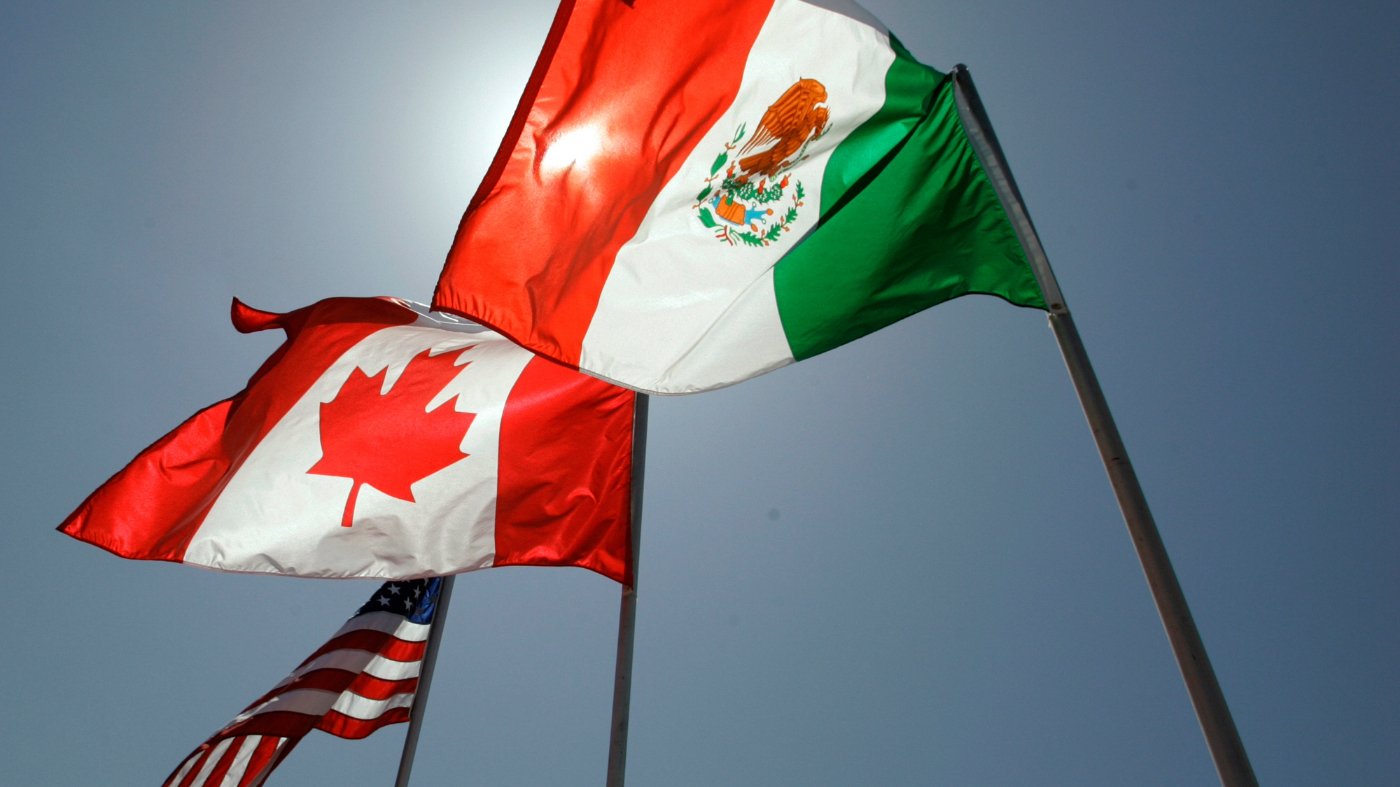
President Donald Trump once called the U.S.-Mexico-Canada Agreement the greatest free trade deal in history. Its chief architect, former U.S. Trade Representative Robert Lighthizer, dubbed it the "gold standard." But in his second term, Trump has surrounded himself with trade skeptics like economist Peter Navarro and Commerce Secretary Howard Lutnick, who has publicly insulted Canada, calling the country a "51st state" and saying Canadians "suck." Anti-American sentiment in Canada has surged to levels not seen since the War of 1812.
Trump has made clear he believes the U.S. would be better off without USMCA. But before Congress or its Mexican and Canadian counterparts cave to his demands for renegotiation, they should understand the economic stakes—and the leverage they hold.

Under USMCA's review clause, if the three parties fail to agree on amendments during the current review period, the agreement simply continues as is until July 1, 2036. Crucially, the president cannot withdraw from USMCA without congressional approval. Trump is manufacturing a "now or never" deadline; the prudent course is to hold firm against any dilution of the deal's terms.
USMCA and its predecessor NAFTA have been an economic engine for North America since 1993. In the three decades after NAFTA took effect, U.S. exports nearly tripled in inflation-adjusted terms, topping $2 trillion annually. American manufacturing output rose by more than half and hit all-time highs—contradicting the popular narrative of decline. Real median weekly wages climbed 19 percent, reversing a 5 percent drop in the 15 years before NAFTA. Labor force participation among adults aged 25-34 increased, and foreign direct investment surged, drawn by market stability and openness.
Free trade with Canada and Mexico has boosted American jobs, farms, and factories. For low-income families, tariff reductions amounted to one of the largest tax cuts in history. Trump's tariffs, by contrast, represent the largest tax increase as a share of GDP since 1993. The $185 billion in additional tariff revenue projected for 2025 translates to a more than $2,000 annual tax hike per U.S. household—borne by business owners and families alike.
Trump made a similar mistake early in his first term by withdrawing from the Trans-Pacific Partnership, which would have extended a rules-based free trade framework across Pacific allies and countered China's influence. Instead, he has pursued rapprochement with Chinese leaders while waging an unprovoked trade war with allies. As the administration pressures Canada and Mexico, China is signaling it's open for business.
The architects of USMCA built in a 10-year renegotiation window before the deal could sunset, recognizing that political dynamics shift across three democracies. Between now and 2036, the U.S. will hold two more presidential elections. It's hard to imagine either major party nominating a candidate as reflexively opposed to free trade as Trump, especially as the economic costs become more visible.
Arithmetic will forge a political coalition to defend USMCA. Free-market advocates oppose tariffs on principle: economic liberty, competitive markets, and growth that raises living standards. Center-left politicians will arrive at the same conclusion because slower growth shrinks the tax base and strains social programs. Traditional conservatives will face their own reckoning as slower growth makes it harder to cut taxes, fund defense, or reduce deficits. These groups don't share a philosophy, but they share a problem—and as costs mount, the coalition to strengthen USMCA will grow.
The message to Canada, Mexico, and the U.S. Congress is simple: Don't acquiesce to weakening USMCA based on this summer's deadline. Continue challenging executive overreach in the courts. Hold the line. A better deal is within reach. We have until 2036—a decade to get this right. Don't let impatience squander the agreement we have.