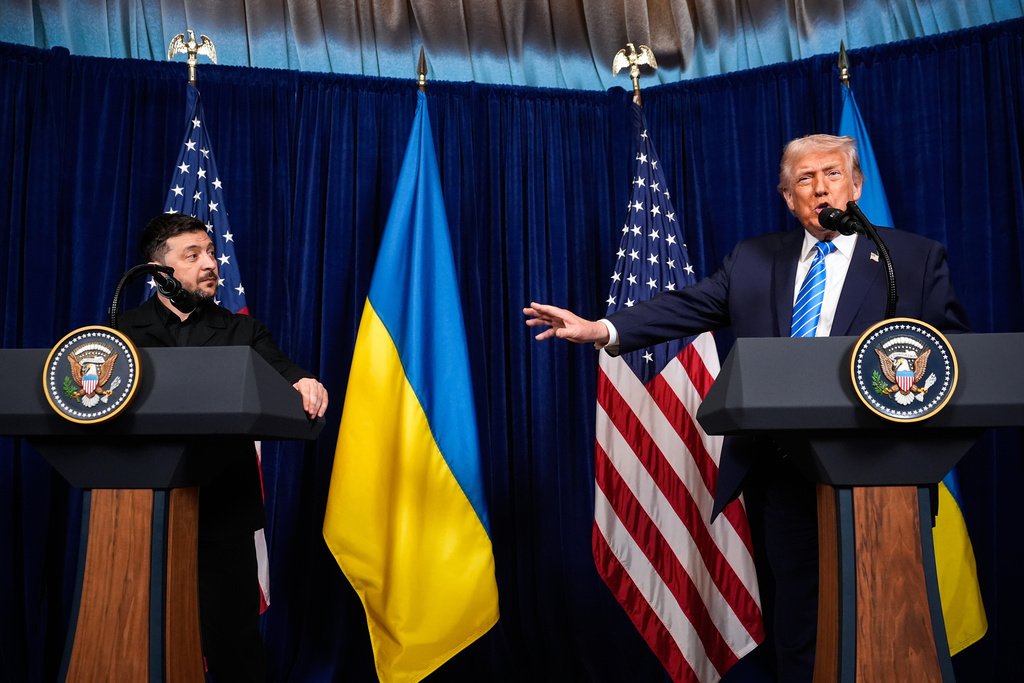
In a significant policy shift, President Trump announced at the NATO leaders' summit in Ankara that he would license Patriot missile production to Ukraine. The decision, framed as a defensive measure, comes as Kyiv continues a series of strategic strikes deep inside Russian territory, targeting oil refineries and military assets. Trump, sitting alongside Ukrainian President Volodymyr Zelensky, emphasized the system's defensive nature, but for a nation under invasion, every weapon is defensive.
The announcement marks a breakthrough for Ukraine, which has been struggling with critically low interceptor stocks as Moscow intensifies nightly bombing raids on its cities. The deal allows Kyiv to produce its own Patriot interceptors, a move that could reshape the battlefield dynamics.

Ukraine's Strikes on Russian Infrastructure
The real history of the past week unfolded not in Ankara but in Saratov, a Russian city little known to most Americans. There, Ukrainian drones struck an oil refinery on July 8, knocking out its only primary refining unit and forcing a shutdown. Days earlier, Ukraine hit Omsk, Russia's largest refinery. These strikes, along with attacks on nine tankers of the sanctions-evading shadow fleet, Dzhankoi airbase in Crimea, and Port Krym in Kerch, demonstrate Kyiv's growing capability to disrupt Moscow's war machine.
Mile-long queues at gas stations in Russia are the contemporary manifestation of an empire bleeding. The strikes are part of a broader strategy to degrade Russia's ability to sustain its war effort, drawing parallels to historical turning points.
Historical Parallels: Saratoga and Saratov
In a speech marking 250 years of American independence, Trump declared, "From the beginning, we were a nation that lived by the motto victory or death or live free or die. We defeated tyrants, demolished evil, and saved freedom again and again and again." Those words could serve as a description of Ukraine's present struggle against Russian aggression.
Ukraine is holding a mirror to America's founding story. In October 1777, the British surrender at Saratoga convinced France to ally with the American colonies. Historian Edmund Morgan called it "a great turning point of the war, because it won for Americans the foreign assistance which was the last element needed for victory." France's economy dwarfed that of the 13 colonies, and it supplied gunpowder, soldiers, and the fleet that trapped the British at Yorktown.
Today, Ukraine asks for no such sacrifice of blood. It asks for moral clarity, tighter sanctions, the transfer of frozen Russian assets, sustained political support, and the weapons to make Moscow's war fail. The Patriot missile deal is a step in that direction, but it remains to be seen whether the West will provide the decisive assistance that turned the tide in 1777.
The Broader Geopolitical Context
The NATO summit in Ankara also saw discussions on broader security issues, including the ongoing conflict with Iran. As the U.S. expands strikes on Iranian ports, bridges, and energy sites, the situation in the Middle East remains volatile. Iran has warned of full-scale war if strikes continue, while the Houthis have been directed to block the Red Sea in retaliation. These developments underscore the interconnected nature of global security challenges.
Trump's decision to license Patriot production to Ukraine is a clear signal of continued U.S. support, but it also raises questions about the administration's overall strategy. Polls show the American people side with Ukraine, and the deal reflects that sentiment. However, the path to a settlement remains uncertain, as Trump's language in Ankara focused on "settlement" rather than victory.
As Ukraine continues to strike Russian infrastructure and degrade Moscow's war machine, the parallels to the American Revolution are striking. The question is whether the West will provide the same kind of decisive support that France gave to the colonies, or whether it will hesitate, leaving Ukraine to fight alone against a predatory Goliath.
For more on the broader geopolitical landscape, see our coverage of U.S. strikes on Iranian energy sites and the Iranian warning of full-scale war.