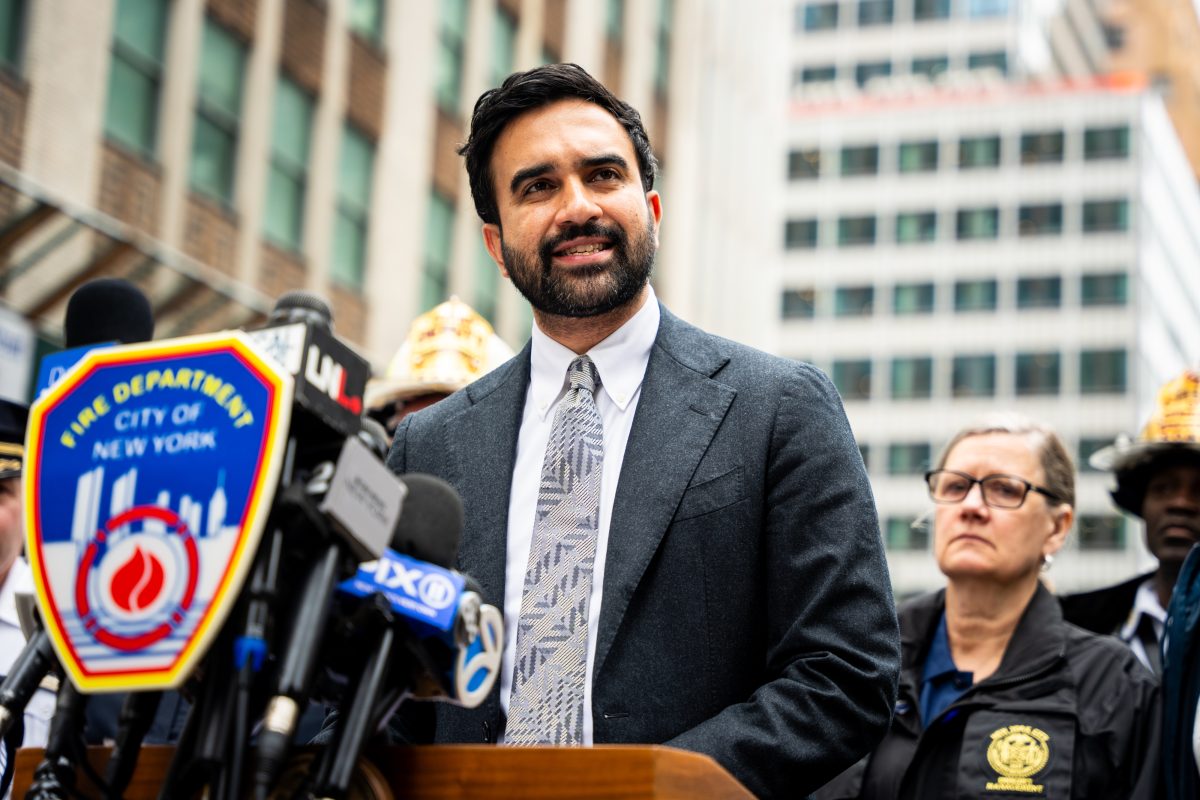
New York City Mayor Zohran Mamdani (D) has reignited a diplomatic firestorm by announcing that his administration is actively reviewing the legal feasibility of arresting Israeli Prime Minister Benjamin Netanyahu should he travel to the city for the upcoming United Nations General Assembly session this fall.
In an interview aired Saturday on The New York Times podcast “The Interview,” hosted by Lulu Garcia-Navarro, Mamdani stated unequivocally that “Prime Minister Netanyahu belongs in The Hague.” He described the Israeli leader as “a war criminal who has been charged by the International Criminal Court,” adding that this view is widely held “purely because of what his actions have wrought over these past many years.”
The International Criminal Court issued an arrest warrant for Netanyahu in 2024, accusing him of war crimes and crimes against humanity in Palestine, including “starvation as a method of warfare” and “other inhumane acts.” Mamdani, who has previously characterized Israel’s military campaign in Gaza as genocide, told the Times during his mayoral campaign last year that he would direct the NYPD to detain Netanyahu if he entered city jurisdiction.
Netanyahu dismissed the threat in a recent radio interview, accusing Mamdani of harboring sympathies for Hamas—a charge the mayor has denied. “He’s with the terror actors,” Netanyahu told WABC host Sid Rosenberg. “And I think the problem is that he doesn’t recognize and he doesn’t care that those who hate the Jews and Israel ultimately hate America.”
World leaders from UN member states are expected to converge on New York City in September for the General Assembly’s annual high-level debate. Netanyahu has been a regular attendee in past years. Mamdani told the Times he will “follow the laws” of the city but declined to specify what that means in practice.
Pressed by Garcia-Navarro, Mamdani revealed that his legal department is actively examining the question. “That’s an active conversation with our legal department,” he said. “We’re not talking about a personal assessment of Benjamin Netanyahu. We’re talking about the International Criminal Court and the fact that they have a warrant out for this prime minister’s arrest, and I think it’s important to talk about the weight that that has as a charge and that also, as the mayor of New York City, I’ll be following the laws of New York City.”
The mayor’s stance has already drawn sharp criticism from pro-Israel groups and some fellow Democrats, who warn that such a move could severely damage U.S.-Israel relations and undermine New York’s role as a diplomatic host. Meanwhile, Mamdani’s progressive base has cheered his willingness to confront Netanyahu over alleged war crimes.
This is not the first time Mamdani has stirred controversy on foreign policy. He has previously renewed calls to abolish ICE after a fatal shooting in Houston, and his broader agenda has drawn comparisons to a socialist wave that could reshape Democratic midterm prospects. Yet his divisive tactics have also alienated key NYC constituencies, raising questions about his political longevity.
As the September session approaches, the legal and diplomatic implications of Mamdani’s position remain unclear. Whether the mayor ultimately orders an arrest or backs down, the episode underscores the growing intersection of local governance and international criminal justice.