The U.S. military is broadening its campaign against Iran, targeting a port facility, energy infrastructure, and bridges as President Trump intensifies pressure on the Iranian regime. The strikes mark a significant escalation in a conflict that now threatens to spiral into full-scale war.
Iran has retaliated by striking U.S. bases in the region, along with power and desalination plants in allied Gulf states, according to local officials. The tit-for-tat attacks have brought both sides closer to open conflict, with the Strait of Hormuz—a critical chokepoint for global energy shipments—emerging as the central flashpoint.

The renewed fighting comes as the fragile memorandum of understanding between the two countries has collapsed, and traffic through the strait has plummeted over the past two weeks. Retired Vice Adm. John W. “Fozzie” Miller, former commander of U.S. Naval Forces Central Command, argued that hitting bridges, railway infrastructure, and command centers is essential to changing Tehran’s “calculus.” “I think we should continue to expand that to include other ways all over the country where the regime has capability that allows them to exercise command and control,” Miller told The Hill.
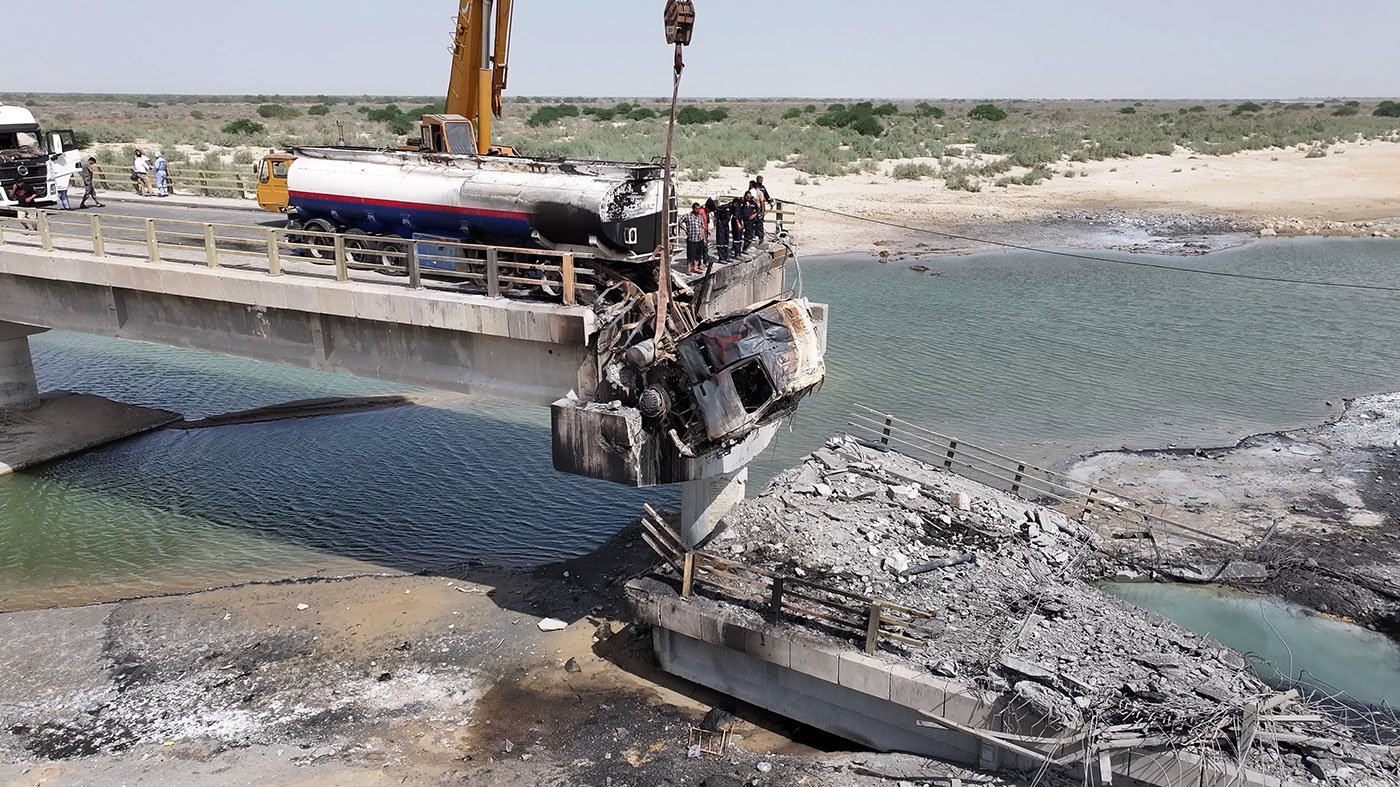
U.S. forces conducted airstrikes for the seventh consecutive night on Friday, targeting bridges around Bandar Abbas, a key port city on the Persian Gulf that serves as the Iranian Navy’s headquarters and handles more than 85 percent of the country’s container traffic. U.S. Central Command said the strikes hit surveillance sites, military logistics infrastructure, underground weapons storage, and maritime capabilities. Iranian state broadcaster IRIB reported that several bridges and highways connecting the hub to provinces were closed.
Miller described Bandar Abbas as “sort of the center of gravity for the Strait of Hormuz region.” Strikes also landed in Bandar Khamir, west of Bandar Abbas, igniting a fire on a major bridge. The U.S. military is also targeting ballistic missiles, launch systems, and drone inventory to curb Iran’s ability to retaliate against American bases in the Gulf.
Retired 4-star Army Gen. Jack Keane said isolating the strait was always part of the plan. “That’s why you see bridges being destroyed—because we don’t want them to come in and be able to reinforce logistically,” he said on Fox News. Keane acknowledged Iran can still harass commercial ships “a little bit,” but argued the U.S. can dismantle Tehran’s ability to control the waterway over time.
On Thursday, the U.S. military destroyed the Chahbahar Shahid Kalantari Port surveillance tower, which officials said was part of an IRGC maritime surveillance network used to target commercial vessels. Miller noted the strike undermines Iran’s ability to use the port for a “long time to come.”
Iran’s retaliation has included missile and drone attacks on U.S. positions in Kuwait and Bahrain. Kuwaiti authorities reported that Iran struck a power and desalination plant, causing damage in a country where roughly 90 percent of drinking water comes from desalination. The Kuwaiti military said it intercepted 32 drones early Thursday, while Jordanian forces intercepted three incoming Iranian missiles early Friday. Even Qatar and Oman, both mediators in the conflict, came under fire; Qatar’s defense ministry said a child was wounded by shrapnel from an intercepted missile.
Harrison Mann, a former executive officer of the Defense Intelligence Agency’s Middle East/Africa Regional Center, criticized the strategy, calling it “insanity” to keep relying on strikes without changing outcomes. He warned that attacking civilian infrastructure, including a desalination plant in Kuwait, could constitute war crimes and may push Gulf states to plead for de-escalation. “Iran has already attacked civilian infrastructure—including a desalination plant in Kuwait, a clear war crime,” Mann said, adding that an undeniable U.S. energy crisis or Houthi closure of the Bab el Mandeb could force a shift.
The U.S. military struck water facilities near the city of Kuhestak in Sirik county on June 10, damaging two concrete tanks and cutting water supplies to residents, according to Iranian state sources. As the conflict widens, the region braces for further escalation, with the Strait of Hormuz’s future hanging in the balance.