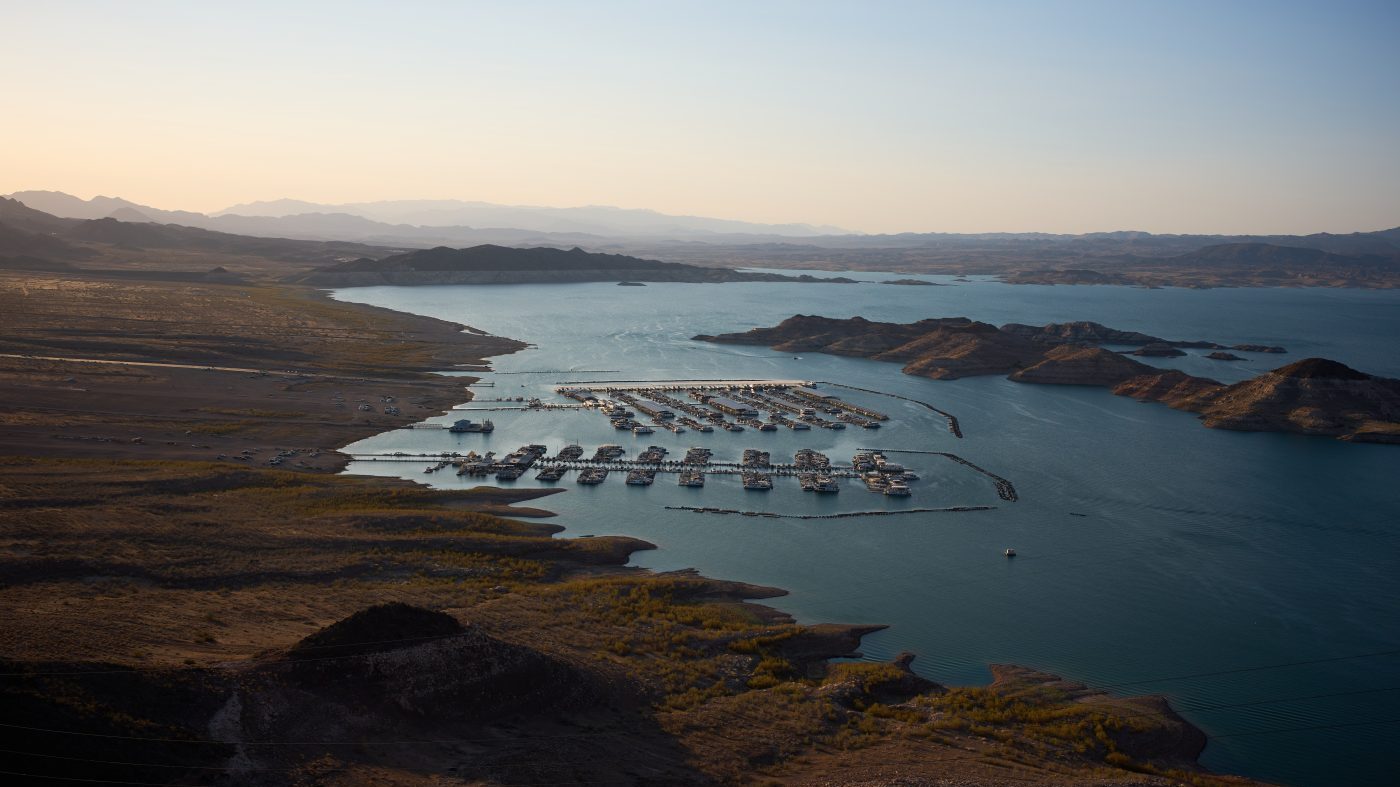
The nation's two largest reservoirs are heading into a make-or-break period, with no relief in sight after a record-low snowpack and a relentless drought. A Facebook comment on the Colorado River Basin's page Wednesday captured the mood: "Not enough water in the Monsoons to help. There's only 2 things that can save Mead and Powell right now: 150 percent Colorado Rockies snow pack for 5 consecutive years, or God himself."
New projections from the U.S. Bureau of Reclamation show Lake Mead dropping to 1,035.86 feet by November, the lowest since Hoover Dam was built in the 1930s. That's about 6.5 feet below its level Friday of 1,042.52 feet. The nation's largest reservoir is currently at just 27 percent capacity.

Two-Year Outlook Darkens
Reclamation's 24-month study, updated monthly, forecasts Lake Mead at 1,009.69 feet by June 2028—a drop of nearly 33 feet in two years. Full pool is 1,229 feet. Even under the most optimistic scenarios, Arizona and Nevada face reduced Colorado River allocations in 2027, based on August projections of year-end lake levels.
Lake Powell, the second-largest reservoir, sits at 24 percent capacity. The federal government has prioritized keeping Powell above 3,525 feet to protect Glen Canyon Dam's hydroelectric capacity. It's currently at 3,524.03 feet. To prop up Powell, the government has increased releases from Flaming Gorge Reservoir on the Utah-Wyoming border and cut releases from Powell itself, which will further reduce inflows to Lake Mead.
Las Vegas Water Secure—For Now
Southern Nevada Water Authority officials say Las Vegas's supply is safe, despite continued growth. SNWA reports Nevada uses far less than its allocation thanks to water recycling and reduced outdoor use. The authority gets credits for recycled water returned to Lake Mead. About 90 percent of the valley's water comes from Lake Mead; the rest from wells. Nevada's total consumptive use is estimated at 198,001 acre-feet in 2026, well below its 287,000-acre-foot allocation under current shortage conditions.
The federal government is expected to release new river allocation rules in 2027, possibly around the same time as Reclamation's August 24-month study. Current rules expire at year's end. The Interior Department and Reclamation are shaping future agreements after the seven basin states failed to reach consensus.
Worst-Case Scenarios Loom
Reclamation also published best- and worst-case projections. Under the "Probable Minimum" scenario, Lake Mead would fall below 1,000 feet by June 2028. Some scientists say this line has been a more accurate reflection of reality during the drought that began in 2000.
Lake Powell's projections show it dropping far below its target of 3,525 feet, with 10 consecutive months of declines to 3,491.75 feet. If the government continues prioritizing Powell, less water flows downstream to Mead, potentially amplifying the crisis.
The Colorado River supplies 40 million people, but scientists say climate change has reduced basin water by about 20 percent. The result: more water is promised than exists. As economists debate growth strategies, the water crisis highlights the hard trade-offs facing the West. Meanwhile, ongoing legal battles over immigration policy and sharp divisions in Congress over foreign aid underscore the broader political turbulence as the 2026 midterms approach.