A Republican-led amendment to halt U.S. aid to Israel passed the House on Wednesday with overwhelming bipartisan opposition, but the vote revealed a sharp divide among Democrats, as 103 of them supported the measure—nearly matching the 98 who voted against it.
The amendment, introduced by Representative Thomas Massie (R-Ky.), was widely seen as a procedural stunt destined to fail. It ultimately went down 104-314, with 10 members voting present. Massie was the only Republican to back his own proposal, leaving Democrats to grapple with the fallout.

The vote laid bare the intensifying pressure from the party's activist base to reassess the U.S.-Israel relationship, particularly as the Netanyahu government presses its military campaign in Gaza. The amendment would have stripped $3.3 billion in Foreign Military Financing from the fiscal year 2027 State Department and national security funding bill—the amount earmarked for Israel—and barred any funds from going to the country.
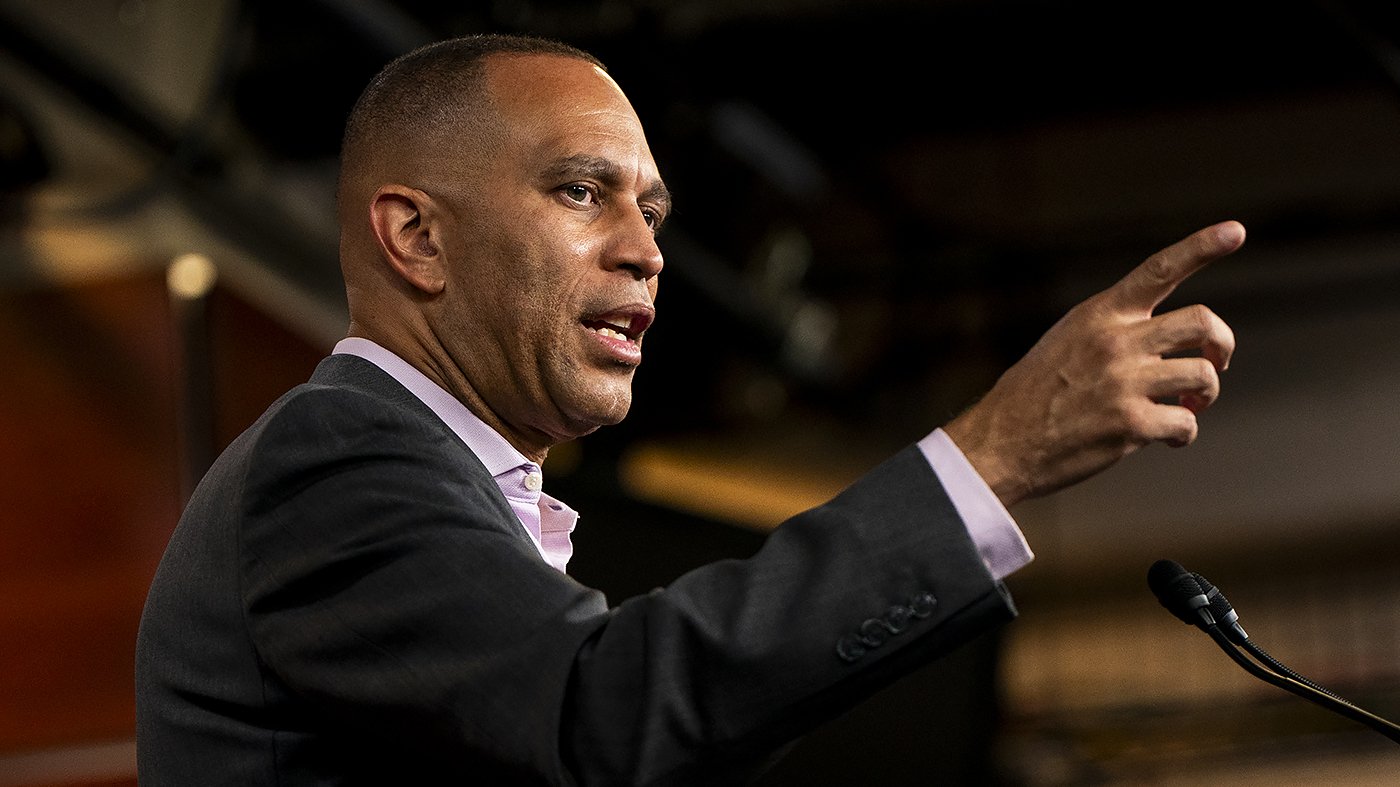
Democratic leadership was fractured. House Minority Leader Hakeem Jeffries (D-N.Y.) and Caucus Chair Pete Aguilar (D-Calif.) opposed the amendment, while Whip Katherine Clark (D-Mass.) and former Speaker Nancy Pelosi (D-Calif.) voted for it. Jeffries argued in a “Dear Colleague” letter that the amendment was “overly broad,” warning it would block humanitarian aid, refugee resettlement, and peace-building efforts. He accused Republicans of trying to “weaponize an amendment they do not support for nakedly partisan reasons.”
Clark, in a statement, acknowledged the GOP’s cynical motives but said the status quo was untenable. “We should not provide a blank check for military aid to any country that does not comply with U.S. law, interests, and values,” she said. “The Netanyahu government has failed to meet that standard.” Her decision to break with Jeffries underscores the growing rift between the party’s establishment and its progressive wing, a dynamic that has reshaped internal debates on foreign policy. This tension echoes similar fractures seen in recent primary battles, as progressive candidates have won key primaries, challenging the party's traditional center.
Pelosi, who has long championed a strong U.S.-Israel relationship, framed her vote as a symbolic rebuke of Netanyahu. “For the good of the Israeli people and the Palestinian people, it is clear that U.S. policy must change,” she said, calling for “a just and lasting peace.” She added that while the amendment was “ill-conceived,” she voted yes “for the message that it sends.”
The vote comes amid growing scrutiny of Israeli policies, including allegations that Israeli actions are deliberately collapsing the Palestinian healthcare system. It also follows warnings from Senator John Fetterman (D-Pa.), who has threatened to leave the party if it abandons Israel, as detailed in a recent interview.
The near-even split among House Democrats marks a significant shift from the party's historic bipartisan support for Israel. With the 2026 midterms looming, the issue is likely to remain a flashpoint, testing whether the party can maintain unity on foreign policy while satisfying its increasingly vocal base.