The Palestinian healthcare system is in a state of advanced decay, and the architect of its destruction is the Israeli government, according to Dr. Mustafa Barghouti, a Palestinian physician and president of the Palestinian Medical Relief Society. Writing in a firsthand account, Barghouti argues that Israel's deliberate financial strangulation, combined with escalating settler violence and movement restrictions, has turned a medical crisis into a death sentence for thousands of Palestinians.
At the heart of the crisis is Israel's refusal to transfer tax and customs revenues it collects on behalf of the Palestinian Authority under the Oslo Accords. Since 2019, Israel has withheld a growing share of those funds—and for the past year, it has stopped all transfers, depriving the PA of $6 billion, roughly 70 percent of its public income. The result: doctors and medical staff have gone unpaid, pharmaceutical suppliers and private healthcare providers remain unpaid, and medical equipment and infrastructure have deteriorated.
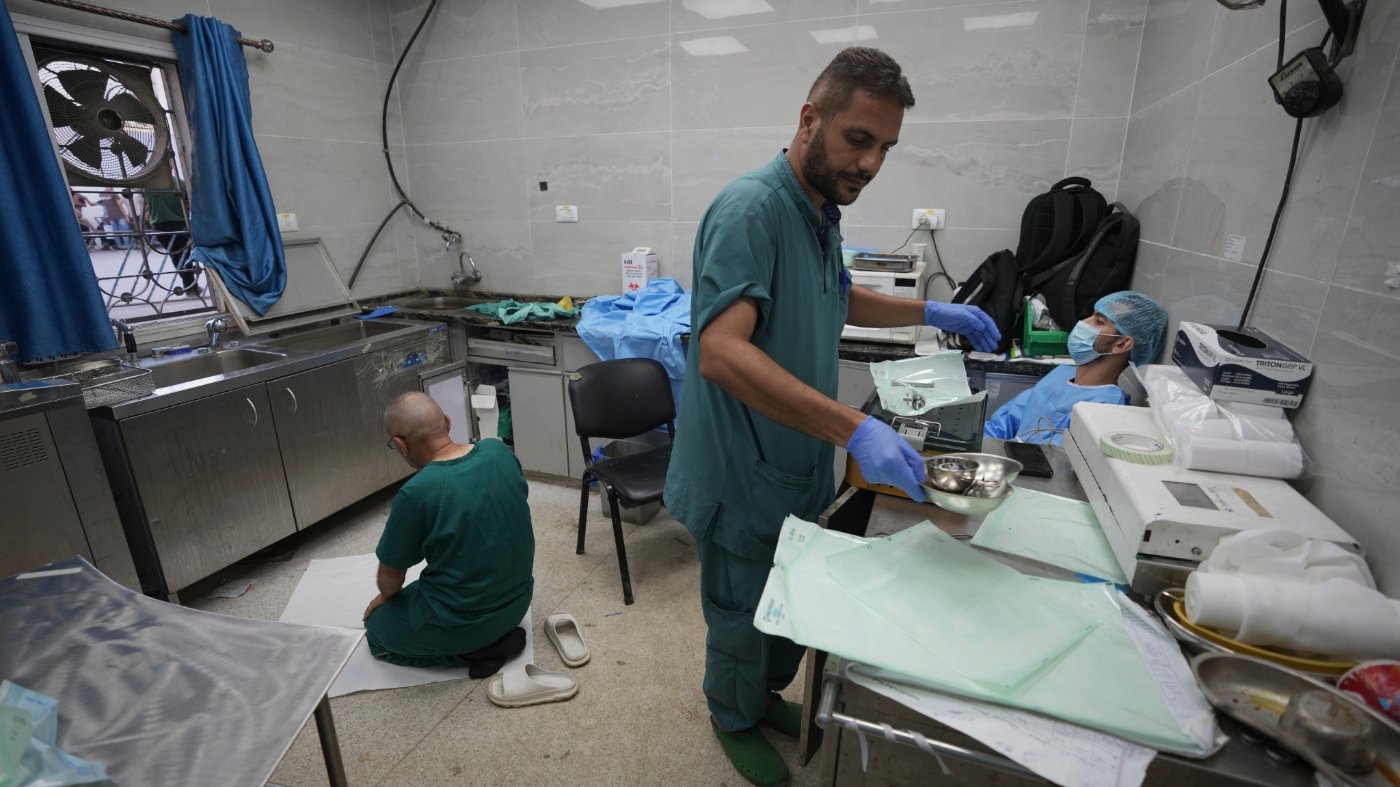
Government-run hospitals now offer only lifesaving treatment, and even that at reduced quality. There is an acute shortage of medications, endangering 4,000 cancer patients and thousands of dialysis patients. Even if drugs were available, most Palestinians cannot afford them on the private market due to Israel's economic restrictions. Critical supplies like surgical sutures, dialysis filters, stents, and catheters are in short supply. Similar supply chain issues have prompted U.S. lawmakers to push for stronger price transparency rules to reduce waste in healthcare systems, but in the West Bank, the problem is not waste—it's deliberate deprivation.
With doctors receiving only 30 to 50 percent of their salaries for the past three years, many have reduced their hours. Combined with supply shortages, this has led to more than 11,000 surgeries being postponed so far this year. Israeli restrictions on movement further compound the problem, making it difficult for patients to reach care or for ambulances to reach them. Settler attacks, which have skyrocketed over the past year, often make travel too dangerous.
Barghouti's organization, the Palestinian Medical Relief Society, operates 123 mobile clinics and teams serving nearly 300 communities in the West Bank and Gaza that have no other medical care. In recent months, staff have faced increasing danger, including one instance where they had to flee from settlers in the Southern West Bank. Barghouti's own family has been affected: his wife, a cancer patient and founder of the community and public health institute at Bir Zeit University, has been unable to get her medication, forcing the family to buy it directly from the manufacturer at great cost.
The situation is far worse in Gaza, where the health, water, and sanitation systems have been decimated by the ongoing blockade and Israeli military attacks. More than 1,700 health workers have been killed since October. There is only one barely functioning MRI machine in Gaza, and a lack of CT scans, ultrasounds, and other basic medical, lab, and surgical equipment. While U.S. lawmakers debate breaking up major health insurers over revenue concerns, Gaza's health system is being systematically dismantled by military force.
Barghouti accuses Israeli Finance Minister Bezalel Smotrich, himself an illegal settler, of spearheading these policies. Smotrich has openly declared his intent to collapse the Palestinian Authority, encourage Palestinian migration, and annex the West Bank and Gaza in violation of international law. Israel has also campaigned to shut down NGOs like Doctors Without Borders and Oxfam, as well as the U.N. Relief and Works Agency for Palestine Refugees, on which 934,000 Palestinians—about 30 percent of the West Bank population—rely for healthcare.
Barghouti calls on the U.S. and Israel's other Western backers to act immediately to guarantee essential medicines and supplies, pressure Israel to release the funds it owes the PA, allow freedom of movement, stop settler terrorism, and let UNRWA and NGOs operate unimpeded. Failure to do so, he warns, will result in the total collapse of the Palestinian healthcare system and further needless death and suffering, marking the latest chapter in the international community's complicity in Israel's trampling of international humanitarian law.