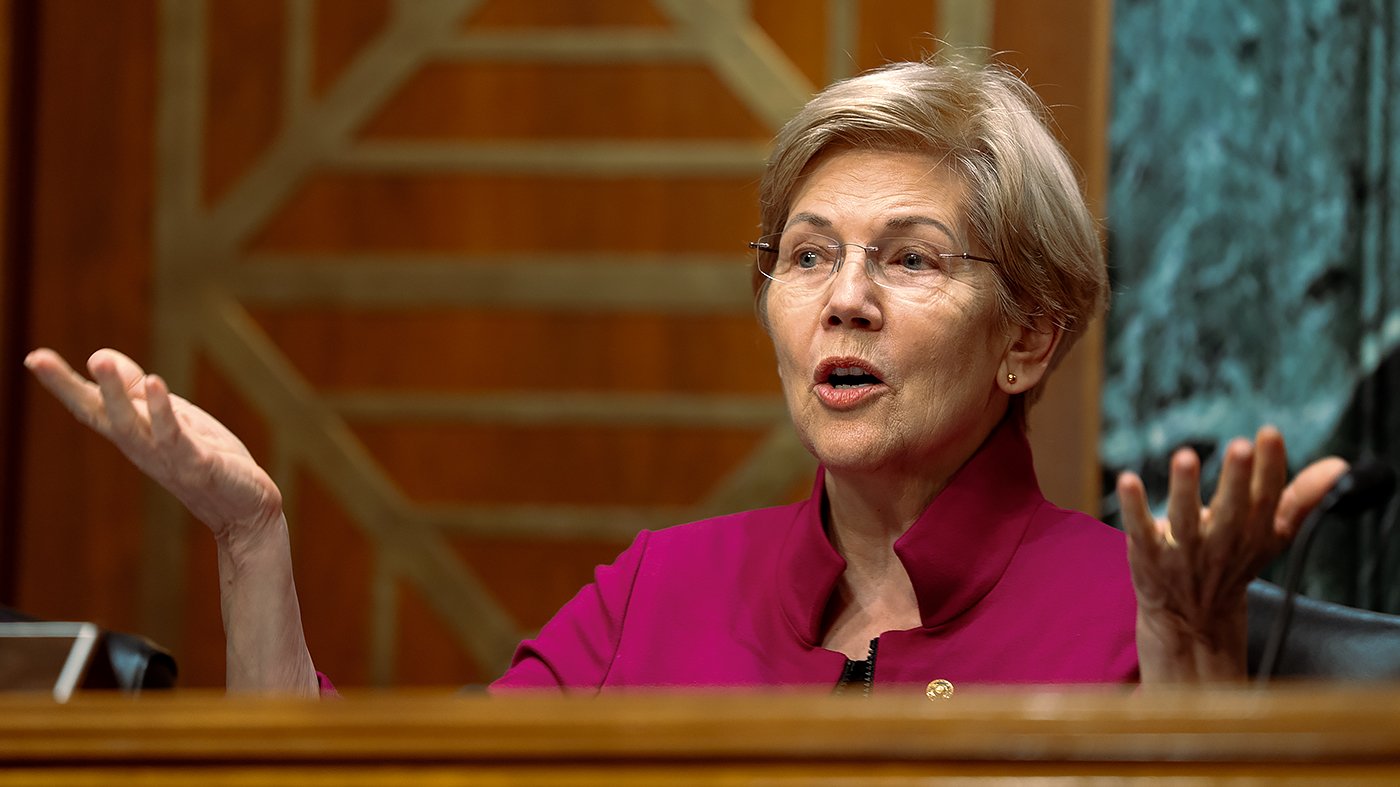
Sen. Elizabeth Warren (D-Mass.) confronted new Federal Reserve Chair Kevin Warsh during a Senate Banking Committee hearing on Wednesday, demanding answers about his handling of an investigation into a private dinner between a top Fed official and Wall Street bankers.
The hearing centered on Fed Vice Chair of Supervision Michelle Bowman's attendance at a dinner hosted by Bank of America on June 17, just hours after the Federal Open Market Committee (FOMC) voted to hold interest rates steady. Under Fed rules, officials are barred from discussing monetary policy during a roughly two-week blackout period before and after each FOMC meeting.
Warren, the committee's ranking Democrat, pressed Warsh on whether he had spoken with Bowman about the incident or sought to determine if she had violated the blackout period. "At this closed-door dinner, she reportedly spoke about both monetary policy topics and regulatory policy. Now, I've called on the inspector general to review her conduct, but you're the guy in charge. As chair, you set the tone on culture," Warren said.
Warsh repeatedly declined to answer directly, stating he would defer to the Fed's inspector general. "Out of an enormous respect for him, his investigation, what he chooses to do with it, I'm going to leave it to him to do without trying to micromanage that," Warsh said. He argued that it would be "inappropriate for me to prejudge facts that are being discovered by an independent actor."
Warren shot back, "Did you care enough to ask? How can you be chair and not ask your own vice chair whether or not she violated the blackout period, violated the law?" She added, "How can you prejudge them if you don't even ask?"
Bowman has denied any wrongdoing. In a statement, she said, "I did not share my views on monetary policy. I have consistently complied with all applicable FOMC and ethics rules and remain firmly committed to doing so."
The exchange comes amid broader scrutiny of the Fed's ethics and transparency. Warsh, who was confirmed by the Senate in a 51-45 vote with only Sen. John Fetterman (D-Pa.) crossing party lines, is navigating a politically charged environment. His testimony followed a Tuesday appearance before the House Financial Services Committee, part of his mandatory twice-yearly congressional testimony. The controversy also echoes tensions over financial regulation and ethics, as seen in recent debates over cryptocurrency legislation and Trump's business ties. For more on Warren's recent push for ethics reforms, see her accusations against Senate leaders over the crypto bill.
Warsh's handling of the probe could have implications for the Fed's credibility, especially as the central bank grapples with inflation and economic uncertainty. The hearing also highlighted ongoing partisan divisions over financial oversight, with Republicans largely defending Warsh's approach and Democrats demanding more aggressive action. For context on the broader economic challenges facing the Fed, see Warsh's recent comments on inflation and rate cuts.
The dinner controversy is the latest in a series of ethics questions surrounding Fed officials. Warren has been a vocal critic of what she sees as cozy relationships between regulators and the financial industry. The issue is likely to persist as the inspector general's investigation unfolds, with potential fallout for both Bowman and Warsh's leadership.