The Trump administration unveiled a sweeping change Thursday that will sharply curtail the length of visas for foreign journalists working in the United States, imposing a 240-day cap for most reporters and an even tighter 90-day limit for those from China. The move, announced by the Department of Homeland Security, replaces the longstanding “duration of status” policy that allowed journalists to stay indefinitely without periodic review.
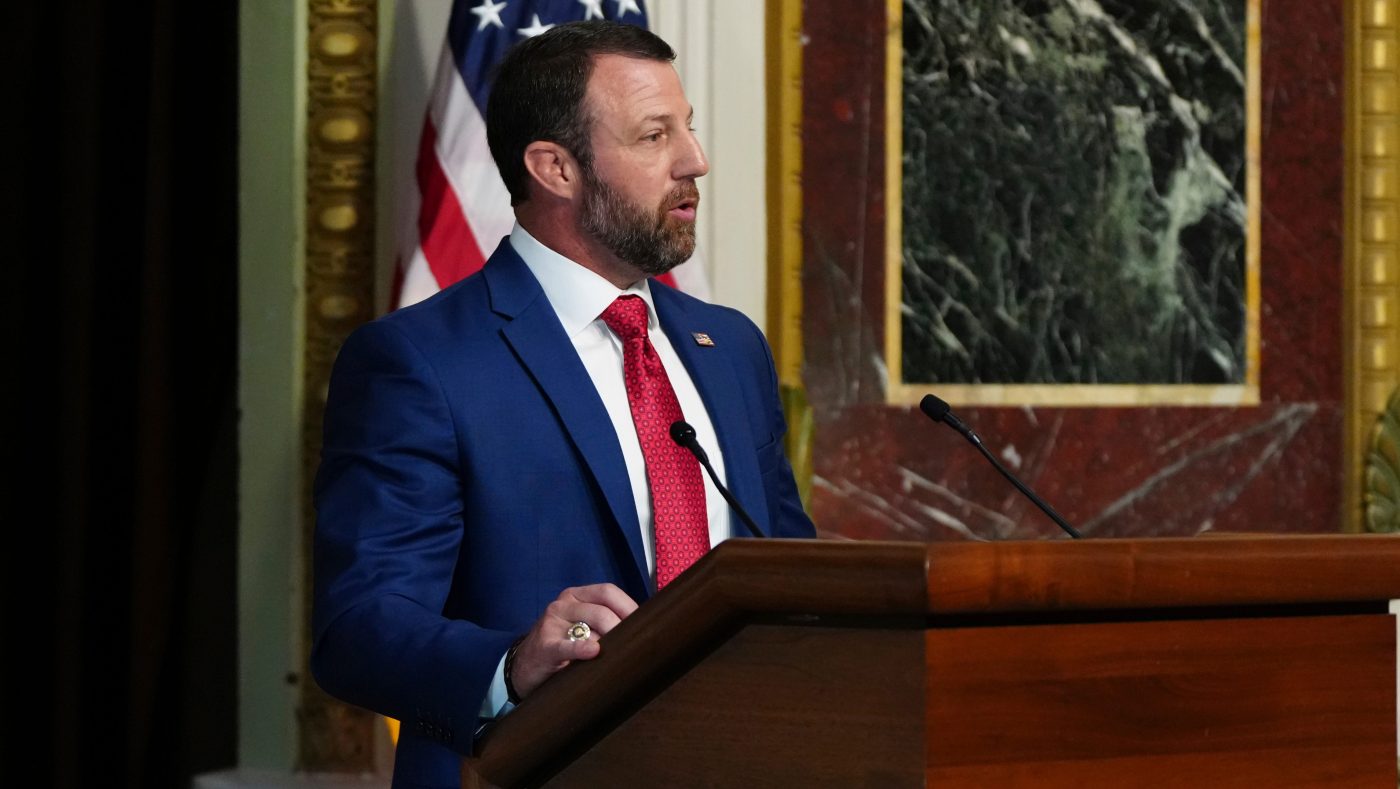
DHS Secretary Markwayne Mullin framed the overhaul as a national security imperative, stating in a release that the old system “has compromised national security and created an environment ripe for immigration fraud.” The administration characterized the previous open-ended stays as a “loophole” that permitted “foreign students, exchange visitors, and media representatives to remain in the United States indefinitely without routine government oversight.”
The new rule, set to take effect 60 days after publication in the Federal Register, marks a return to a more restrictive posture toward Chinese media after the Biden administration had eased some limits. During President Trump’s first term, the U.S. similarly reduced Chinese journalist visas to 90 days in retaliation for Beijing’s expulsion of American reporters from three news organizations and its ban on their work in Hong Kong amid tensions over the COVID-19 pandemic. The Biden administration later expanded those visas to allow stays of up to one year.
Chinese officials swiftly condemned the policy as “discriminatory” and warned of retaliation. Foreign Ministry spokesperson Lin Jian told reporters in Beijing that “China urges the U.S. to immediately revoke its discriminatory policies targeting Chinese journalists and effectively safeguard their lawful rights and interests in the U.S.” He added that “China reserves the right to take reciprocal countermeasures.”
This latest action comes amid a broader pattern of tension between the Trump administration and the press. In a related development, the D.C. Circuit recently reinstated a Pentagon rule requiring journalists to be escorted by military personnel in certain areas, a decision that dealt a blow to a lawsuit filed by The New York Times. Critics argue the escort rule and the visa changes together represent a concerted effort to limit press access and independence.
The visa rule also echoes the administration’s aggressive posture on immigration enforcement and election security. Trump has repeatedly alleged, without evidence, that foreign actors, including China, interfered in the 2020 election—a claim that has drawn sharp rebukes from Democrats. Senator Chris Coons noted that Trump’s election fraud speech “lacked any concrete proof,” while Representative Jim Himes accused the president of a “bald-faced lie” on the topic.
Journalist advocacy groups are expected to challenge the rule, arguing it undermines press freedom and the ability of foreign correspondents to cover the U.S. comprehensively. The 240-day limit, though extendable, introduces uncertainty for reporters who often require longer stays to develop sources and cover complex stories.
As the rule heads toward implementation, the administration’s latest move signals a hardening stance on who can report from within U.S. borders and under what conditions, with Chinese journalists bearing the brunt of the restrictions.