Ramin Guluzada is running out of options. His fiancée, Ulviyya Ali, a Voice of America journalist, has been locked in an Azerbaijani prison for more than a year, facing up to 20 years on charges he says are fabricated. The U.S. government, he argues, has the leverage to free her—but so far, it has stayed silent.
Ali reported for VOA on human rights abuses in Azerbaijan, a country that ranks among the world’s top ten most repressive regimes for press freedom. Her work made her a target. In May 2025, she was arrested on accusations of currency smuggling and money laundering, charges that press freedom groups like the Committee to Protect Journalists and Reporters Without Borders have dismissed as politically motivated.
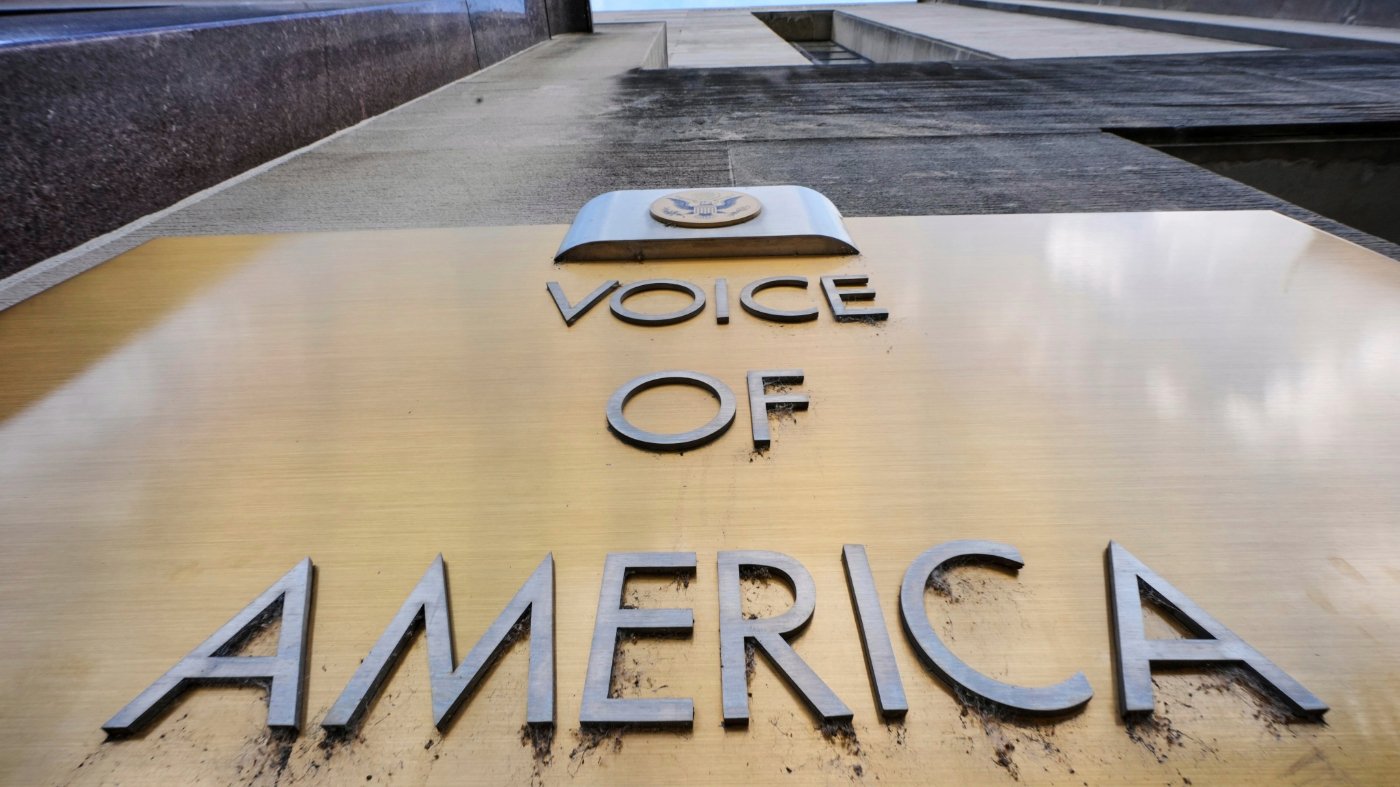
Since President Trump’s March 2025 executive order effectively shuttered Voice of America, the U.S. response has been muted. The State Department has not issued a public statement on Ali’s case. The U.S. Agency for Global Media, which oversees VOA, has not taken meaningful steps to secure her release. Guluzada says Ali has been beaten by prison guards and threatened with rape, yet Washington has not spoken up.
This silence marks a sharp departure from past U.S. actions on behalf of VOA journalists. In 2009, the U.S. helped secure the release of reporter Mohammed Yasin Isahaq from a Somali prison. In 2022, VOA condemned the assault of journalist Godwin Mangudya in Zimbabwe and pressed for the release of Diing Magot in South Sudan. And in Azerbaijan itself, the U.S. applied sustained pressure that led to the 2016 release of investigative journalist Khadija Ismayilova, who had been arrested on similarly dubious charges.
“If the U.S. government stays silent while Ulviyya remains locked away, it would send a message far beyond Azerbaijan,” Guluzada writes. “It would call into question America’s credibility abroad and, further, would be a statement about the value the U.S. places on the people who risk their lives to carry its messages.”
Two U.S. senators—Chris Van Hollen (D-Md.) and Jeanne Shaheen (D-N.H.)—have spoken out in Ali’s defense. But Guluzada says that’s not enough. He wants the State Department to name Ali in every bilateral engagement with Baku. He wants Congress to consider targeted sanctions against officials responsible for her detention. And he wants USAGM to advocate with the same urgency it showed in earlier cases.
Guluzada describes Ali as someone who believed in VOA’s mission of “telling audiences the truth,” even at great personal risk. From prison, she continues to write, interviewing other inmates and documenting conditions with journalistic precision. “She told me she is proud to be there, because she has always stood with the oppressed,” he says.
But pride doesn’t ease the pain of separation. The couple lived together for only two weeks as an engaged pair before her arrest. “I want to say ‘I love you’ at home again, not just in court or in prison,” Guluzada writes. “I need America’s help to bring her back.”
As the U.S. weighs its response, the case underscores a broader question about American credibility abroad—a theme that resonates with voters increasingly skeptical of foreign entanglements, as highlighted in recent polling on public expectations for prolonged conflicts like the Iran situation.