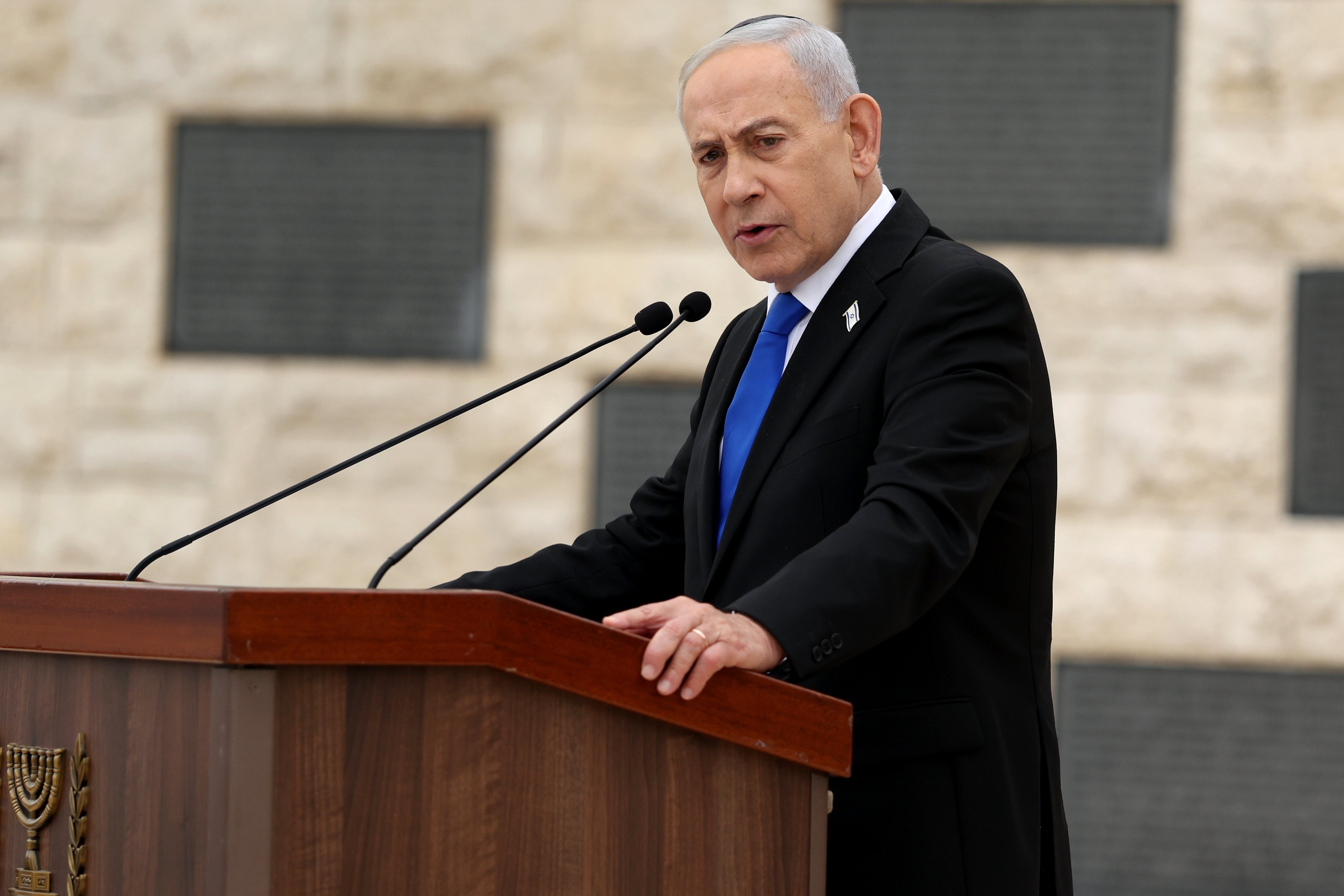
Prime Minister Benjamin Netanyahu faces a critical test of leadership as the United States and Iran engage in renewed hostilities. So far, Israel has not joined the American campaign, and Iran has not targeted the Jewish state directly. But the pressure is mounting on Netanyahu to act, with hawkish voices in his coalition calling for a military response to any Iranian aggression.
Netanyahu has issued stark warnings, telling Tehran that any attack on Israel would be met with a “far more powerful” retaliation than previous strikes. Yet these fiery words should not translate into military action, analysts argue. The risks are immense, and the precedent for restraint is clear.
In 1991, during the Gulf War, Iraqi Scud missiles rained down on Israel. Prime Minister Yitzhak Shamir wanted to retaliate, but the United States pressed him to hold back. President George H.W. Bush promised that destroying Iraqi launchers would be a top priority, and Washington deployed Patriot batteries and sent senior envoys to ensure Israeli restraint. Shamir faced down his right-wing cabinet, a decision that preserved the anti-Iraq coalition and kept Israel out of a wider war.
Today’s situation differs in key ways. There is no broad coalition fighting alongside the U.S. against Iran. Israel’s air defenses are far more advanced than in 1991, and Iran has not yet struck Israel, instead targeting American bases in Jordan and Gulf states like Bahrain. But the operational utility of an Israeli strike is questionable. The U.S. Air Force and Navy already dominate the skies over Iran, and Israel’s involvement would not guarantee protection from Iranian missiles or drones, as Gulf states have discovered despite American air superiority.
An Israeli intervention could also reignite dormant fronts. Yemen’s Houthis, who have held their fire, might resume attacks. Israel is already stretched, conducting operations in Gaza and Lebanon, and approaching a peace deal with its northern neighbor. Adding Iran to the mix would strain personnel and aircraft further.
Politically, the costs are steep. A symbolic vote on Wednesday saw 103 Democrats break ranks to oppose Israel aid, reflecting growing discontent among moderate legislators and their constituents. On the right, critics increasingly argue that Netanyahu and Israel have provoked this conflict, a narrative that would only intensify if Israel joins the fighting. Some have accused Israeli officials of orchestrating a campaign against the Iran deal, feeding skepticism about Israeli motives.
Netanyahu is scheduled to attend Senator Lindsey Graham’s funeral, where he will likely meet with President Trump. Trump should follow Bush’s example, offering more air defense support and closer military cooperation in exchange for Israeli restraint. Netanyahu, in turn, must emulate Shamir, the prime minister who appointed him to his first major political post, and keep Israel out of this latest U.S.-Iran confrontation.
The choice is clear: operational marginal gains are outweighed by the risk of a multi-front war and eroding political support at home and abroad. Netanyahu must face down his right-wingers, as his predecessor did 35 years ago.