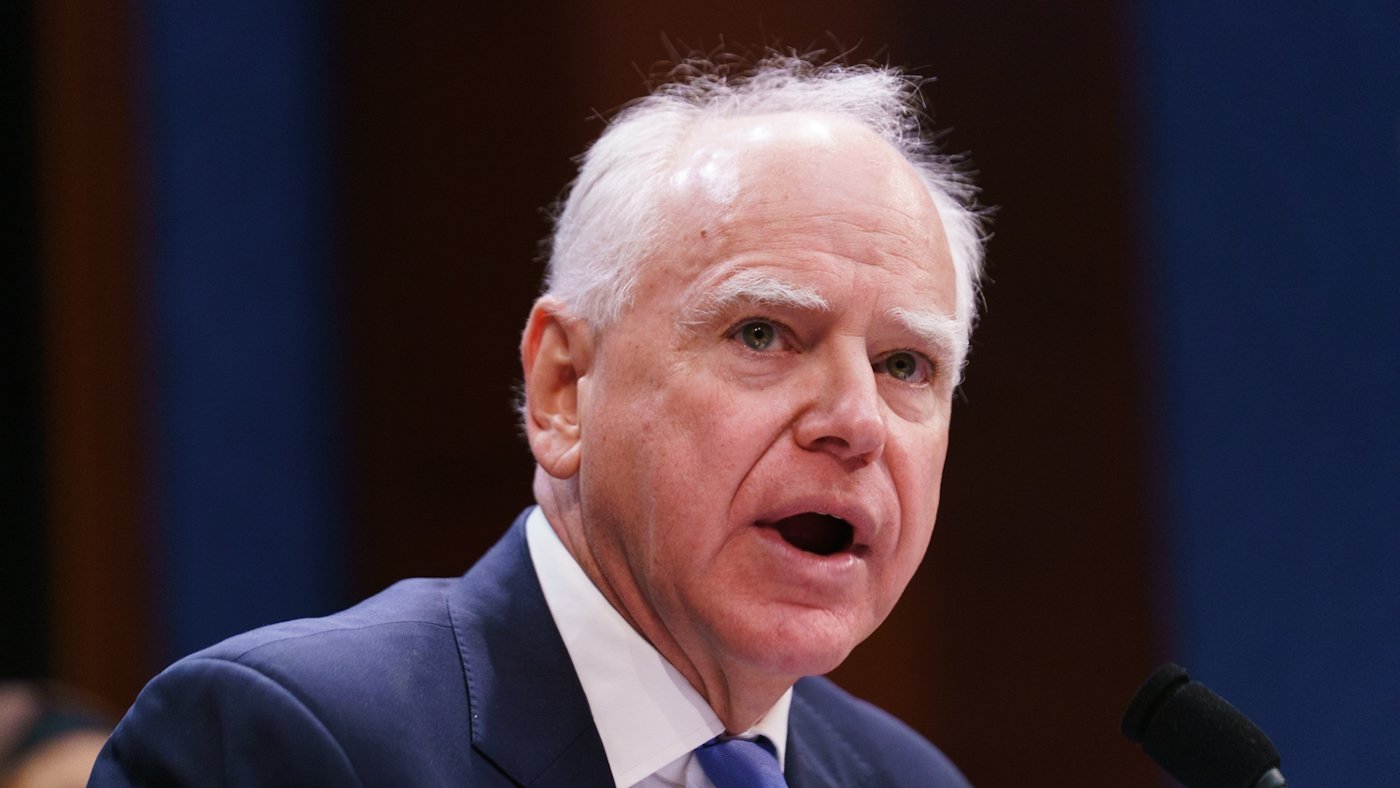
At the inaugural Global Progressive Mobilization conference in Barcelona this weekend, Minnesota Governor Tim Walz delivered a blistering assessment of the Trump administration, characterizing its foreign and domestic policies as fundamentally threatening to democratic institutions. The Democratic governor, who was the party's 2024 vice presidential nominee, framed the current U.S. political climate as one of alarming authoritarian drift.
A Direct Attack on Iran Policy and Domestic Power
Walz focused his criticism on the administration's military engagement with Iran, which has escalated in recent months. He described the president as "feeble-minded and trigger-happy," arguing the conflict was initiated without a clear threat, defined objectives, or strategy for withdrawal. "We need to call that what it is: that's fascism. Or at least it's fascist-curious," Walz told the international audience, linking the foreign policy to a broader pattern of democratic erosion.
The governor warned of a "methodical weakening" of core American institutions, including an independent press, judiciary, and electoral systems. He pointed to what he called a "massive paramilitary force terrorizing our communities," a likely reference to controversial domestic enforcement actions that polls show many Americans view as overly aggressive. His remarks came as U.S.-Iran negotiations continue ahead of a temporary ceasefire expiration, underscoring the immediate policy stakes.
Contrast with Vance and Broader Democratic Warnings
Walz explicitly contrasted his approach with that of Vice President JD Vance, stating he was not present to "arrogantly lecture" or "pick a fight with the pope," a clear nod to the ongoing diplomatic and religious tensions between the Trump administration and the Vatican. Instead, Walz positioned himself as seeking solidarity within a global progressive movement to counter authoritarian trends.
He was joined in his dire warnings by Senator Chris Murphy of Connecticut, a member of the Senate Foreign Relations Committee. Murphy declared the United States "a nation that is in crisis," labeling the current period "the most significant threat to American democracy since the Civil War." He asserted the country is not merely approaching a totalitarian takeover but is "in the middle of it," with the former president actively seeking to seize control of courts, law enforcement, media, and elections to achieve "oligarchic capture."
Context of a Global Progressive Gathering
The conference, designed to defend democracy and advance social justice globally, featured speakers from over forty countries. New York City Mayor Zohran Mamdani and Senator Bernie Sanders addressed attendees via pre-recorded video, signaling the event's importance to the Democratic Party's progressive wing. The gathering served as a platform for U.S. figures to articulate their opposition to Trump's agenda on an international stage, framing domestic struggles as part of a worldwide battle against populist nationalism.
The sharp rhetoric from Walz and Murphy reflects a strategic shift among Trump's opponents, moving beyond policy disagreements to direct accusations of authoritarianism. This aligns with calls from figures like Al Sharpton for an aggressive electoral challenger in 2028. The criticism of the Iran conflict also echoes satirical critiques from commentators like Bill Maher, who has publicly mocked the administration's shifting rationale and strategy in the region.
Ultimately, the speeches in Barcelona underscore how central the narrative of democratic backsliding has become to the Democratic Party's critique of the Trump presidency. By invoking fascism and framing the conflict with Iran as symptomatic of a deeper institutional decay, figures like Walz are seeking to mobilize both domestic and international opinion against what they portray as an existential threat to the American political system.