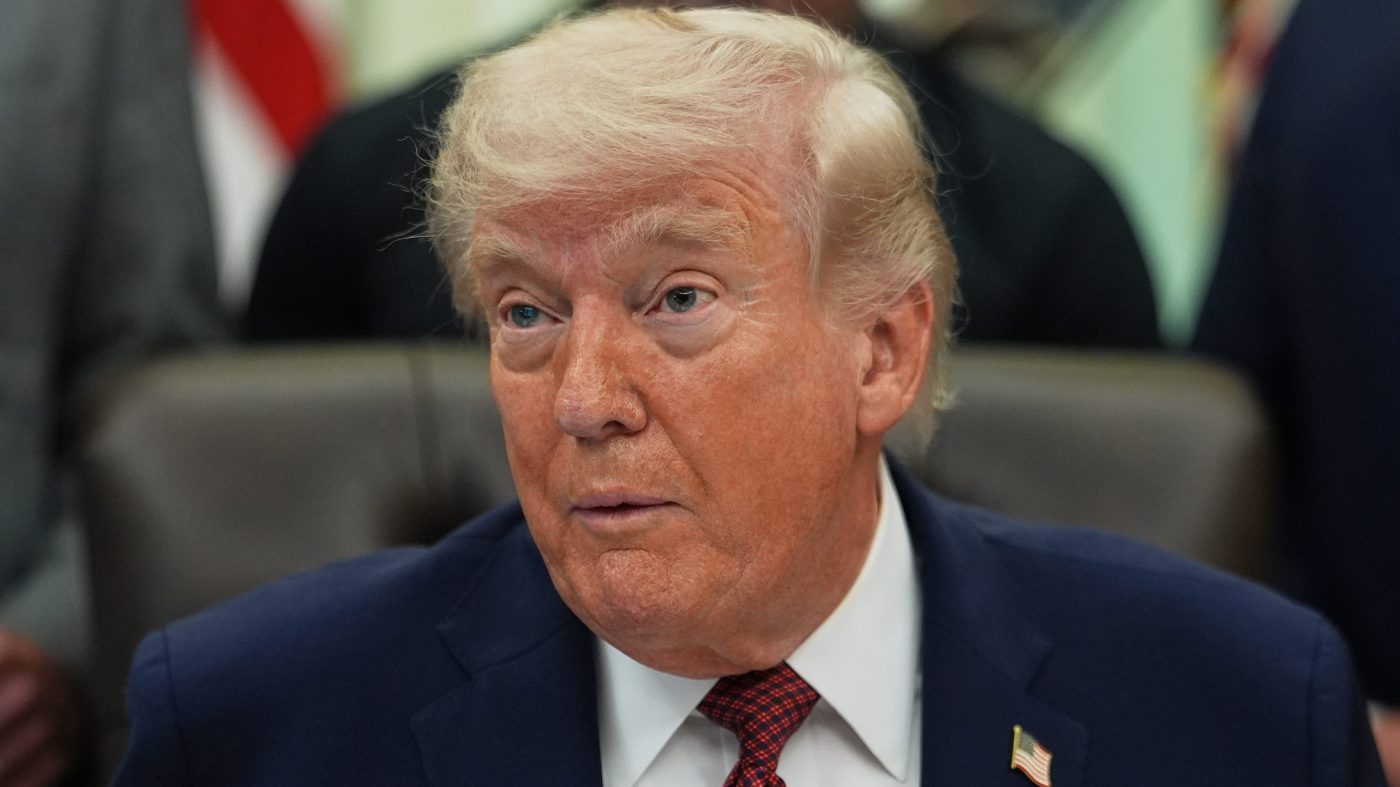
President Donald Trump will join a marathon public reading of the Bible this weekend, an announcement made Friday that coincides with his escalating public dispute with Pope Leo XIV. The event, organized by the group Christians Engaged, will feature Trump among approximately 500 readers during its week-long duration.
In a statement, Trump praised the "America Reads the Bible" initiative, saying participants would "honor Holy Scripture, renew our faith, usher in a historic resurgence of religion on American shores, and rededicate the United States as one Nation under God." According to The New York Times, the president pre-recorded his segment from the Oval Office, selecting a passage from 2 Chronicles that some of his Christian supporters interpret as a call for national repentance.
Political and Religious Figures Join Event
The reading roster includes numerous high-profile Trump allies and administration officials, blending political and religious messaging. Participants include Defense Secretary Pete Hegseth, Secretary of State Marco Rubio, former Housing and Urban Development Secretary Dr. Ben Carson, and White House chief of staff Susie Wiles. Political figures such as House Speaker Mike Johnson and Senator Ted Cruz will also take part, alongside religious leaders like the Rev. Franklin Graham.
This public display of religious engagement occurs against the backdrop of a sharpening conflict between Trump and the pontiff. Pope Leo XIV has repeatedly criticized U.S. military operations in Iran, calling for diplomatic solutions, while Trump has dismissed these appeals. The president recently accused the pope of being "WEAK on Crime, and terrible for Foreign Policy," and suggested—without evidence—that Leo wants Iran to obtain nuclear weapons.
A Public Refusal to Reconcile
On Friday, Trump told reporters he has no plans to meet with the pope to resolve their differences. "I have a right to disagree with the pope," Trump stated. "I have no disagreement with the fact the pope can say what he wants, and I want him to say what he wants, but I can disagree." This public clash with the first American pope represents a significant test for the longstanding political alliance between the Republican Party and many Catholic voters.
While in Cameroon, Pope Leo issued a pointed condemnation that appeared aimed at political leaders who instrumentalize faith, though he did not name Trump directly. The pontiff denounced "those who manipulate religion and the very name of God for their own military, economic, and political gain, dragging that which is sacred into darkness and filth."
Controversial AI Imagery Precedes Event
Trump's participation follows a weekend controversy involving artificial intelligence-generated religious imagery. The president posted an AI-rendered image resembling a painting that depicted him in a Christ-like manner to his Truth Social platform. After significant backlash from conservatives and Christians who called it blasphemous, the post was removed. Trump later claimed he believed the image showed him as a "doctor."
Days later, he shared another AI-generated image, this one showing him being embraced by Jesus Christ, with the caption: "The Radical Left Lunatics might not like this, but I think it is quite nice!!!" These posts highlight how emerging technology is intersecting with political messaging in unprecedented ways.
The Bible reading event and the surrounding controversies arrive as the administration faces multiple foreign policy challenges. The dispute with Pope Leo centers on Iran policy, an area where Trump has recently threatened renewed military strikes if a fragile ceasefire collapses. This hardline stance has drawn criticism both internationally and from some domestic observers who have questioned the coherence of the administration's Iran strategy.
Analysts suggest the Bible reading serves multiple political purposes: solidifying Trump's support among evangelical Christians, providing a counter-narrative to his dispute with the Catholic Church, and emphasizing cultural themes ahead of the midterm elections. The event represents a continued fusion of religious symbolism and political strategy that has characterized much of Trump's public presidency.