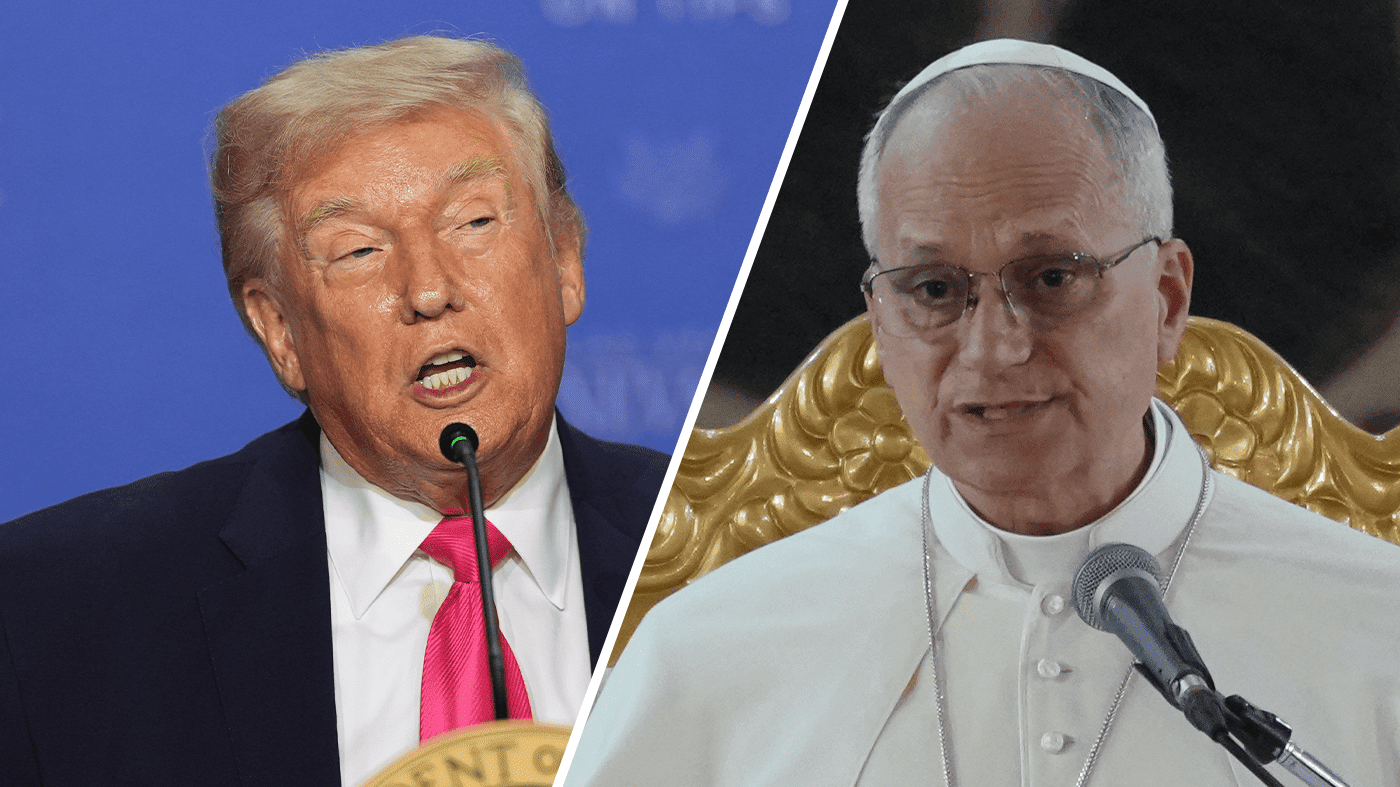
President Donald Trump has publicly criticized Pope Leo XIV, creating a historic breach between a sitting U.S. president and the head of the Roman Catholic Church. The dispute, centered on the administration's immigration stance and its military engagement in Iran, is unprecedented in modern times and is further complicated by Leo's status as the first American-born pope.
From Veiled Criticism to Direct Rebuke
The tension escalated from weeks of indirect papal commentary on administration policies to a direct confrontation after a televised segment. Following a 60 Minutes interview where several American cardinals criticized the White House's approach to the ongoing conflict with Iran, Trump took to Truth Social to label the pontiff "weak on crime and terrible for foreign policy." The pope's own critiques had been more nuanced, a style noted by observers. "The pope is so good at staying above the fray. It's not direct, it's not personal," said John McCarthy, a former Biden adviser and church liaison.
A Swift Backlash and Retreat
The president's remarks triggered immediate condemnation from global leaders and figures within his own coalition. Bishop Robert Barron, a member of Trump's Religious Liberty Commission, stated the president owed Leo an apology. Italian Prime Minister Giorgia Meloni, typically a Trump ally, called the comments "unacceptable." Facing this backlash, Trump notably dialed back his rhetoric by week's end, asserting he was not fighting with the pope and had a right to disagree.
Administration officials offered a mixed defense. Vice President J.D. Vance cautioned the pope on theological matters, while border czar Tom Homan suggested religious leaders should avoid politics. This internal dynamic highlights the complex position of prominent Catholics within Trump's inner circle, including First Lady Melania Trump, Vance, Secretary of State Marco Rubio, and Press Secretary Karoline Leavitt.
Political Calculus for a Key Voting Bloc
The clash arrives as Trump's political team assesses the loyalty of Catholic voters, a bloc he won decisively in the 2024 election. Exit polls showed 59% of Catholics supported him. CatholicVote President Kelsey Reinhardt called that support "one of the biggest political realignments in the last 25 years." However, more recent polling suggests vulnerability; a March CNN survey put Trump's approval among Catholics at just 42%.
Republican strategists see little electoral upside in the confrontation. "Politics is a game of addition, not subtraction," said GOP strategist T.W. Arrighi. "There's no addition to be gained by attacking the head of the largest Christian denomination in the world." He added, however, that the pope "is not infallible." The political risk may be most acute in swing districts. McCarthy noted that high Catholic populations in competitive states like Pennsylvania, Arizona, and Iowa could make the dispute a factor in the upcoming midterms, though Reinhardt argued future policy would ultimately matter more than "the temperature of this particular week."
A Historic Breach in Context
While past presidents have disagreed with the Vatican—Pope John Paul II opposed the Iraq War and clashed with the Clinton administration on abortion—Trump's direct, personal criticism represents a new escalation in tone. The incident coincides with a reported resurgence in U.S. Catholic Church participation, with data indicating significant growth in dioceses across the country.
The feud also underscores the administration's persistent foreign policy challenges, particularly regarding Iran, where Trump's vows to prevent nuclear weapons face contradictory signals from Tehran. The pope's criticism of the Iran war, which mirrors earlier Vatican skepticism of U.S. military interventions, now forms the core of a remarkable public schism between the White House and the Holy See.