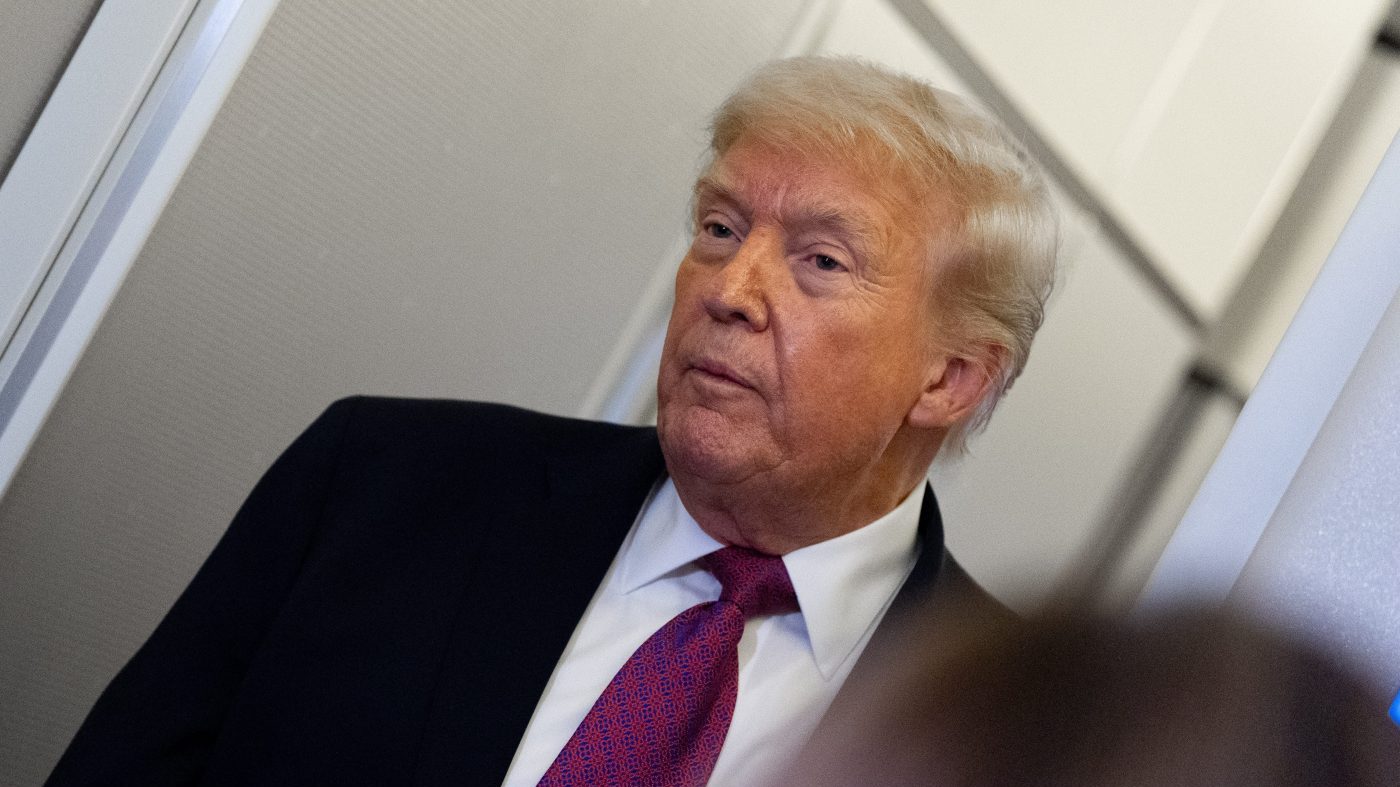
President Donald Trump declared late Friday that the United States is prepared to launch renewed military strikes against Iran if diplomatic talks fail to yield an agreement before a temporary ceasefire deadline passes next Wednesday. Speaking to reporters aboard Air Force One, the president framed the choice starkly for Tehran's leadership.
"If no deal is reached by Wednesday's deadline, we'll have to start dropping bombs again," Trump stated. He tempered the threat with cautious optimism, adding, "But I think it's going to happen," in reference to reaching a negotiated settlement to end the conflict that began in late February.
Naval Blockade and Regional Leverage
The warning comes as the U.S. maintains a naval blockade in the Strait of Hormuz, a critical global oil transit corridor. The Pentagon imposed the blockade earlier this week after Iran announced new tariffs on commercial vessels. This move continues a pattern of tensions over control of the strategic waterway, which Tehran had briefly signaled would reopen before reversing course following Trump's insistence the blockade would stand.
Regional diplomacy has seen mixed signals. A temporary truce between Israel and Lebanon, brokered under Iranian pressure, had raised hopes for a broader de-escalation. However, the path to a U.S.-Iran deal remains fraught, as illustrated by previous declarations of progress that Tehran subsequently undermined.
Pakistan's Mediating Role
Pakistan has emerged as the primary mediator in the high-stakes negotiations. Foreign Minister Mohammad Ishaq Dar expressed optimism during a public appearance in Turkey on Friday, noting the parties were "very close to stitching a deal" before logistical issues forced a pause. "We are hoping and still working in the background that we should bridge the gap," Dar said, citing the recent Lebanon-Israel ceasefire as a positive development.
Vice President J.D. Vance led a U.S. diplomatic delegation to Islamabad last Saturday for direct talks with Iranian officials, with Pakistani Prime Minister Shehbaz Sharif facilitating. Those discussions, however, ended without an agreement. Vance downplayed the setback for Washington, stating, "I think that's bad news for Iran much more than it's bad news for the United States of America."
Strategic Context and Nuclear Stakes
The current confrontation sits within the broader, long-standing U.S. objective to curb Iran's regional ambitions and nuclear program. Trump's threat of renewed force aligns with his administration's consistent pledge to prevent Iran from obtaining nuclear weapons, a goal that has faced persistent challenges and contradictory signals from Tehran.
The president publicly praised Pakistan's mediation efforts on Thursday, suggesting a potential diplomatic reward. "Pakistan has been great. They've been so good," Trump told reporters. "If a deal is signed in Islamabad, I might go." This potential presidential trip would mark a significant moment in a foreign policy approach that has often blended military pressure with unpredictable personal diplomacy.
The coming days will test whether the threat of renewed conflict can compel a diplomatic resolution, or if the temporary ceasefire will dissolve, returning the region to a state of open hostilities. The outcome carries profound implications for global energy markets, regional stability, and the trajectory of U.S. foreign policy in the Middle East.