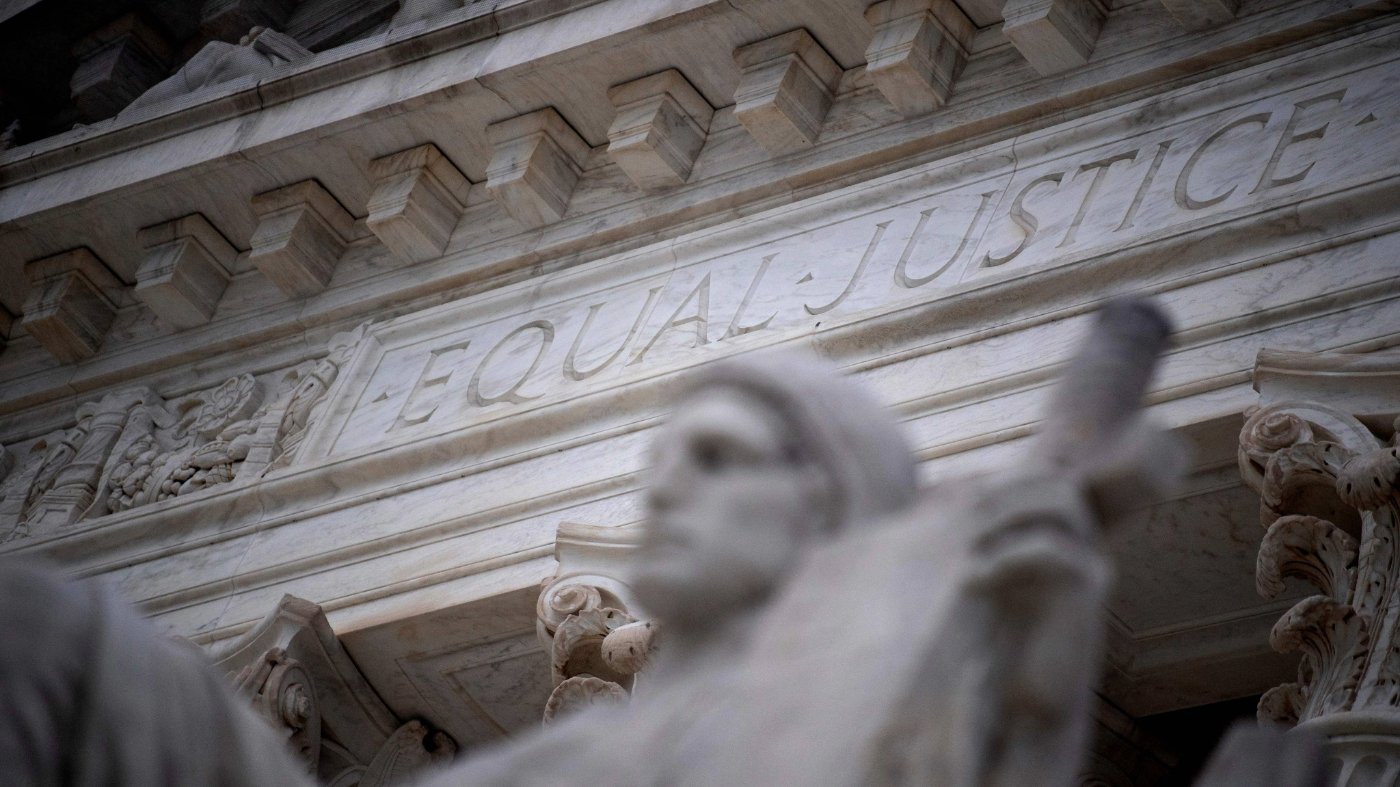
The Supreme Court's conservative majority dealt a severe blow to the Voting Rights Act on April 29, ruling in Louisiana v. Callais that challengers must now prove mapmakers intentionally drew districts to discriminate based on race — even if the outcome is clearly discriminatory. The decision, written by Justice Samuel Alito, shifts the burden from demonstrating discriminatory results to proving discriminatory intent, a standard that civil rights advocates say is nearly impossible to meet.
Justice Elena Kagan, in a blistering dissent, noted that Congress has long recognized that finding direct evidence of racist motives is “well-nigh impossible.” She argued that the ruling effectively renders Section 2 of the Voting Rights Act “all but a dead letter.” The act, she wrote, “is — or, now more accurately, was — born of the literal blood of Union soldiers and civil rights marchers.”
The case centered on Louisiana's congressional map, which included only one majority-minority district out of six, despite Black voters making up roughly one-third of the state's population. Lower courts had ruled that the Voting Rights Act required a second such district. But after the state drew a new map, white plaintiffs sued, arguing that using race as a factor violated the Equal Protection Clause. The Supreme Court sided with the white plaintiffs, effectively rewriting the standard for proving racial discrimination in redistricting.
The ruling is likely to have far-reaching consequences, particularly in the South, where race and partisan politics are deeply intertwined. As the original article notes, “Most white southerners are committed Republicans,” while Black voters overwhelmingly support Democrats. The decision could wipe out as many as 19 congressional seats protected by the Voting Rights Act, making it even harder for Democrats to win in Southern states.
Critics argue that the court's majority is ignoring both history and current reality. The Voting Rights Act was passed in 1965 after decades of systematic disenfranchisement of Black voters, a struggle that President Lyndon Johnson considered his “greatest achievement,” according to biographer Robert Caro. The act was strengthened in 1982 with an amendment, signed by President Ronald Reagan, clarifying that discrimination could be shown by its results, not just by proof of intent.
In a related development, Southern GOP states are already rushing to redraw maps following the ruling, further entrenching partisan gerrymanders. The decision also echoes the court's earlier ruling upholding Alabama's GOP-drawn map, which similarly threatened Black voting power.
Civil rights lawyer Gerald A. Griggs, quoted in the original article, noted that overt racism has given way to subtler forms of discrimination that have “corroded the arteries of the system.” The court's new standard, he argued, ignores these realities. “Racial discrimination in redistricting is a malignancy that cannot be wished away,” the original article states.
Kagan's dissent concluded with a warning: “Today’s decision renders Section 2 all but a dead letter.” She noted that the Voting Rights Act “ushered in awe-inspiring change,” but now, the court has effectively gutted it, leaving minority voters with little recourse against discriminatory maps.
The ruling has sparked renewed calls for structural reforms to the Supreme Court, with pro-democracy coalitions demanding changes to the institution. Meanwhile, Democratic lawmakers have vowed to protect voting rights, with Virginia Rep. McClellan promising to fight back against the ruling.
As the original article notes, the decision is a stark departure from decades of precedent. Congress, if it believes the Voting Rights Act is no longer needed, could repeal it — but that decision should not come from six conservative justices imposing their personal policy preferences.