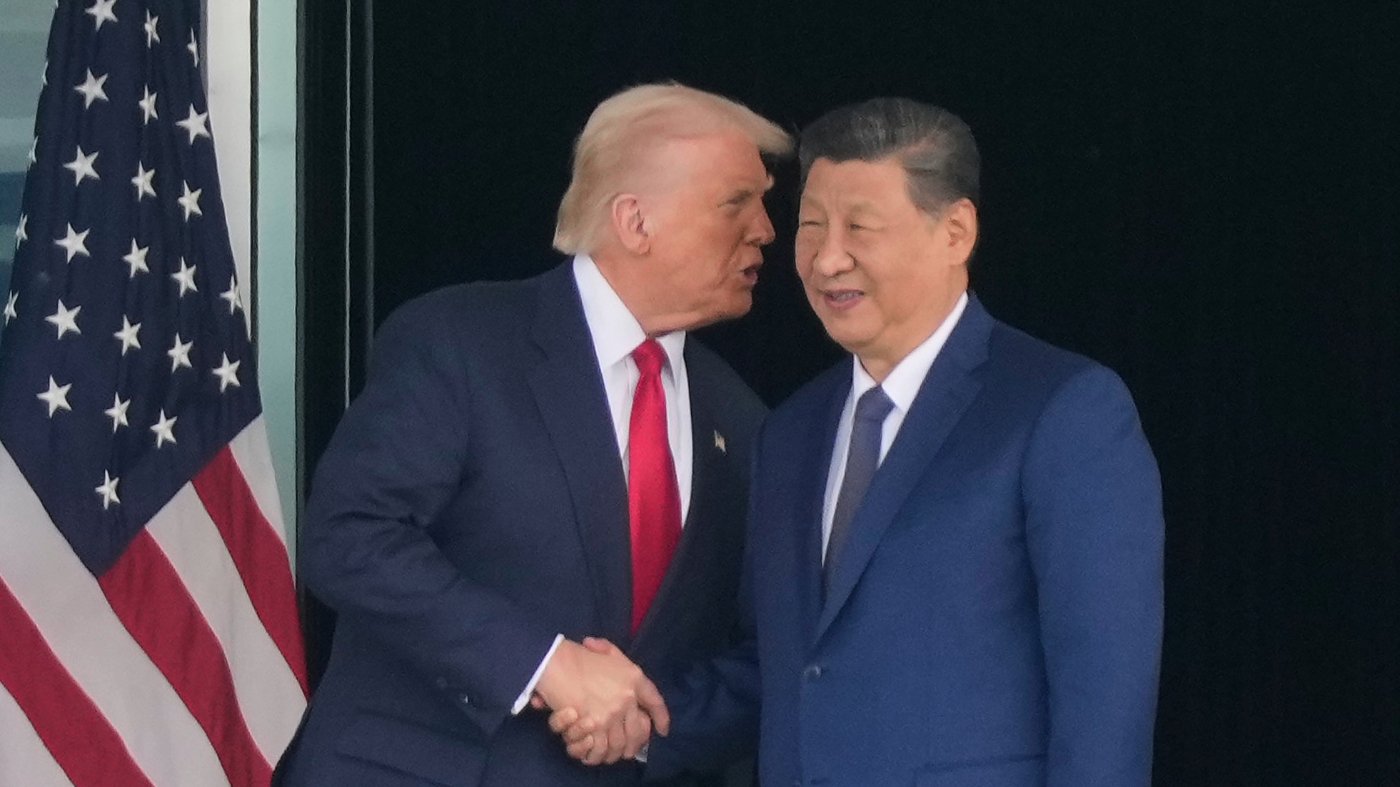
Taipei is hoping for no last-minute shocks when President Donald Trump and Chinese President Xi Jinping sit down later this week, with Taiwan's status as one of the most volatile topics on the table. Taiwanese Foreign Minister Lin Chia-lung expressed confidence in the island's relationship with Washington but acknowledged a degree of caution about potential curveballs.
“Of course we hope that the Trump-Xi summit does not produce any surprises regarding Taiwan-related issues,” Lin told Reuters, according to reports. Speaking to Taiwan's Central News Agency, he added that the island “should be concerned, but not overly worried,” as noted by Turkey's Anadolu Agency.
Beijing has long claimed Taiwan as part of its territory and has repeatedly signaled willingness to use military force to bring the island under its control. The U.S. has maintained a policy of strategic ambiguity for decades, neither endorsing Taiwan's independence nor fully backing China's territorial claims.
Former President Joe Biden had stated explicitly that American troops would defend Taiwan in the event of a Chinese invasion. Trump has been far less clear on that commitment, leaving room for Xi to test U.S. resolve. Analysts expect Xi to use trade negotiations as a lever to shift Washington's stance on Taiwan.
The summit, now scheduled for Thursday and Friday, was delayed due to the ongoing Iran war, which has complicated international diplomacy. China has quietly backed Iran in its conflict with the U.S. and Israel, adding another layer of tension to the talks. The Iran conflict gives Xi additional leverage as he prepares to host Trump in Beijing.
Even as Trump heads to China, progress on a peace deal with Iran appears to be unraveling. The president recently rejected an Iranian peace offer, and the war has already fueled voter anger that could hurt Republican midterm prospects.
Beyond Taiwan and Iran, the agenda includes American technology access, Trump's push for China to buy U.S. products like Boeing jets, cooperation on the fentanyl crisis, and artificial intelligence governance. The summit's outcome will test whether the two superpowers can manage their most explosive disagreements without triggering a crisis.