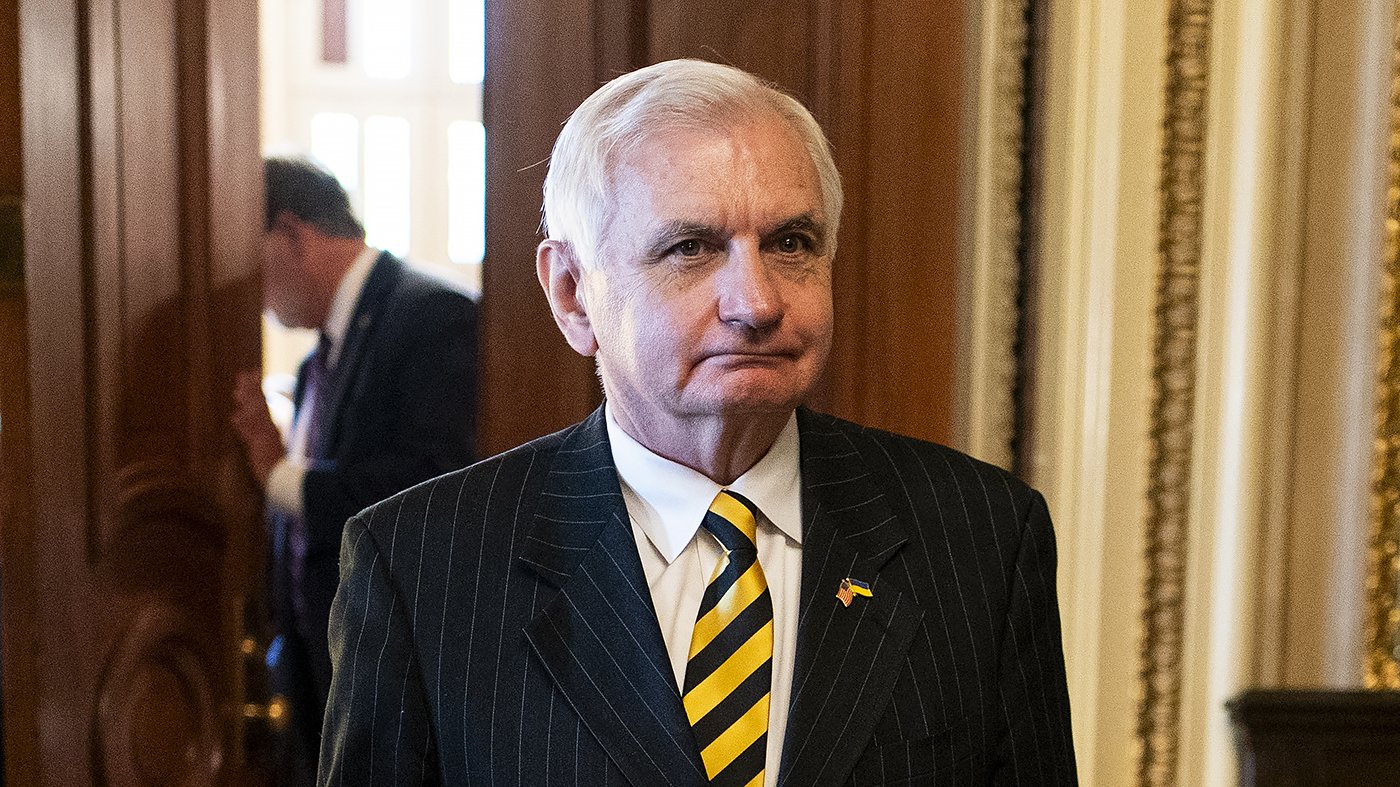
Senator Jack Reed, the top Democrat on the Senate Armed Services Committee, argued Sunday that President Donald Trump is walking into his high-stakes meeting with Chinese President Xi Jinping from a position of profound weakness.
“President Trump is going into this meeting terribly weakened,” Reed told host Shannon Bream on Fox News Sunday. The Rhode Island Democrat pointed to the ongoing standoff with Iran, which he said has left the United States bogged down in a conflict that Tehran controls the pace of. “He has involved ourselves in a conflict with Iran. There’s a stalemate now. The Iranians are holding 20 percent of the world’s oil at risk,” Reed said, referencing Iranian restrictions on shipping through the Strait of Hormuz.
Trump is scheduled to meet Xi in Beijing on Thursday and Friday, marking the first in-person encounter between the two leaders since October and the first visit by a U.S. president to China in over eight years. The summit arrives as the Gulf crisis hands China leverage and the administration scrambles for a permanent end to hostilities with Iran.
China, a close ally of the Islamic Republic, has complicated U.S. pressure tactics. This week, Beijing instructed its companies to ignore American sanctions on Chinese refineries. The Treasury Department recently sanctioned Hengli Petrochemical Refinery, an independent Chinese “teapot” refinery, labeling it “one of Iran’s largest customers for crude oil and other petroleum products.”
Despite those sanctions, Reed noted that China has insulated itself from energy shocks through aggressive investments in renewables. “China is doing quite well because of their alternate energy investments,” he said. The world’s largest emitter of greenhouse gases installed 360 gigawatts of wind and solar capacity in 2024 — more than half of all global additions that year, according to the World Economic Forum.
The senator also highlighted the strategic cost of Trump’s Iran entanglement. The Pentagon has shifted personnel and equipment from the Indo-Pacific to the Middle East, eroding American readiness to counter Chinese military moves. Beijing has recently ramped up its military presence around Taiwan, a democratic island China claims as its own territory. Reed argued that the combination of a stretched U.S. military posture and rising domestic prices undercuts Trump’s negotiating position.
“We’re seeing at home significant gas prices, significant increases in grocery prices and in all sorts of prices for the American home,” Reed told Bream. “And the American people are significantly concerned about this conflict with Iran. So that’s not a strong position to be in when you’re talking to an economic and a geopolitical rival.”
The assessment echoes broader concerns that Trump’s Iran strategy is in disarray, with oil prices surging and talks stuttering. As the president prepares to sit down with Xi, critics warn that domestic turmoil and geopolitical overreach have left him with little leverage on trade, energy, or security issues.