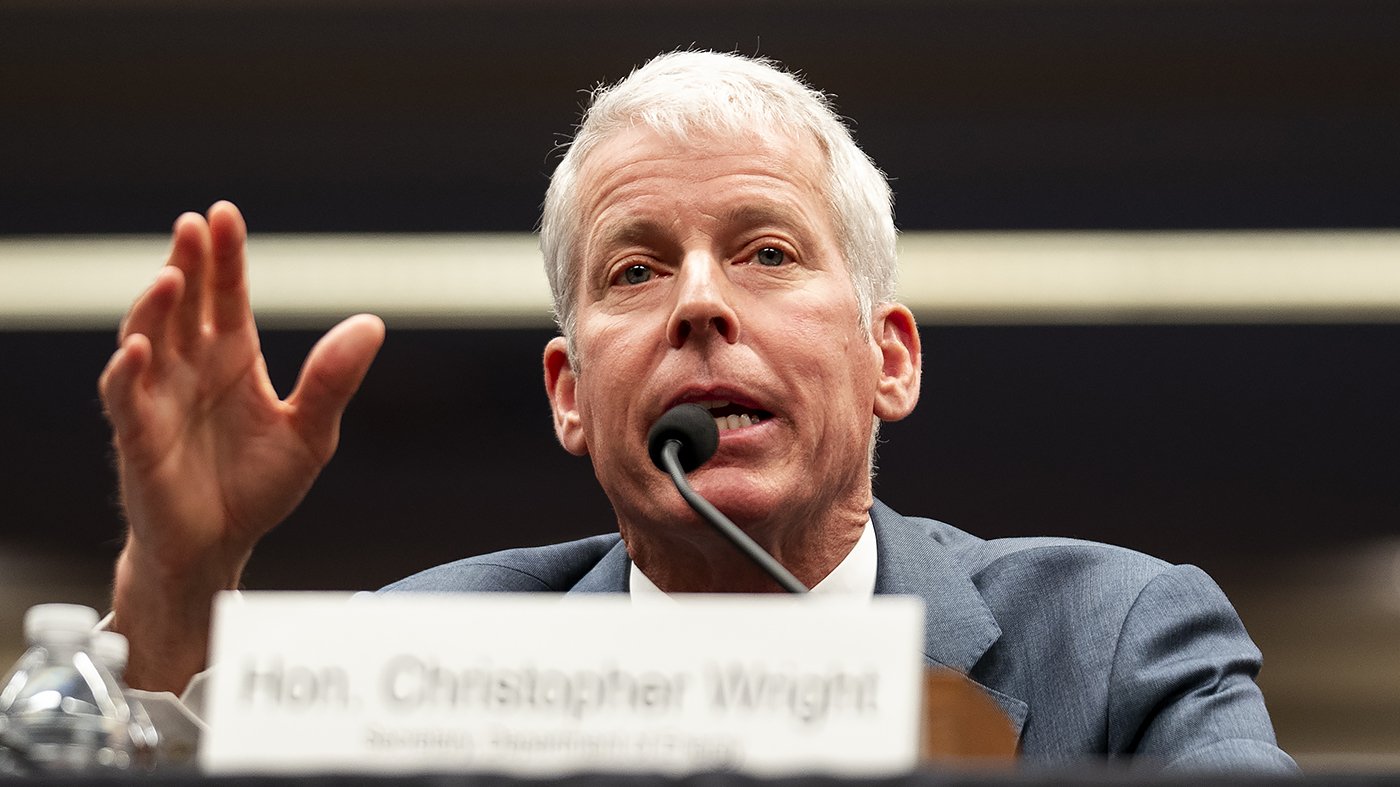
Energy Secretary Chris Wright refused to forecast gasoline prices Sunday, even as the national average surged past $4.50 per gallon—the highest level since Russia invaded Ukraine in 2022—amid the protracted conflict with Iran.
“I can’t make any predictions about oil prices or gasoline prices,” Wright told Kristen Welker on NBC’s “Meet the Press.” He noted that the military phase of the war unfolded largely as anticipated, but added, “After the main military operations have ceased, now we’re in a negotiating period. We’re using economic leverage against Iran, and this regime is trying to cling on to their nuclear program, so obviously this part of the conflict has gone a little longer.”

The administration’s shifting outlook on fuel costs has drawn scrutiny. In March, Wright expressed optimism that prices could drop below $3 by summer, just days before the average hit nearly $3.60. By April, he revised that timeline to 2027, prompting President Trump to call him “totally wrong.” Now, with prices exceeding $4.50, the gap between White House promises and reality has widened. The surge has been driven in part by Iranian restrictions on shipping through the Strait of Hormuz and a U.S. Navy blockade of Iranian ports that began in mid-April, escalating economic pressure but also tightening global oil supplies.
Wright said the administration remains “open to all ideas” to ease the burden on consumers, including a potential suspension of the federal gas tax, which currently stands at 18.3 cents per gallon for gasoline and 24.3 cents for diesel. Several states, including Indiana and Georgia, have already suspended their own gas taxes, but federal action has yet to materialize. “All measures that can be taken to lower the price at the pump and lower the prices for Americans, this administration is in support of,” Wright said, though he offered no specific timeline or commitment.
The energy secretary’s comments come as Trump’s Iran strategy appears increasingly strained, with oil prices volatile and diplomatic talks stalling. The administration’s dual track of military action and economic coercion has yet to force Iranian concessions on its nuclear program, and the resulting energy costs are hammering American households. Meanwhile, gas prices surged another 34 cents last week as the Navy escorted commercial vessels through the strait under fire, underscoring the fragility of supply routes.
Republicans on Capitol Hill have also voiced alarm. Senator Kevin Cramer recently blasted inflation data as “bad,” linking rising costs directly to the Iran conflict. House Majority Leader Steve Scalise clashed with a CNBC host over gas prices, defending the administration’s approach while acknowledging the pain at the pump. The political fallout is mounting as voters head into a summer where $5 gas could become the norm.
Wright’s refusal to offer even a rough forecast marks a sharp retreat from earlier confidence. When pressed on whether prices could dip below $3 by year’s end, he demurred, saying only that the administration is “constantly looking for different ideas.” That leaves Trump—who has staked much of his economic pitch on energy dominance—without a clear answer to the most visible cost crisis of his second term.