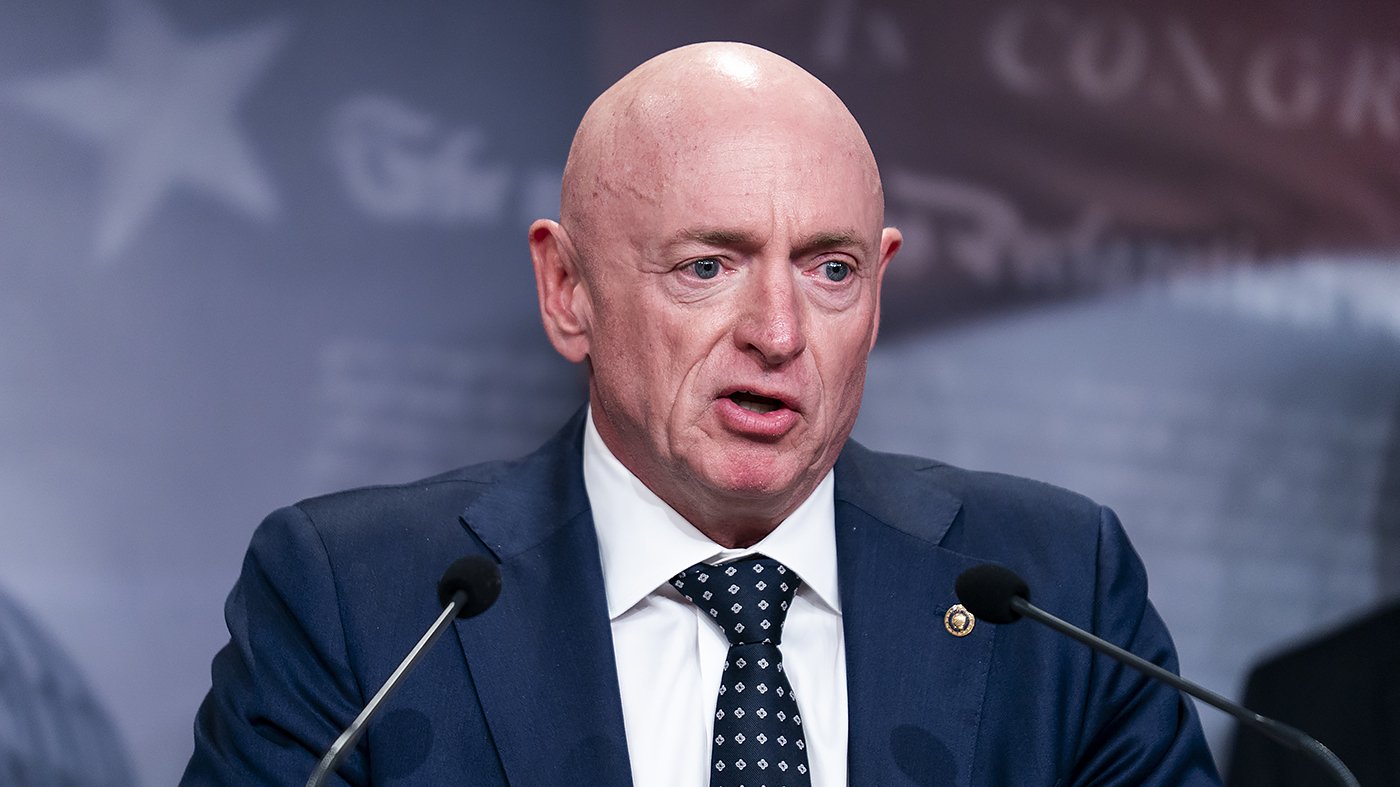
Senator Mark Kelly (D-Ariz.) on Sunday cast doubt on the strategic rationale for the United States' ongoing military engagement with Iran, now past its second month, arguing the conflict is eroding American military readiness and imposing steep costs on the public with little clear benefit.
Appearing on CBS News' Face the Nation, Kelly was pressed by host Margaret Brennan on whether the U.S. could still defend Taiwan against Chinese aggression given the resources tied up in the Iran theater. Kelly replied that the answer hinges on the conflict's duration. “A conflict that lasts a matter of days or just weeks, I think we’re well positioned,” he said. “If a conflict goes on for months or years, when it takes years to replenish some of these munitions, of course, we’re going to be in a worse posture than we otherwise would be in if this war in Iran didn’t happen.”
The Arizona Democrat, a former Navy pilot and astronaut, did not mince words about the domestic toll. “What are the American people getting out of this?” he asked. “This president said he wasn’t going to start any new wars. He was going to bring down costs. He’s done exactly the opposite. War against Iran. Costs on everything are up.”
His remarks reflect a broader public unease. Recent polling shows a majority of Americans oppose the conflict, which has disrupted global energy markets. The closure of the Strait of Hormuz, a critical chokepoint for oil shipments, has sent gasoline prices soaring. According to AAA, the national average for a gallon of regular gas now stands at $4.52, up sharply from $3.14 at the same time last year.
The economic strain is hitting households hard. A recent survey found that financial fear now outweighs the fear of death for 70 percent of Americans, with Generation X reporting the highest anxiety levels. The war's inflationary effects are a key driver of that unease.
Meanwhile, diplomatic channels show faint signs of activity. Iranian state media, via the Islamic Republic News Agency (IRNA), reported that Tehran has submitted a response to the latest U.S. peace proposal. A source familiar with the matter told IRNA that negotiations between the Trump administration and Iran have so far been limited to halting hostilities in the region. The Hill has reached out to the White House for comment on the status of those talks.
The conflict also raises questions about broader U.S. strategy. Six Americans remain detained in Iran, and their families have been pressing the administration for action. As the war drags on, critics argue it distracts from other priorities and undermines America's ability to project power globally.
Kelly's critique underscores a growing bipartisan concern that the administration's foreign policy is adrift. The war in Iran, he suggested, is a costly diversion that leaves the U.S. less prepared for other threats and offers no clear payoff for the American people.