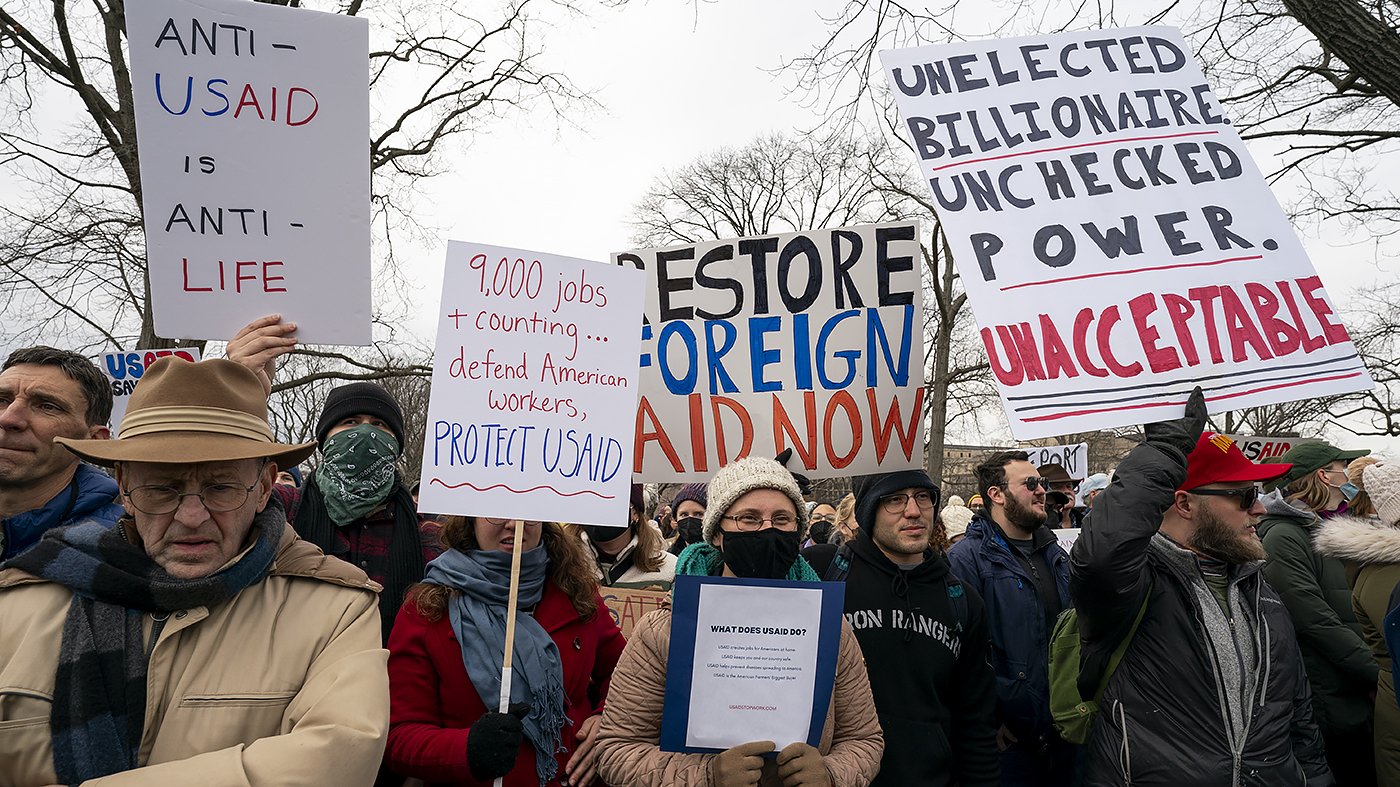
The shuttered U.S. Agency for International Development (USAID) informed Congress late last month that it holds $19 billion to cover costs from terminating its programs, according to a notification obtained by The Hill. The funds, which include unobligated and unliquidated balances from fiscal years 2024 and 2025, are designated for closing out terminated awards, but officials acknowledge the actual closeout costs will be significantly lower.
Where Will the Leftover Funds Go?
The notification, first reported by Devex, states that any remaining money after closeout may be redirected to other foreign assistance programs, such as those run by the State Department. However, humanitarian experts and Democratic lawmakers argue the administration should urgently disburse the funds to address dire global needs.
“If I was an appropriator, I’d be alarmed that the administration is withholding life-saving aid,” said Sam Vigersky, international affairs fellow at the Council on Foreign Relations. “Between the war with Iran and global funding cuts from the U.S. and others, needs are near record highs. We’re in a moment where every dollar matters.”
Agency’s Dismantling and Human Toll
USAID was effectively dismantled in February 2025 under the direction of tech billionaire Elon Musk, who led the so-called Department of Government Efficiency (DOGE). Musk described the agency as being fed “into the woodchipper,” locking out staff and terminating most of its roughly $40 billion annual budget. Researchers estimate that more than 500,000 children and 260,000 adults died as a result of the aid cuts.
The notification details $625 million in unobligated funds from 2024 and $3.2 billion from 2025 for global health and economic development programs, plus over $15 billion in unliquidated obligations on terminated development objective agreements (DOAGs). Closeout costs cover final settlements, pending invoices, asset disposition, and other claims.
Democratic Pushback and Legal Concerns
Senate Democrats, led by Sen. Brian Schatz (D-Hawaii), sent a letter on April 24 demanding the administration reverse its plan to hold back $3.2 billion in fiscal 2025 appropriations. They called it an “unnecessary and illegal impoundment of funds,” noting that the money—signed into law by President Trump in March—expires in September. The funds include $300 million for HIV/AIDS programs, $250 million for malaria, $320 million for maternal and child health, and $650 million for global health security.
“The Administration should immediately begin using these foreign assistance funds to deliver results for the American people,” the lawmakers wrote. “There is no reason for this FY25 funding to be withheld to cover the wasteful costs this Administration has incurred because it chose to dismantle USAID.”
One former USAID official, speaking anonymously, noted the $19 billion is nearly half of the State Department’s entire $50 billion foreign assistance budget. “The trend that this speaks to and that Congress should be very concerned about, is that the Trump administration is not spending the money they are appropriating for them,” they said.
Real-World Impact
Emily Byers, managing director of global development policy at Save the Children, highlighted a single $69 million program in Niger terminated in the shutdown. The maternal and child health initiative provided immunizations, malnutrition screening, and obstetric care to 1.4 million women and 1.1 million children. “Congress has shown continued leadership by appropriating critical funding,” she said, urging the administration to release the funds.
The notification does not name any administration officials, but OMB Director Russell Vought—dubbed the “grim reaper” by Trump—was assigned as acting USAID administrator to oversee the shutdown. Reuters reported in February that the White House used $15 million of USAID funds for Vought’s security. The State Department and oversight lawmakers did not respond to requests for comment.
This standoff comes amid broader political tensions, as seen in House Democrats accusing Lutnick of lying in closed-door Epstein testimony and Trump tariff refunds set to begin May 12 after Supreme Court ruling. The fate of the $19 billion remains uncertain as critics push for transparency and urgency.