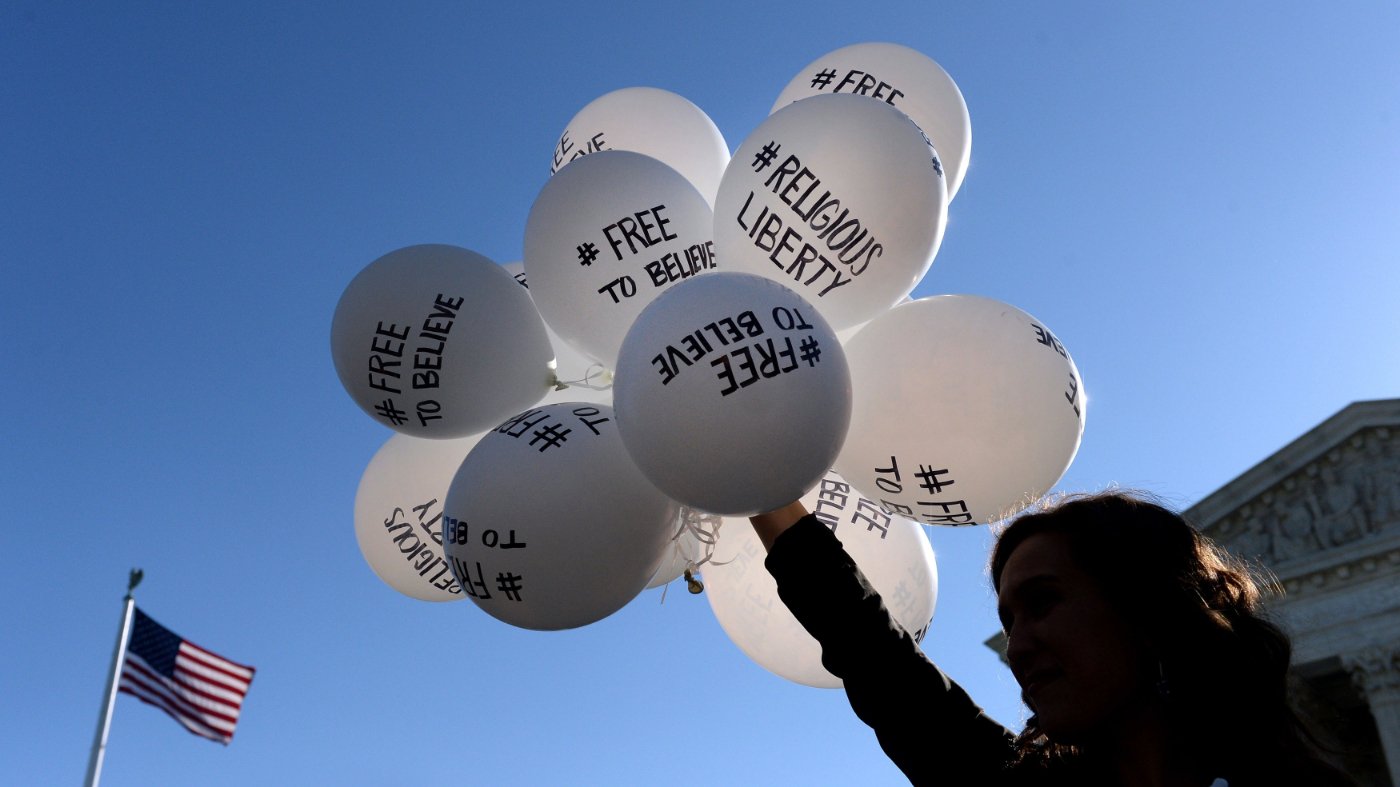
There's an old Spanish saying that cuts to the heart of accountability: 'El que tiene tienda, que atienda' — he who keeps a shop must mind it. For years, the United States has claimed the mantle of global defender of religious liberty. But with the ambassador-at-large post vacant and no interim leadership in place, that shop is not just understaffed — the lights are off.
The International Religious Freedom Act of 1998 mandates a Senate-confirmed ambassador-at-large for International Religious Freedom, a senior diplomat empowered to engage foreign heads of state, build coalitions, and ensure that conscience isn't traded away for other diplomatic interests. That position needs to be filled now.
In April 2025, President Trump nominated former Rep. Mark Walker (R-N.C.) for the role. When the nomination stalled in the Senate and expired, Trump appointed Walker as principal adviser on Global Religious Freedom — a non-confirmed stopgap. That term ended last month, leaving no one, confirmed or otherwise, leading the effort. The shop is empty.
The consequences are not abstract. In Nigeria, jihadist groups killed more than 3,400 Christians in the most recent reporting year — roughly 3,400 of nearly 5,000 Christians murdered for their faith worldwide. The Nigerian government has repeatedly denied the scale of the crisis even as entire Christian communities are wiped out.
The fall of Nagorno-Karabakh displaced over 100,000 ethnic Armenian Christians and saw the deliberate destruction of churches and monasteries. In China, the systematic erasure of Uyghur Muslim culture continues alongside relentless pressure on underground Catholics and house churches. This February, 78-year-old Catholic businessman Jimmy Lai was sentenced to 20 years under Hong Kong's National Security Law — effectively a death sentence for defending freedom of conscience and the press.
In Nicaragua, Daniel Ortega's regime has waged a campaign to strangle the Catholic Church since 2018, imprisoning bishops, stripping them of citizenship, and driving them into exile. These are not isolated crises; they form a pattern demanding sustained, authoritative American engagement.
A confirmed ambassador carries diplomatic authority that no interim arrangement can replicate. Sam Brownback, who served under Trump's first term, convened the first Ministerial to Advance Religious Freedom and launched the International Religious Freedom or Belief Alliance. Rashad Hussain, confirmed under Biden, secured safe passage for persecuted Chinese Christians who arrived in America to celebrate Easter. Both proved this cause transcends party.
The urgency is compounded by transition at the U.S. Commission on International Religious Freedom, where terms of commissioners like Maureen Ferguson are expiring. With experienced leaders departing and the ambassadorial chair empty, the foundation for American religious freedom leadership is less stable.
This is not a moment for partisan maneuvering. Religious freedom is the first freedom — the conviction that has allowed this country to be great and given us standing to speak to the world. The administration should move swiftly to nominate a permanent ambassador, and the Senate should act with equal urgency. The shop is open. It is time to mind it.
Andrea Picciotti-Bayer is director of the Conscience Project and the recipient of the Religious Freedom Institute's 2025 Religious Freedom Impact Award.