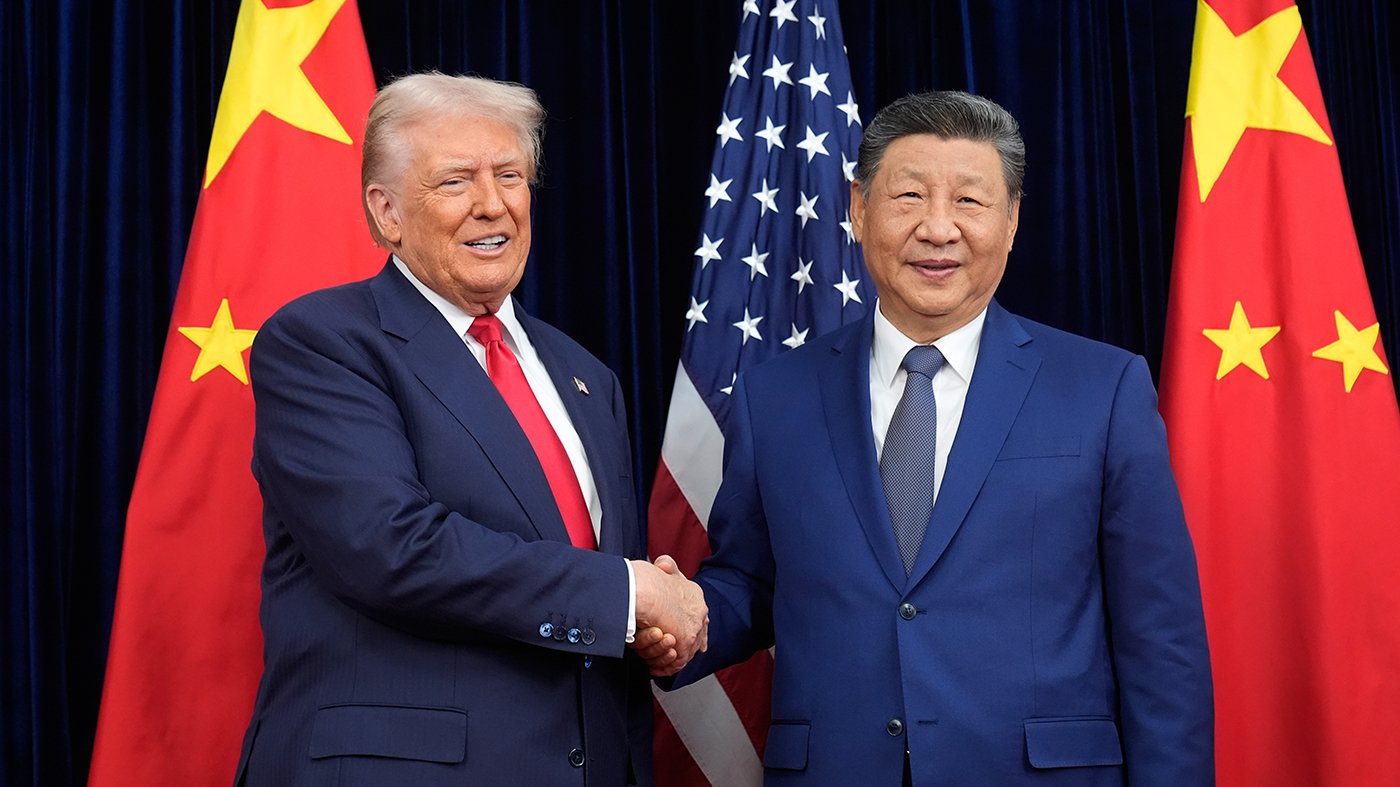
President Donald Trump heads to Beijing this week for a high-stakes summit with Chinese President Xi Jinping, but the ongoing U.S. war with Iran threatens to overshadow the talks. Originally scheduled for early April and postponed due to the conflict, the meeting now comes as progress on a Tehran deal appears to be slipping away.
Analysts say both sides are eager for the summit to proceed, but the Iran crisis has shifted the dynamic. “The priority is having the summit take place and ensuring U.S.-China relations are on stable footing,” said Alison Szalwinski, vice president at the Asia Group. “But Iran continues to loom.”
Strategic Disadvantage for Trump
The war has driven up gas prices globally, and the U.S. remains mired in a conflict that has blocked the Strait of Hormuz, through which 20% of the world’s oil flows. While the U.S. has inflicted heavy damage on Iranian forces, it has failed to reopen the strait, and Trump has repeatedly signaled a desire to end the fighting.
“The idea of an American president going to a summit with our foremost competitor after experiencing the most catastrophic strategic debacle in recent memory is striking,” said Suzanne Maloney, vice president and director of the Foreign Policy program at the Brookings Institution. “This changes the sense of U.S. ascendence.”
Some lawmakers have echoed that view, with critics arguing that Trump is terribly weakened as he heads into the talks.
China’s Calculated Leverage
Beijing has built up large reserves of oil and gas to weather the strait’s closure, and it remains the top importer of Iranian crude. China has ignored U.S. sanctions on Iranian oil, telling domestic refineries to flout the penalties and threatening countermeasures against businesses that comply. Xi has so far refused Trump’s requests to help reopen the strait.
“China is pleased to see the U.S. expend munitions in the Persian Gulf that could otherwise be used to defend Taiwan,” said Lyle Goldstein, director of Asia engagement at Defense Priorities. “But as the premier global trading power, China needs those straits open. The war damages the Chinese economy too.”
China is also using its influence with Iran selectively. Iranian Foreign Minister Abbas Araghchi met with Chinese Foreign Minister Wang Yi in Beijing, where Wang emphasized support for diplomacy. Szalwinski called this “classic Chinese restraint”—stepping in just enough to protect energy flows and regional stability without owning the problem.
U.S.-China Agenda: Modest Goals
The summit’s agenda includes Chinese access to U.S. technology, American purchases of Boeing jets and agricultural goods, the fentanyl crisis, artificial intelligence, and Taiwan. But experts caution against expecting breakthroughs. “Agricultural purchases, Boeing jets—all pretty unremarkable,” said Mira Rapp-Hooper, a visiting fellow at Brookings. “Not a grand bargain.”
Craig Singleton of the Foundation for Defense of Democracies described the expected deals as “beans, Boeings, and a Board of Trade, but not a breakthrough.” U.S. Trade Representative Jamieson Greer has proposed a board of trade to separate out product categories, but the broader tensions remain.
U.S. officials have oscillated between appealing to China’s self-interest and blunt criticism. Secretary of State Marco Rubio argued it’s in Beijing’s interest to secure freedom of transit through the strait, while Treasury Secretary Scott Bessent said on Fox News, “Iran is the largest state sponsor of terrorism, and China buys 90% of their energy, so they are funding terrorism.”
As Trump prepares to meet Xi, the Iran war has handed Beijing leverage on trade, energy, and security—a fact that will shape every exchange in Beijing this week.