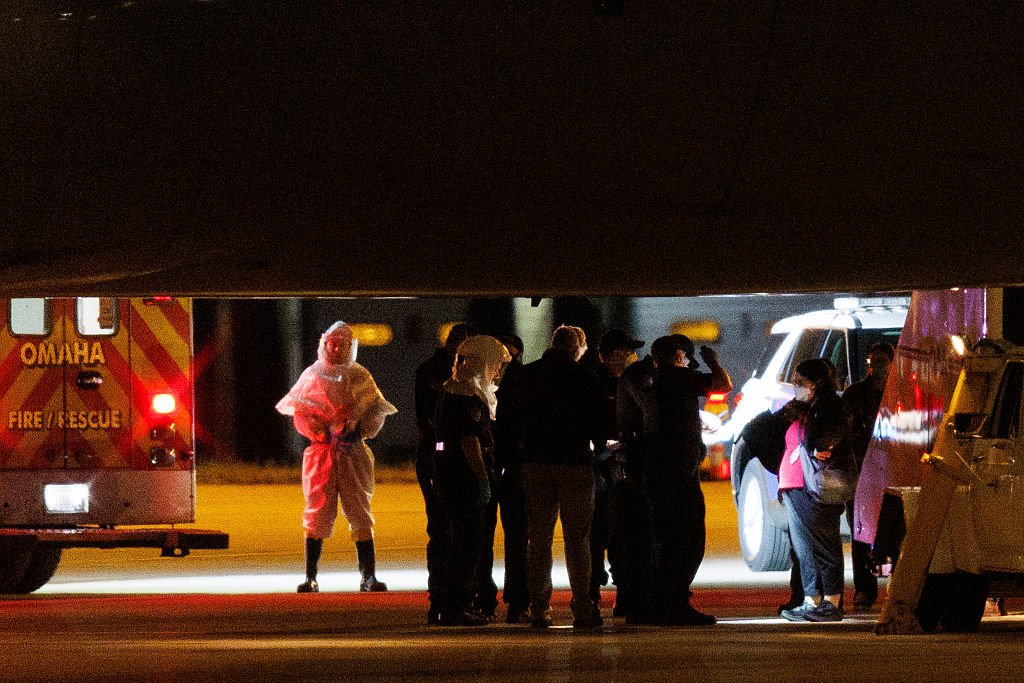
Eighteen individuals—17 Americans and one British national—arrived back in the United States on Sunday after being evacuated from the MV Hondius, a cruise ship grappling with a hantavirus outbreak. They are now in quarantine at facilities in Nebraska and Georgia, where health authorities are closely monitoring them for signs of the potentially deadly virus.
U.S. health officials disclosed late Sunday that one of the 17 American evacuees flown to Nebraska tested positive for hantavirus but shows no symptoms, while another passenger has experienced mild symptoms. These developments follow the earlier deaths of three individuals linked to the outbreak on the ship.

During a Monday morning press conference, officials emphasized that the risk of hantavirus spreading in the manner of COVID-19 in the United States remains extremely low. They assured the public that all necessary precautions are being taken to contain the virus and prevent further transmission.
Here is what you need to know about the situation.
Where Are the Evacuees Being Quarantined?
Sixteen of the passengers are now housed at the National Quarantine Center at the University of Nebraska, the only facility of its kind in the United States. They arrived overnight at Offutt Air Force Base in Omaha via a repatriation flight. This center has previously been used to treat patients with Ebola and, early in the COVID-19 pandemic, to isolate individuals exposed to that virus.
The remaining two evacuees are in quarantine in Georgia, though specific location details have not been released.
What Is Hantavirus and How Does It Spread?
Hantavirus is a rare but serious illness transmitted primarily through contact with rodent droppings, urine, or saliva. It is not known to spread from person to person in the same way as respiratory viruses like COVID-19. Health officials have stressed that the current outbreak is linked to environmental exposure on the ship, not human-to-human transmission.
As noted in a related report, experts have repeatedly stated that hantavirus is unlikely to spark a pandemic due to its limited transmission methods.
What Are the Symptoms and Treatment Options?
Symptoms of hantavirus infection can include fever, muscle aches, fatigue, and, in severe cases, difficulty breathing due to fluid buildup in the lungs. There is no specific cure or vaccine; treatment focuses on supportive care, such as oxygen therapy and intensive monitoring. The disease can be fatal in up to 40% of cases, but early medical intervention improves outcomes.
For more details on the medical response, see our coverage of the outbreak's treatment protocols.
What Is the Broader Risk to the Public?
Officials have been emphatic that the risk to the general public is negligible. The Centers for Disease Control and Prevention (CDC) is coordinating with state and local health departments to ensure all protocols are followed. Dr. Jay Bhattacharya, a prominent health policy expert, recently commented that hantavirus is "not COVID" and should not provoke panic, as highlighted in a separate interview.
The quarantine measures are precautionary, aimed at ruling out any possible secondary cases and reassuring the public that the government is taking the situation seriously.
What Happens Next?
The evacuees will remain under observation for the duration of the virus's incubation period, which typically ranges from one to eight weeks. Health officials will monitor for any symptoms and conduct follow-up testing as needed. The ship, the MV Hondius, remains out of service pending a full investigation by the cruise line and health authorities.
This incident has drawn renewed attention to the challenges of managing infectious disease outbreaks in confined settings like cruise ships, though experts maintain that hantavirus does not pose a systemic threat comparable to COVID-19.