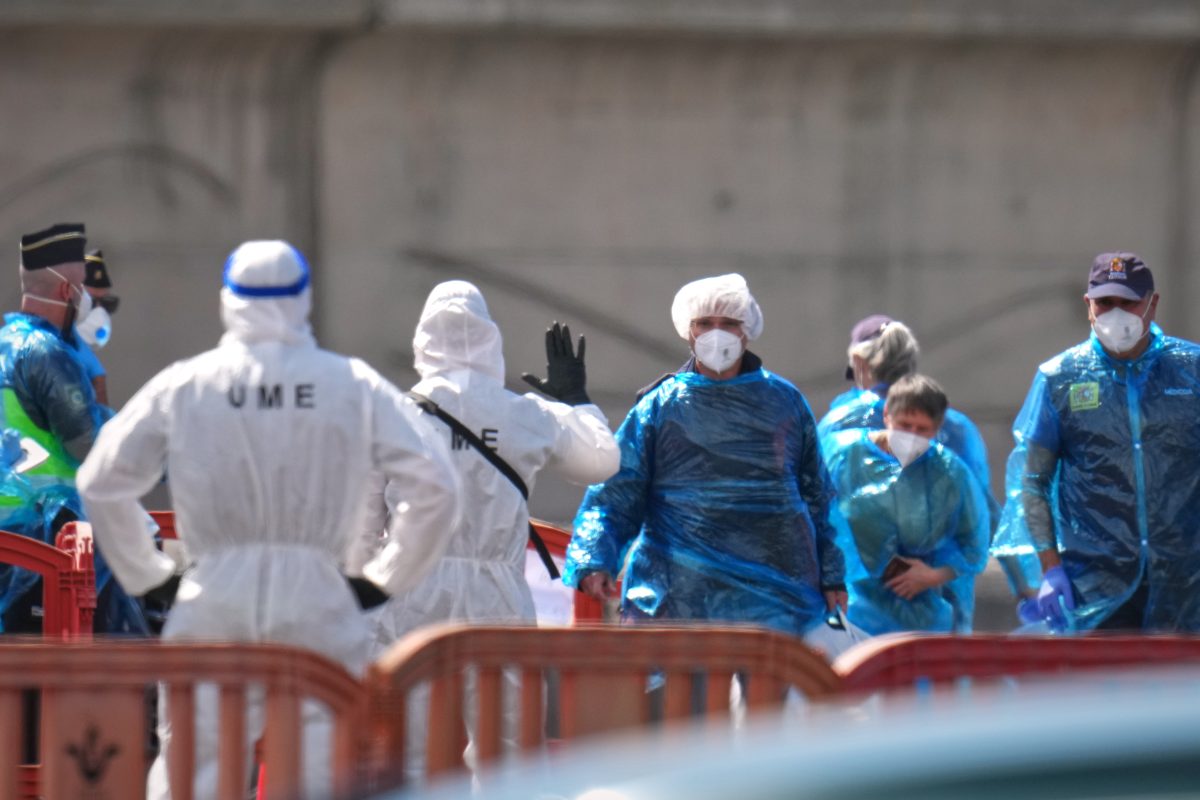
The sight of passengers in full protective gear evacuating the hantavirus-stricken cruise ship MV Hondius off Spain's Canary Islands over the weekend has stirred uneasy memories of the early COVID-19 pandemic. But U.S. and global health authorities are working to make clear: this outbreak is not the start of a new global crisis.
The evacuation, which began Sunday, involved coordinated repatriation flights for passengers of various nationalities. Spanish nationals departed first, followed by French and Canadian travelers, according to the Associated Press. A Dutch plane was arranged for German, Belgian, and Greek citizens, while a U.S. government aircraft landed Sunday evening to bring American passengers home.

To date, three people have died from the outbreak, and five infected passengers had previously left the ship. The more than 140 individuals still aboard showed no symptoms at the time of evacuation, but all are under quarantine. The American evacuees were flown to Offutt Air Force Base in Nebraska and then transferred to the National Quarantine Center at the University of Nebraska, according to the CDC. Contact tracing is also underway.
Despite the dramatic scenes, the CDC stated Friday that “the risk to the American public remains extremely low.” The World Health Organization echoed that sentiment last week. “This is not COVID, this is not influenza,” said infectious disease epidemiologist Maria DeJoseph Van Kerkhove during a press conference.
Van Kerkhove highlighted several critical differences between hantavirus and the coronavirus that caused the pandemic. COVID-19 was a novel virus—one the world had never seen before. Hantavirus, by contrast, has been known “for quite a while,” she noted. The United States has tracked hantavirus cases since a 1993 outbreak in the Four Corners region, where more than 50 cases were reported and about 30 people died. Through 2023, the CDC has confirmed nearly 900 cases nationwide—a fraction of the millions of COVID-19 cases recorded during the pandemic.
Another key distinction lies in transmission. Hantavirus is typically spread through contact with rodents or their urine and droppings, not through human-to-human transmission. In the U.S., deer mice are the primary carriers. The strain involved in the cruise ship outbreak, Andes virus, can spread from person to person, but the CDC notes that such transmission is usually limited to direct physical contact, exposure to body fluids, or prolonged time in close, enclosed spaces.
“We haven’t had huge person-to-person spreads of hantavirus infection ever before, and there’s no reason to suspect a huge outbreak from this case at this point,” Steven Bradfute, an associate professor and associate director of the Center for Global Health at the University of New Mexico Health Sciences Center, told the AP.
CDC acting Director Dr. Jay Bhattacharya also stressed that asymptomatic individuals cannot transmit the virus. The Andes virus is more commonly associated with rodent contact in South America, not widespread human outbreaks.
To prevent infection, public health experts recommend minimizing contact with rodents and their droppings, using protective gloves, and cleaning affected areas with a bleach solution. They caution against sweeping or vacuuming droppings, which can aerosolize the virus.
As the repatriation and quarantine efforts continue, health officials are working to ensure that the hantavirus outbreak remains contained—and does not spiral into the next global health emergency.