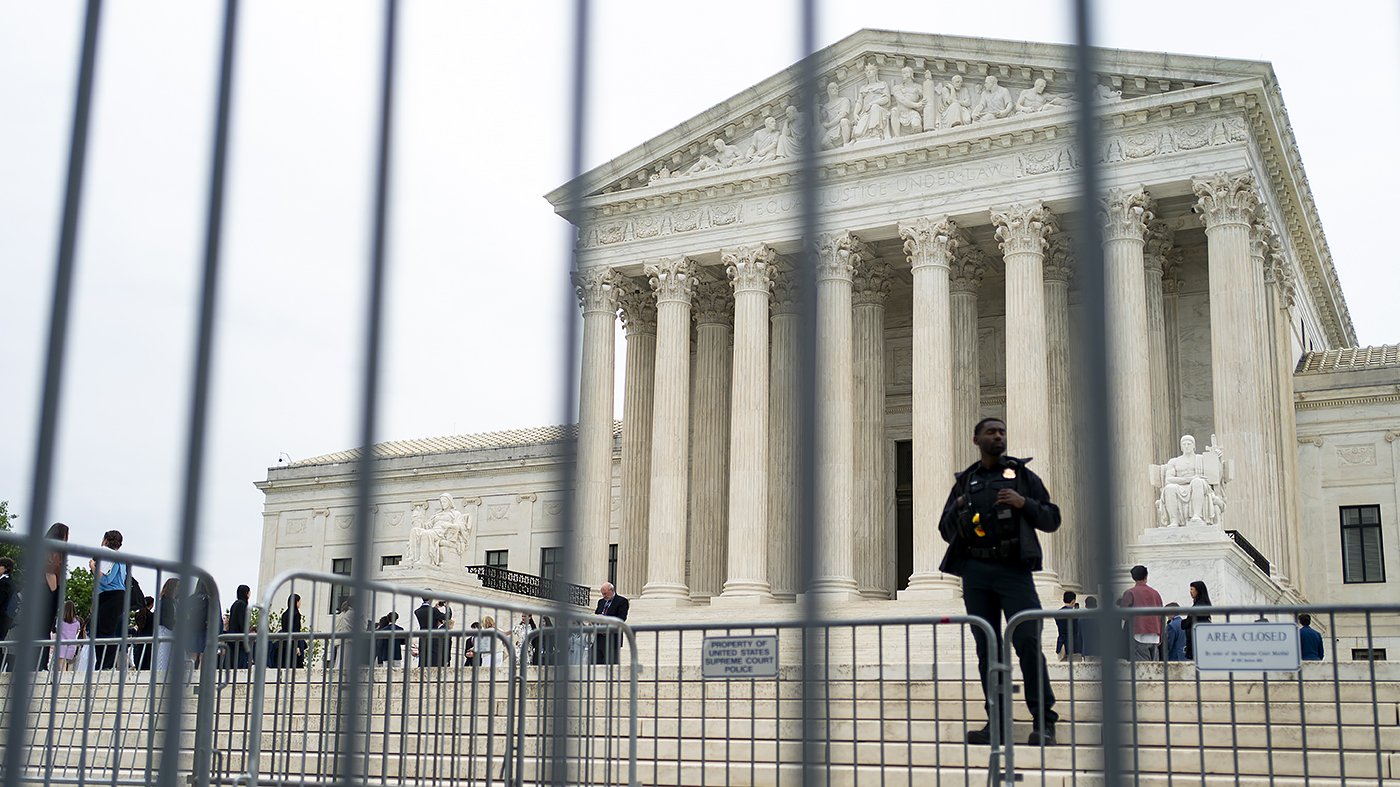
The Supreme Court on Monday cleared the way for Alabama Republicans to implement a congressional map that would dismantle one of the state's two majority-Black districts, a move that could boost GOP chances in the midterm elections. The decision lifts a lower court's injunction, potentially allowing the contested map to take effect for upcoming primaries.
The order, issued without public explanation from the majority, drew sharp dissents from the court's three liberal justices. Justice Sonia Sotomayor, joined by Justices Elena Kagan and Ketanji Brown Jackson, argued that the map should remain blocked because the lower court had found it violated the Fourteenth Amendment by intentionally diluting Black voting power—a finding independent of the Voting Rights Act ruling that the majority cited.
“Vacatur is thus inappropriate and will cause only confusion as Alabamians begin to vote in the elections scheduled for next week,” Sotomayor wrote in her dissent.
The action follows the Supreme Court's recent blockbuster decision narrowing the Voting Rights Act, which had previously been used to require additional majority-minority districts. That ruling, handed down in a Louisiana case, has emboldened Republican-led states to redraw maps with fewer seats where minority voters can elect their preferred candidates. As Southern GOP states rush to redraw maps after the Supreme Court ruling, Alabama is now seeking to revert to a map it passed in 2023 after an earlier version was struck down for violating the Voting Rights Act.
The 2023 map did not create a second majority-Black district, leading a three-judge panel to reject it and impose a court-ordered map that is currently in use. Alabama argues that the Supreme Court's recent ruling changes the legal landscape, and the high court's order gives the state an opportunity to persuade the lower court to adopt its preferred design.
If implemented, the Republican-drawn map would eliminate the district held by Democratic Rep. Shomari Figures, giving the GOP a stronger chance to flip that seat in the midterms. Alabama GOP clears path for new primaries if court lifts voting map ban, signaling the party's readiness to move quickly once legal barriers are removed.
The decision adds to a flurry of redistricting activity as states race to finalize maps before primary deadlines. Earlier Monday, Virginia Democrats filed an emergency appeal with the Supreme Court seeking to restore their own redistricting plan after a state court blocked it. That case, Virginia Democrats take redistricting fight to Supreme Court after state court blocks map, underscores the nationwide battle over electoral maps ahead of the 2026 midterms.
In her dissent, Sotomayor criticized the majority for discarding the lower court's detailed findings of discriminatory intent without a sound basis. “The Court today unceremoniously discards the District Court's meticulously documented and supported discriminatory-intent finding and careful remedial order,” she wrote, warning of the confusion that will follow as Alabama voters head to the polls.
The liberal justices' protest highlights a broader divide over the scope of the Voting Rights Act and the Constitution's protections against racial gerrymandering. With the Supreme Court's conservative majority now narrowing those protections, advocates warn that minority representation could erode across the South. Supreme Court conservatives fail Barrett's own test on voting rights, a recent analysis noted, as the court's rulings continue to reshape the political landscape.
For now, Alabama Republicans are poised to move forward with a map that critics say undermines decades of progress in ensuring fair representation for Black voters. The lower court is expected to reconsider the case in light of the Supreme Court's order, with the midterm elections looming.