Republican-led states across the South are accelerating efforts to redraw congressional maps following a landmark Supreme Court decision, aiming to solidify the GOP's grip on the House majority in the upcoming midterms. The ruling, which struck down Louisiana's map as an unconstitutional racial gerrymander, has reignited a redistricting arms race that threatens to reshape the electoral landscape.
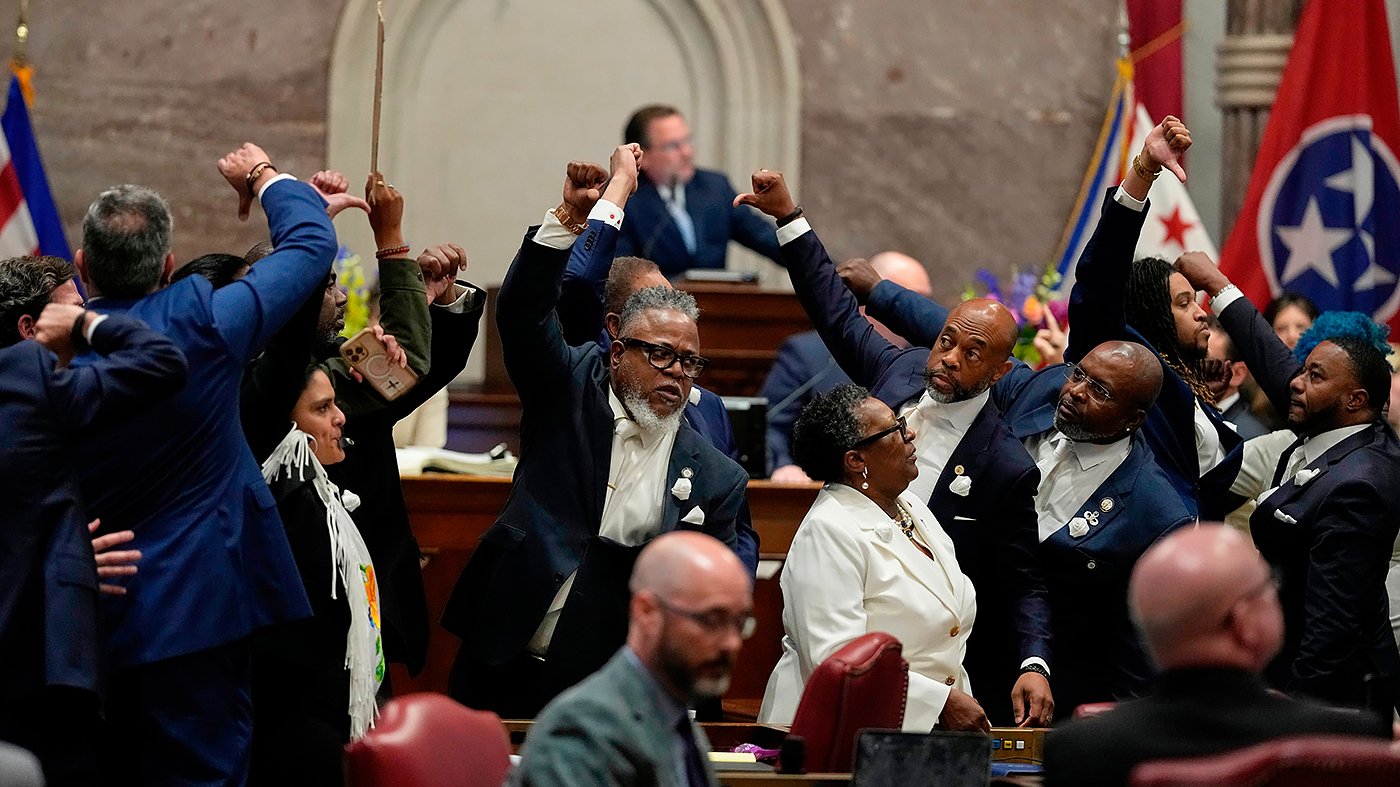
Tennessee Republicans approved a new map on Thursday that could unseat the state's lone House Democrat, capitalizing on the high court's green light for states to revise boundaries ahead of the 2026 elections. The move follows the justices' decision to reject Louisiana's addition of a second majority-Black district, a blow to Section 2 of the Voting Rights Act that has long enabled minority representation.

Virginia Democrats suffered a parallel setback when the state's Supreme Court invalidated a redistricting plan approved by voters last month, which would have expanded the Democratic delegation by four seats. That ruling, covered in our earlier report, underscores the partisan tug-of-war over district lines.
Louisiana officials have already delayed House primaries from May 16 to July 15, citing the need for new maps. A state Senate committee began public hearings on redistricting Friday, with a full legislative vote expected next week. Critics argue the delay is unnecessary. “There are very real constitutional problems with stopping an election in progress,” said Justin Levitt, a constitutional law professor at Loyola Law School. “In Louisiana, the governor declared an emergency only for some races, which shows there isn’t one.”
Alabama Republicans passed legislation Friday directing the governor to schedule new primaries under a GOP-friendly map, contingent on a federal court lifting an injunction that currently protects a district with a near-majority Black voting-age population. That district elected Rep. Shomari Figures (D-Ala.) in 2024. The bill, which we reported on earlier, would allow the governor to bypass the May 19 primary date for certain districts.
Republican analysts remain uncertain whether courts will comply. Decision Desk HQ chief elections analyst Geoffrey Skelley called it “up in the air.” The GOP hopes to target Figures's seat and create another pickup opportunity in November, but the effort has sparked fierce resistance from state Democrats and Black lawmakers. Protesters outside the Alabama Statehouse chanted “fight for democracy” and “down with white supremacy,” according to the Associated Press.
The redistricting battles reflect a broader partisan scramble to minimize losses and maximize gains as the midterms approach. “I think it gets worse before it gets better,” Levitt warned, citing the tit-for-tat that began with a Trump-backed map in Texas last year. “We haven’t seen the worst of it yet, and many states feel enormous pressure to join the race to the bottom.”
Any changes to maps and primary dates months before November pose significant logistical hurdles for candidates, election officials, and voters. The Louisiana decision has supercharged new plans across the South, injecting more uncertainty into an already turbulent election cycle.