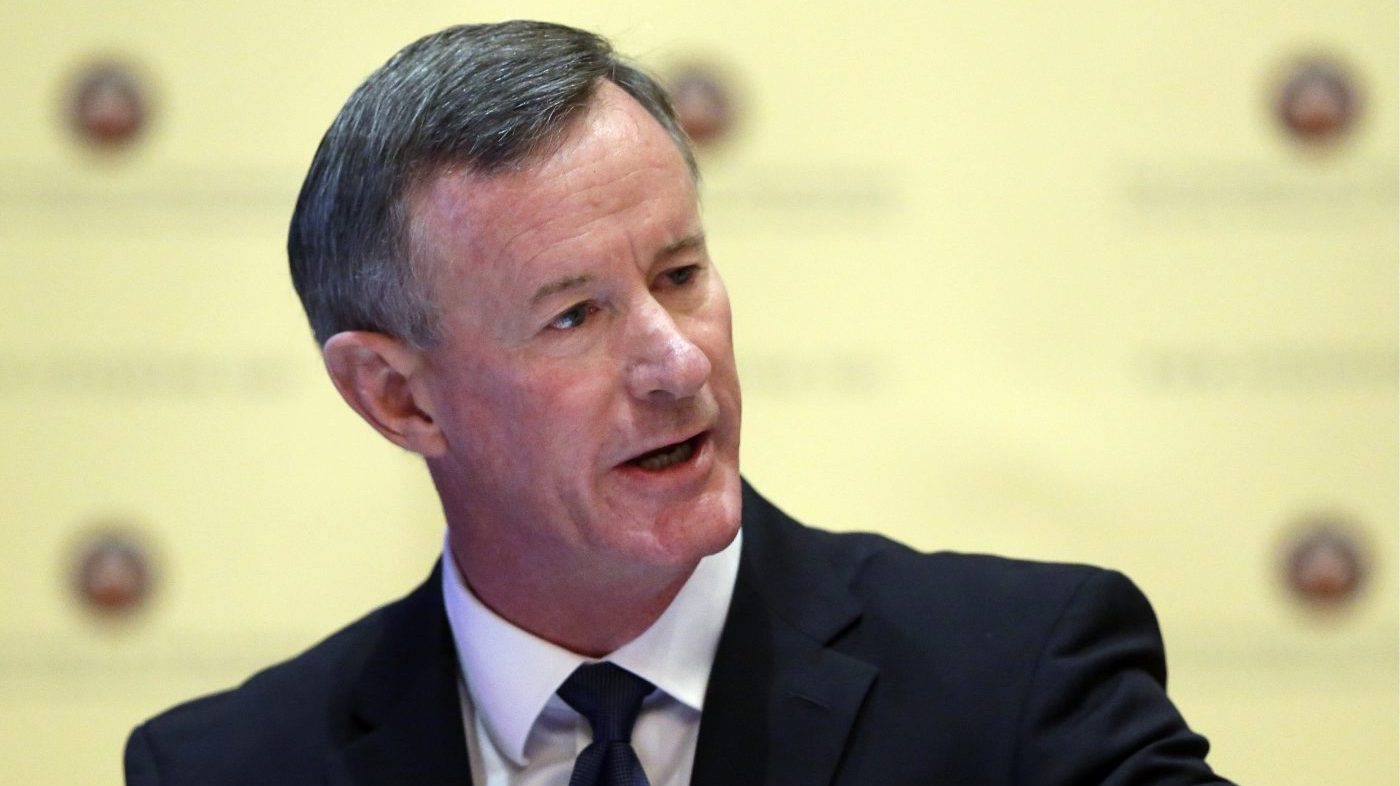
Retired Adm. William McRaven, the former head of U.S. Special Operations Command under President Obama, delivered a blunt assessment Sunday of the U.S.-Iran conflict, arguing that America has gained little from the war. Speaking on ABC's This Week with Martha Raddatz, McRaven stated, “I don’t think [Iran] had a nuclear weapon. I don’t think it was… coming about imminently.” He added, “But the fact of the matter is we’re not really that much better off now than we were before February 28th.”
The war began on February 28 when the U.S. and Israel launched coordinated strikes against Iran. McRaven acknowledged military successes—“Yes, we have sunk their navy. Yes, we have destroyed their air force. Yes, we have taken out a lot of their leadership”—but concluded, “I’m not sure we’re a lot better off.”
The Trump administration justified the offensive by claiming Iran was on the verge of developing a nuclear weapon and refusing to curb its ballistic missile program. The initial strikes killed numerous Iranian officials, including Ayatollah Ali Khamenei, who was succeeded by his son, Mojtaba Khamenei. Remaining leaders, including Foreign Minister Abbas Araghchi and Parliament Speaker Mohammad Bagher Qalibaf, have resisted U.S. demands for nuclear restrictions.
Hostilities flared again this week after a short-lived U.S. effort to escort ships through the Strait of Hormuz. While administration officials insisted the ceasefire remained intact, McRaven disagreed: “The fact of the matter is, when you’re shooting at each other, then you no longer have a ceasefire.”
McRaven proposed a path forward: President Trump should lift the naval blockade on Iranian ports in exchange for Iran opening the Strait of Hormuz and returning to negotiations. The Islamic Republic News Agency reported Sunday that Iran had submitted its response to the U.S. peace proposal. The White House has not commented.
The administration’s proposal, reported by Axios, calls for an end to the war and a 30-day negotiation period covering the Strait of Hormuz, Iran’s nuclear program, and sanctions relief. But McRaven dismissed that timeline as unrealistic. “The fact is… it took over two years to negotiate the JCPOA,” he said, referencing the 2015 nuclear deal. “So this idea that somehow we will negotiate… a very challenging nuclear deal with the Iranians, I think 30 days is way too compressed of time.”
McRaven’s critique echoes other retired military leaders. Retired General Anderson has condemned Trump’s Iran threats as incompetent, while Retired General Keane forecasts resolution within two months. The debate now centers on whether the administration can secure a deal that outdoes the JCPOA, as Trump’s Iran gambit faces growing skepticism.