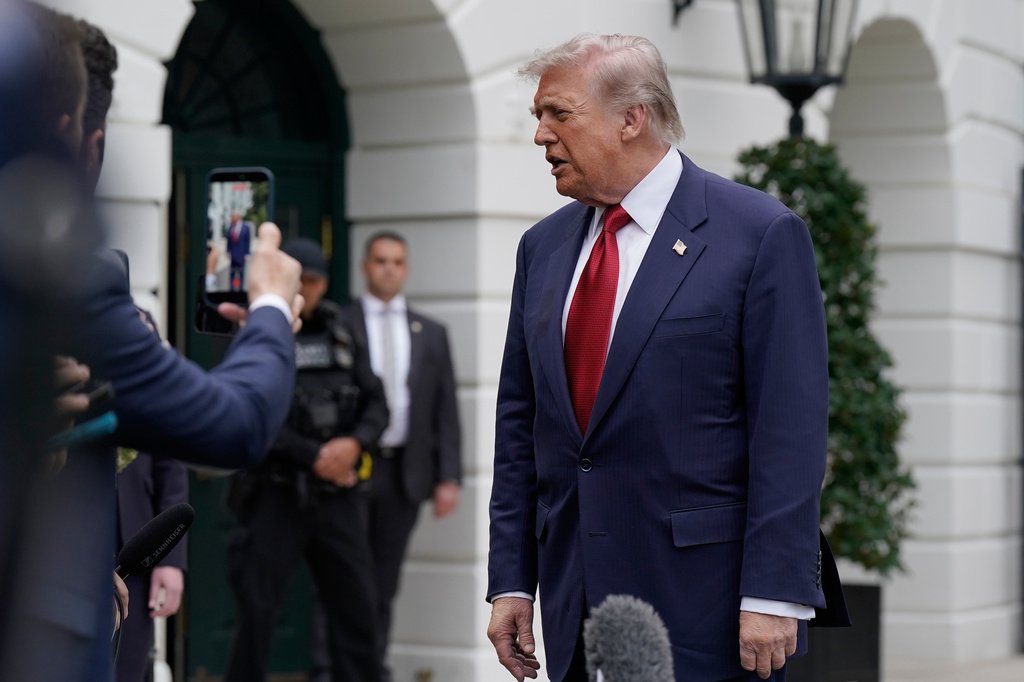
For decades, Republicans have painted Democrats as socialists. But a growing chorus of critics now argues that President Donald Trump has effectively abandoned the party's conservative foundation and embraced a brand of government intervention that looks a lot like socialism—only with a GOP label.
In a recent analysis, the libertarian Cato Institute catalogued multiple instances where Trump has used executive power to interfere in private business deals, impose conditions on corporate mergers, and demand revenue from tech firms—moves that would have been anathema to earlier Republican leaders like Ronald Reagan.
“Trump has supersized government to satisfy his thirst for power, fame, and greater wealth,” the analysis states. “He has weaponized government to harm individuals, groups, and nations he opposes.”
From Free Markets to Presidential Fiat
Trump’s approach marks a sharp departure from the party’s historical embrace of free-market capitalism and limited government. Reagan’s 1981 Inaugural Address declared “government is not the solution to our problem; government is the problem.” Trump, by contrast, has expanded presidential powers, imposed sweeping tariffs, and inserted himself into corporate decisions.
Among the examples cited: Trump required Intel to hand over 10 percent of its stock in exchange for $9 billion in federal grants. He approved Nippon Steel’s $14.9 billion purchase of U.S. Steel only after securing veto power over major company actions. And he demanded AI chipmakers Nvidia and AMD give the U.S. government 15 percent of revenue from chip sales to China as a condition for export licenses.
Senator Rand Paul (R-Ky.) objected to the Intel deal, warning: “If conservatives endorse this now, they hand Democrats a blueprint to expand government ownership over the private sector later. Socialism is literally government control of the means of production.”
Weaponizing the Presidency
Trump has also used his office to pressure media companies, filing defamation lawsuits against ABC and CBS that resulted in settlements totaling $32 million—money directed toward a Trump presidential library and his legal fees. He continues to pursue similar suits against The Wall Street Journal, The New York Times, CNN, and the BBC. While legal experts say the cases are weak, they saddle news organizations with heavy defense costs.
Federal Communications Commission Chairman Brendan Carr has backed Trump’s threats to revoke broadcast licenses for stations airing unfavorable coverage of the Iran conflict or talk shows the president dislikes. Such actions, critics argue, flout the First Amendment’s guarantee of a free press.
“You expect such actions in a socialist or communist dictatorship—not in America,” the analysis notes.
A Political Chameleon
Trump’s ideological flexibility is well documented. He has switched party registration between Democrat and Republican, was an independent, and briefly sought the Reform Party’s presidential nomination in 2000. “Trump is ideologically fluid and embraces whatever positions he thinks will serve his self-interest, ignoring the interests of the American people,” the analysis says. “He is an opportunist above all else.”
A Gallup poll from September 2024 found 57 percent of Americans view socialism negatively. Democrats see an opening to position themselves as defenders of free enterprise and constitutional freedoms against what they call Trump’s “authoritarian socialism.”
The party hopes to capitalize on this in the upcoming November midterms, arguing that retaking one or both chambers of Congress is essential to check Trump’s radical policies. “If voters give Democrats control of Congress, Trump will be limited in the damage he can cause,” the analysis concludes.