Investigative journalist Ross Coulthart has indicated that the Trump administration could release another tranche of classified UAP files as early as this week, building on a series of disclosures that began last week. Speaking to NewsNation, Coulthart said the next drop might come Friday, following a pattern established by the White House's ongoing transparency initiative.
“As early as the end of this week, we might see another drop this coming Friday as happened last week,” Coulthart said. “Certainly told that the videos have been requested by Rep. Anna Paulina Luna.” The Florida Republican has been a vocal advocate for declassifying government records on unidentified anomalous phenomena, or UAPs.
The interagency effort, dubbed PURSUE—short for the Presidential Unsealing and Reporting System for UAP Encounters—aims to centralize declassified UAP materials from across the federal government. President Trump pledged in February to begin releasing UFO and UAP files, framing the move as a break from past administrations that he says sought to obscure the issue.
“While past administrations sought to discredit or dissuade the American people, President Trump is focused on providing maximum transparency to the public, who can ultimately make up their own minds about the information contained in these files,” a Pentagon press release stated. The release added that although all files have been reviewed for security, many have not yet been analyzed for resolution of any anomalies.
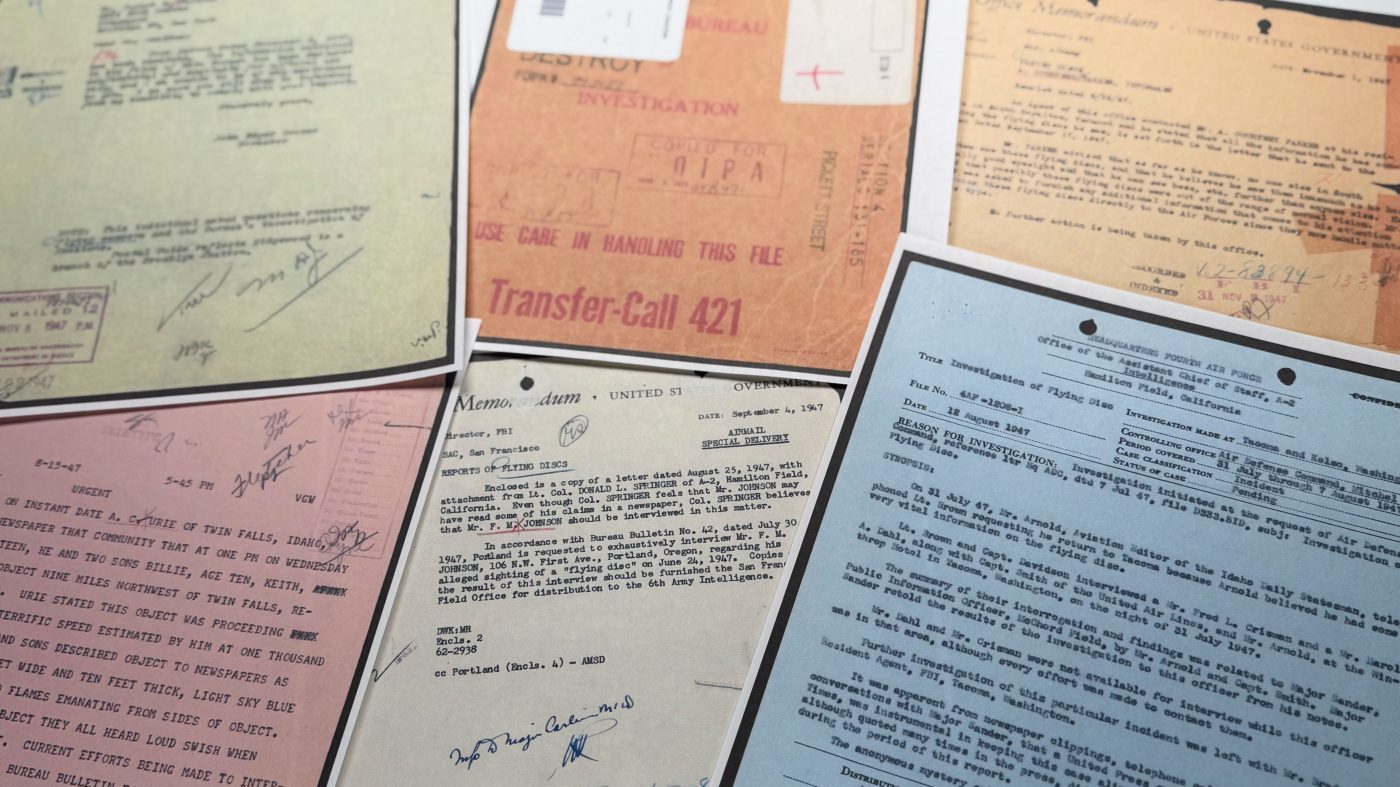
So far, the released files include images from U.S. military reports on UAPs and archival imagery from NASA’s Apollo 12 and 17 missions, showing unidentified objects above the lunar horizon. The Pentagon has said that declassified UAP videos, photos, and source documents from across the entire government will be stored in a single repository, accessible without special clearance.
Among the newly released videos is a 1-minute, 46-second infrared recording from U.S. Central Command (Centcom), captured in 2013. It shows an eight-pointed star-like object that moves across the sensor’s field, leaving a visible trail. Another Centcom video from 2020 shows nine seconds of infrared footage with an area of contrast entering from the bottom left and exiting at the top left. A 2023 video, lasting 2 minutes and 57 seconds, captures a UAP flying near the ocean surface and executing multiple 90-degree turns at roughly 80 miles per hour. Three additional 2024 videos depict a “misshapen and uneven ball of white light” with a “light/glare halo effect.”
NASA contributed several images from the Apollo 12 and 17 missions, with highlighted areas showing unexplained phenomena above the lunar horizon. The files also include audio from the 1965 Gemini 7 mission, where astronauts are heard reporting a “bogey at 10 o’clock high,” clarifying it is not the booster, and noting “hundreds of little particles.”
The ongoing release has sparked renewed public interest in UAPs, particularly among whistleblowers and transparency advocates. For context, the Trump administration’s push for disclosure has drawn comparisons to other recent transparency efforts, such as the administration's broader UAP file dump. Meanwhile, some critics, including astrophysicist Neil deGrasse Tyson, have warned that the files may ultimately disappoint, as he called for real alien evidence.
The Pentagon has not confirmed the exact timing of the next release, but Coulthart’s sources suggest it could come as soon as Friday. With Congress and the public pressing for more information, the administration’s commitment to transparency remains under scrutiny.