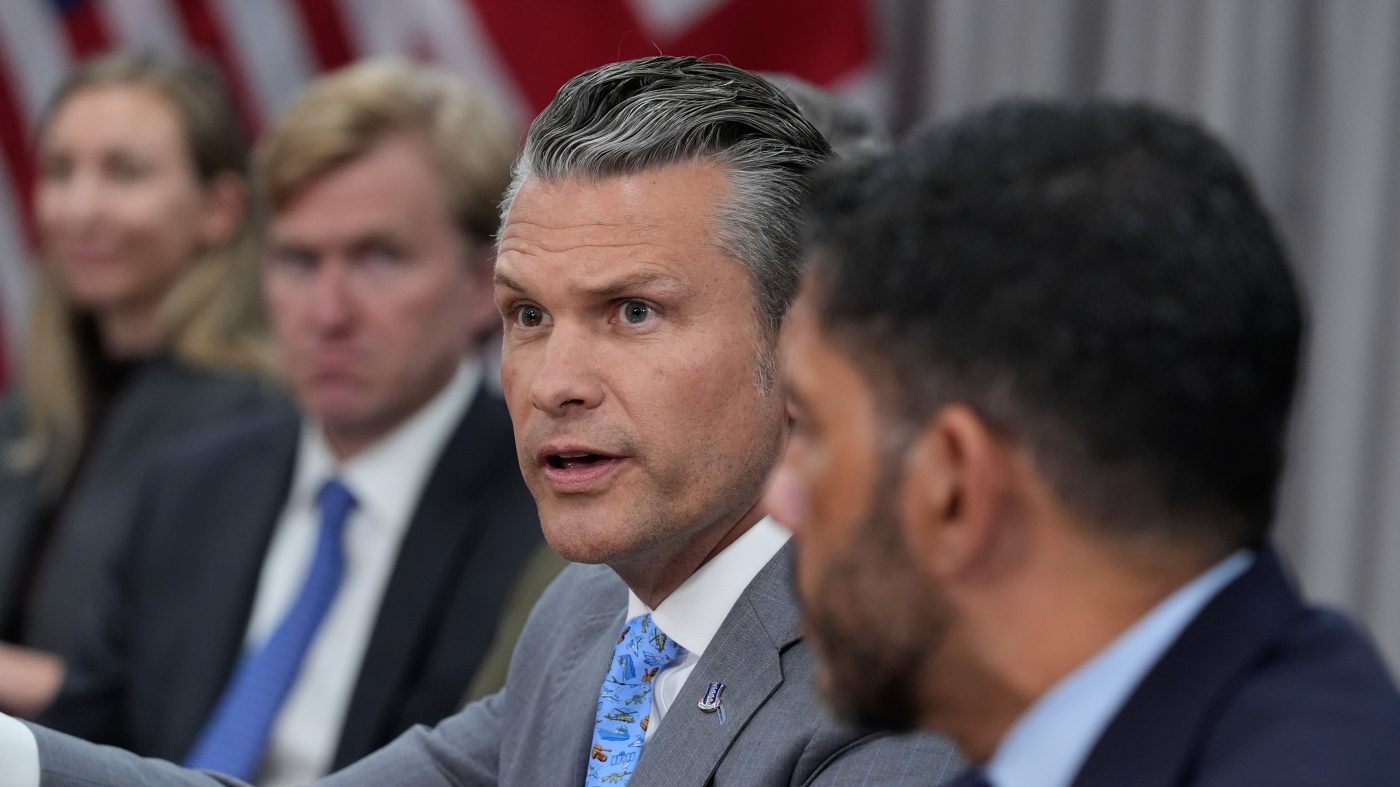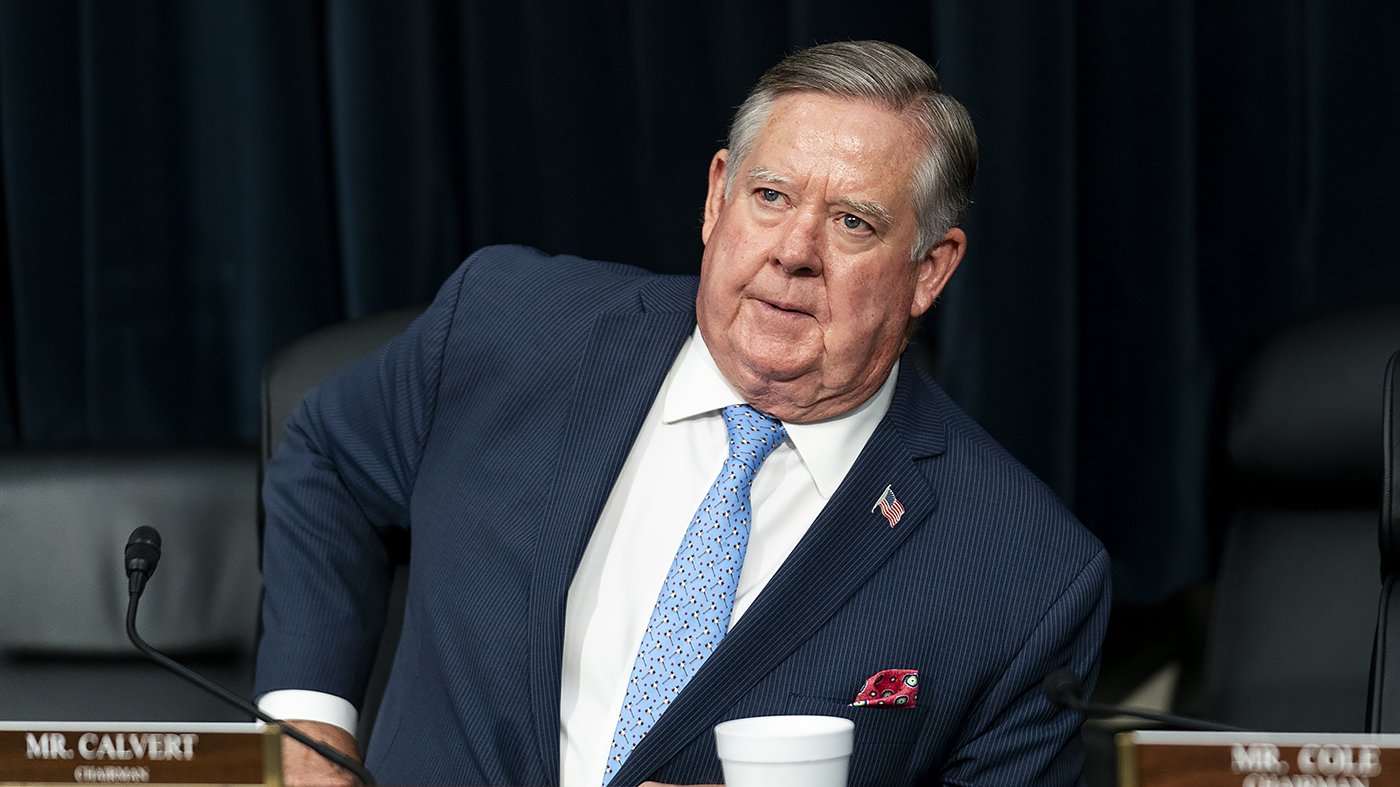
Top Republicans on the House Appropriations Committee voiced sharp doubts Tuesday about the Pentagon's $1.5 trillion budget proposal, as Congress awaits a separate supplemental request that could total tens of billions to fund the ongoing war in Iran.
Rep. Ken Calvert (R-Calif.), chair of the House Appropriations defense subcommittee, pressed Defense Secretary Pete Hegseth on the administration's plan to fund roughly $1 trillion through the regular appropriations process while seeking an additional $500 billion via supplemental requests. Calvert demanded clarity on how the spending translates into real military gains.
“The subcommittee needs to understand how the resources requested in this budget translates into real, measurable improvements in warfighting capability,” Calvert said during a hearing. He added that he has “serious concerns” about the request, noting, “Questions persist about whether we are building the depth and reliance required for a high-end conflict.”
Hegseth defended the proposal as “a fiscally responsible budget, and it is a warfighting budget.” He argued that the administration inherited a defense industrial base “hollowed out by years of America last policies, resulting in a diminished capability and capacity to project strength.” The secretary acknowledged the political realities of the budget process, saying, “There's a reality in this town of what can get done and how it gets done.”
Lawmakers are also waiting on a reported $80 billion to $100 billion supplemental request to cover Iran war costs, including munitions replenishment. Calvert urged the administration to deliver it “sooner rather than later, so we can get to work.” He asked Hegseth for a timeline, but the secretary declined, saying the Pentagon is “well aware of all of those dynamics.” Hegseth downplayed concerns about depleted munitions stockpiles, calling them “foolishly and unhelpfully overstated,” and insisted, “We know exactly what we have, we have plenty of what we need.”
The cost of the Iran conflict, now in its eleventh week, continues to rise. Pentagon comptroller Jules Hurst told the subcommittee that Operation Epic Fury's estimated cost has climbed to $29 billion, up from $25 billion two weeks ago, due to “updated repair and replacement of equipment … and also just general operational costs.”
House Appropriations Committee Chair Rep. Tom Cole (R-Okla.) also raised concerns about using reconciliation to fund the Pentagon next fiscal year. “I don't have any concerns about the amount… I am worried about the ability to sustain that number through the reconciliation process, at some point the money disappears,” Cole said.
Democratic Rep. Betty McCollum of Minnesota, the subcommittee's ranking member, opened the hearing by demanding a detailed breakdown of Iran war costs and how the Pentagon would use the budget increase. She noted that lawmakers have “asked several times for a complete update on ammunition levels, and it has not been provided.” McCollum also asked whether the administration had a “Plan B” to scale back operations against Iran. Hegseth declined specifics, saying, “We have a plan to escalate if necessary. We have a plan to retrograde if necessary. We have a plan to shift assets.”
The subcommittee is scheduled to formally consider the defense budget and supplemental request on June 11. For more context on the tensions surrounding Hegseth's leadership and Pentagon spending, see our report on the Hegseth-Kelly feud exposing weapons depletion. Meanwhile, the political battle over the budget continues, as Schumer leads Democrats in opposing a $1 billion Trump ballroom.