President Trump's sudden order to withdraw 5,000 U.S. troops from Germany has failed to pressure European nations into joining the American-led war in Iran or assisting in reopening the Strait of Hormuz. The move, announced amid a heated clash with German Chancellor Friedrich Merz, has instead hardened Europe's resolve to bolster its own defense rather than submit to Washington's demands.
Allies, frustrated by Trump's repeated threats to pull U.S. forces from the continent and stung by the economic consequences of the Iran conflict, have largely continued business as usual, according to experts and officials. Jörn Fleck, senior director of the Europe Center at the Atlantic Council, said Europeans are seeking ways to contribute to a broader settlement for the Strait of Hormuz out of self-interest, not because of the troop reduction. “They’re not being impacted by the troop withdrawal from President Trump,” he noted.
U.S. Military Footprint in Europe
The United States maintains its largest European troop presence in Germany, with roughly 36,000 service members, including at Ramstein Air Base—the headquarters for U.S. Air Forces in Europe. Italy, Spain, the United Kingdom, and Poland also host significant American forces. These bases serve as logistical hubs for operations beyond the continent, including the Iran war, and act as a deterrent against Russia.
Trump, angered that NATO allies have refused to allow use of their bases or airspace for the Iran campaign and have not sent ships to help clear the Strait of Hormuz, has labeled the countries “cowards.” Earlier this month, he threatened to remove troops from Spain and Italy, accusing Madrid of being “absolutely horrible” and Rome of providing “no help.” Both nations have denied U.S. military aircraft involved in the Iran war access to their facilities.
Measured European Response
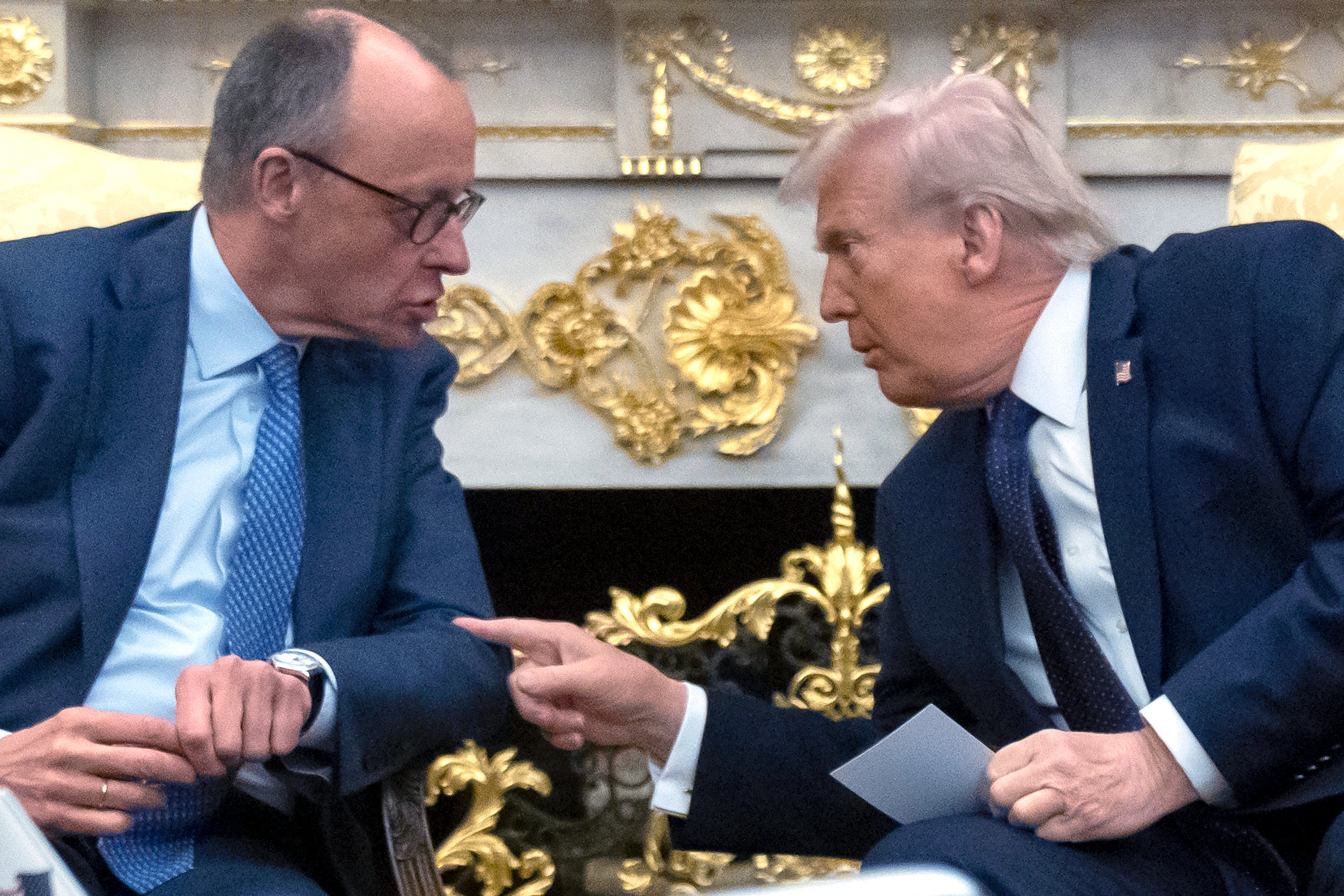
After Merz called the war “ill-considered” and said the U.S. was “being humiliated by the Iranian leadership,” Trump retaliated by announcing the reduction in Germany, with hints of further cuts. The European reaction has been muted rather than conciliatory. Fleck observed that German officials expected such a move and are focused on stepping up their own capabilities. “It’s a relatively small number of U.S. troops, and they will continue to step up themselves,” he said, adding that beneath the calm lies real frustration.
Germany, along with the rest of Europe, has been steadily increasing defense spending, wary of Trump's commitment to NATO. Last month, Berlin released its first military strategy since World War II, naming Russia as the primary threat and aiming to build the continent’s strongest army by 2039. Fleck argued the troop withdrawal will only “reinforce European determination” to reduce vulnerabilities and advance sovereignty.
NATO and Finnish Perspectives
NATO spokeswoman Allison Hart said the alliance is working to understand the U.S. decision, which she said “underscores the need for Europe to continue to invest more in defense.” Finnish President Alexander Stubb urged calm, insisting the U.S. will not leave Europe entirely. “If they want to project their power into regions like the Middle East, Asia, Africa, they need to have a solid foundation here,” he told Italian outlet Corriere della Sera. Stubb also rejected the idea that Europe would be defenseless without U.S. forces, stating, “If we can defend ourselves [against Russia], NATO can do it too.”
Secretary of State Marco Rubio downplayed the withdrawal, noting it affects less than 14 percent of U.S. troops in Germany and returns levels to those of 2022. He stressed that Trump has not decided on further reductions but acknowledged the tension: “If one of the main reasons why the U.S. is in NATO is the ability to have forces deployed in Europe that we could project to other contingencies, and now that’s no longer the case—at least when it comes to some NATO members—that’s a problem.”
The plan has drawn bipartisan criticism in Congress. The chairs of the House and Senate Armed Services committees issued a joint statement condemning the drawdown, warning it weakens American leverage. As the Iran war strains the job market and midterm prospects, Trump’s strategy appears to be backfiring, pushing Europe closer to self-reliance rather than compliance.