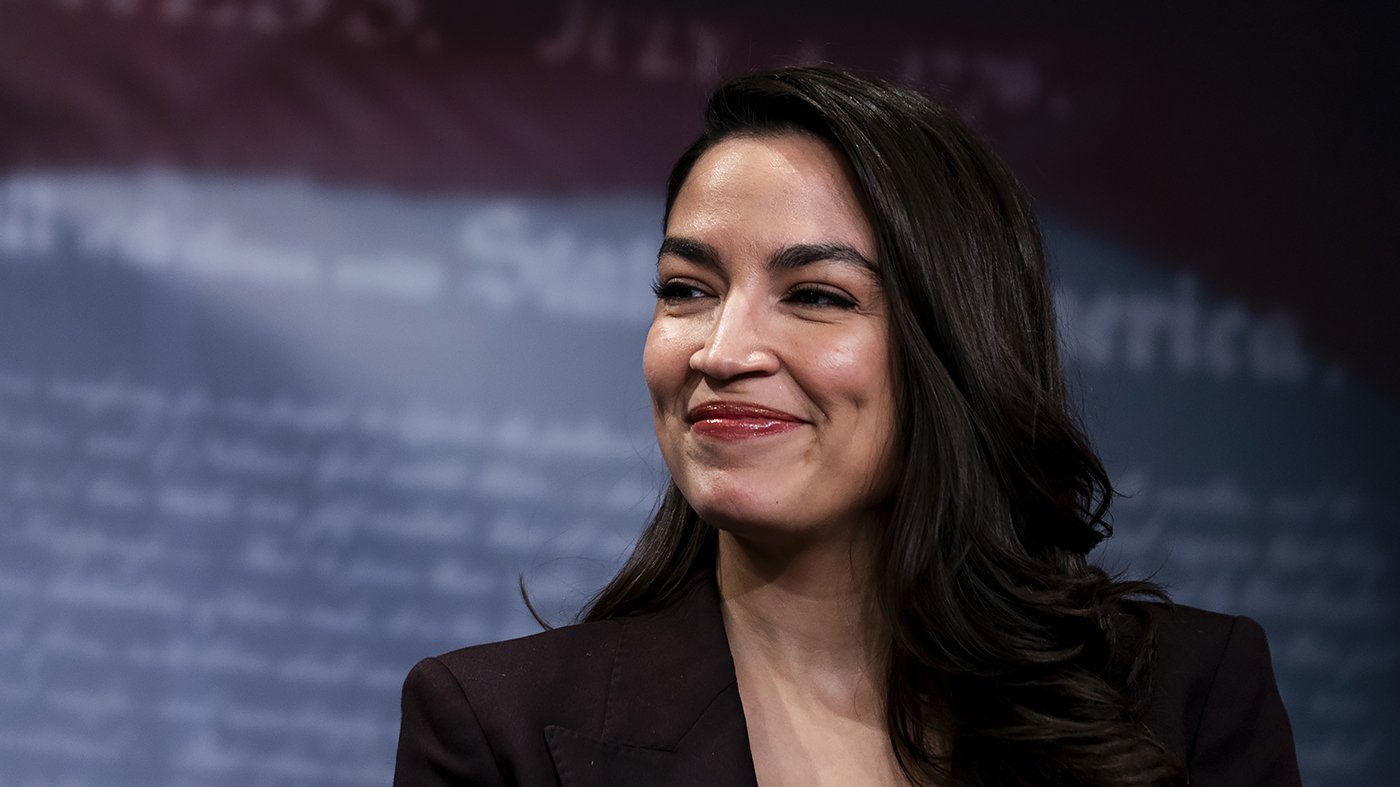
Rep. Alexandria Ocasio-Cortez (D-N.Y.) declined to rule out a White House bid during a recent conversation with Democratic strategist David Axelrod in Chicago, sparking fresh speculation about her political future.
When Axelrod pressed her on whether she harbors presidential ambitions, Ocasio-Cortez pushed back against what she described as a narrow, “positional” view of her goals. “People assume my ambition is a title or a seat,” she said. “My ambition is way bigger than that.”

The New York progressive elaborated: “My ambition is to change the country. Presidents come and go… elected officials come and go. But single-payer healthcare is forever.”
The exchange quickly reverberated through Democratic circles, reigniting debate over whether Ocasio-Cortez—once seen as a niche left-wing figure—could emerge as a serious contender in the 2028 presidential race. Democratic strategist Joel Payne noted that she “spoke with the confidence of someone who understood the power of their voice nationally and the knowledge that she has the option to mount a national campaign should she ever choose to do that.”
Payne added that Ocasio-Cortez is “going to walk into a presidential race, if she chooses to, with 20 percent of the base of the Democratic Party feeling good about her.” Another strategist echoed that sentiment, pointing to her built-in grassroots enthusiasm and fundraising potential as advantages most candidates lack.
The conversation underscores a broader identity crisis within the Democratic Party, which has been searching for direction since its 2024 defeats. While some establishment figures worry Ocasio-Cortez could be too polarizing for a national race, others see her as one of the party’s most effective communicators—especially among voters frustrated with the current leadership.
Her response to Axelrod drew praise even from some rivals. Former Obama adviser Jen Psaki called it “probably the best answer anyone’s given to this question in… a very, very long time.” Democratic strategist Eddie Vale said, “Regardless of what anyone thinks about her politics, it was one of the best answers anyone has given.”
Early polling shows Ocasio-Cortez is competitive. An Echelon Insights survey found her at 36% among likely voters, trailing Kamala Harris (47%), Gavin Newsom (37%), and Pete Buttigieg (37%). But a Yale Youth poll revealed she leads among voters aged 18–34, while voters over 65 prefer Newsom.
Strategist Rodell Mollineau predicted she would inherit supporters of Bernie Sanders and bring her own following. “She certainly has a lane,” he said, adding, “The amount of earned media that she is going to get by running is going to triple that of many other candidates.”
Ocasio-Cortez has previously cautioned Democrats against allying with controversial figures like Marjorie Taylor Greene, whom she labeled a “proven bigot.” Her latest remarks suggest she is positioning herself as a transformative force, not just a candidate for office.