House Democrats are recalibrating their midterm strategy after the Virginia Supreme Court struck down a redistricting map that would have given them a significant boost in November. With limited options left to reshape electoral lines before the election, party leaders are now focusing on a message of economic relief and systemic reform.
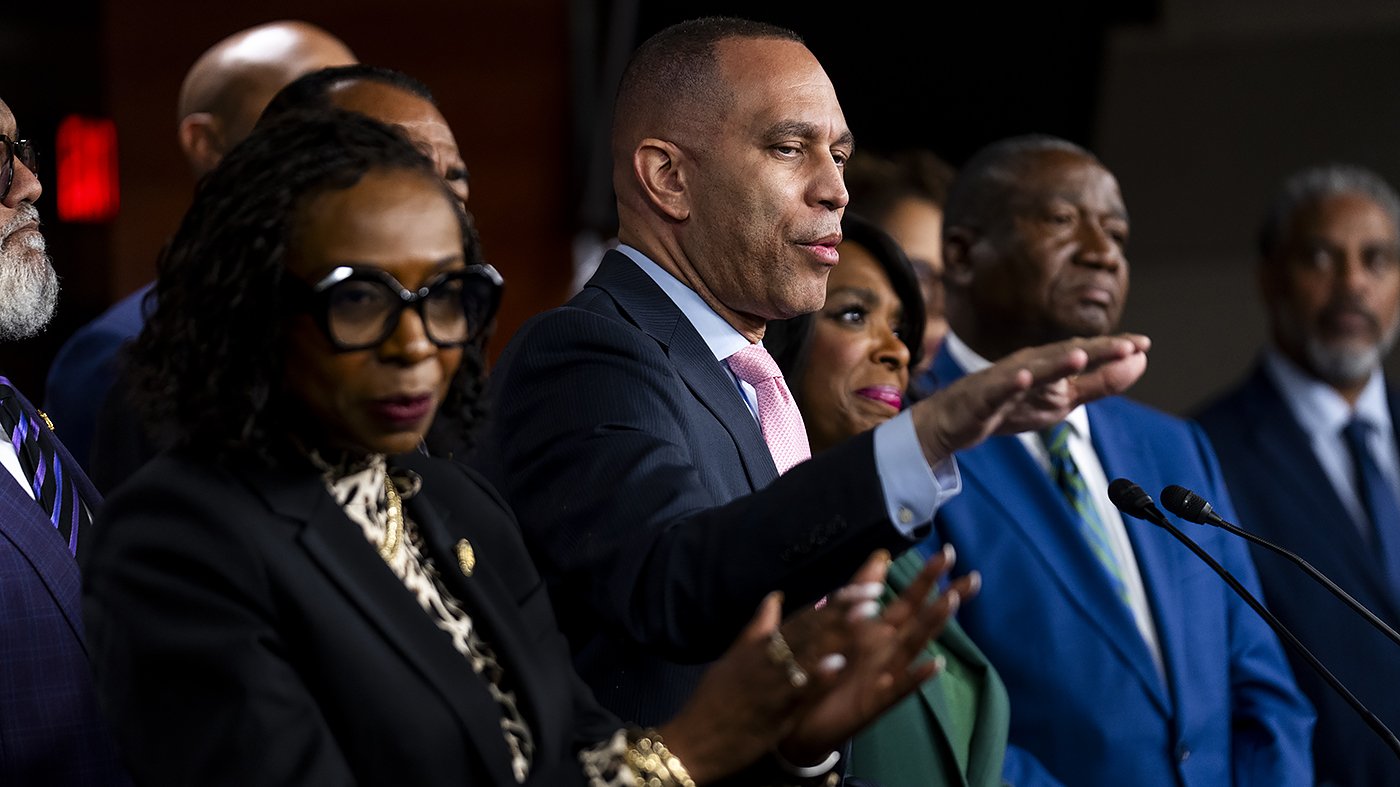
Behind Minority Leader Hakeem Jeffries (D-N.Y.), the caucus is vowing a multi-pronged effort: pursuing new maps in blue states, filing lawsuits against gerrymandered Republican maps, and pledging judicial, electoral, and campaign finance reforms if they retake the House. The caucus is set to meet Thursday to finalize next steps.

“We remain undeterred,” Jeffries wrote in a letter to colleagues. “Our effort to forcefully push back against the Republican redistricting scheme will not slow down. We are just getting started.”
Yet the timeline is running out. Most blue states have already held their primaries, making it impossible to redraw maps for this cycle. Only Maryland has not, but a push to eliminate the state’s sole Republican seat stalled in the state Senate. Meanwhile, GOP-led states like Texas, Florida, and Missouri are moving ahead with maps that could erase Democratic seats, as noted in Jeffries' vow to press on.
Legal challenges are underway in multiple states, but the conservative-leaning U.S. Supreme Court is expected to uphold most GOP maps. The Cook Political Report estimates the combined effect of the Virginia ruling and a recent Supreme Court decision weakening the Voting Rights Act will give Republicans six to seven extra seats. “We have a battlefield, a map, that favors Republicans,” said Rep. Richard Hudson (R-N.C.), head of the House GOP campaign arm.
Democrats are seizing on the economic anxiety of voters, arguing that Republican policies have fueled inflation and that a Democratic House would fight for working families. “This is about kitchen-table issues,” said one senior Democratic aide, pointing to Trump's jobs record as a contrast to their affordability agenda.
Despite the setbacks, election handicappers still see Democrats as slight favorites to flip the House, citing Trump’s unpopularity and a favorable midterm environment. “We do still think the Democrats are favored overall,” said Kyle Kondik of Sabato’s Crystal Ball.
But the path is narrower. The Virginia ruling nullified four Democratic-leaning districts, and the VRA decision threatens others in the South. Democrats are also grappling with internal divisions, as Rep. Richard Hudson noted, accusing the party of a “civil war” with progressive primaries. Ocasio-Cortez's caution about alliances underscores the tension.
In the coming weeks, Democrats plan to ramp up their affordability message, tying GOP map manipulation to a broader agenda of corporate interests. “They can’t win on policy, so they’re rigging the map,” said a Democratic campaign operative. Whether this message can overcome the structural hurdles remains to be seen.