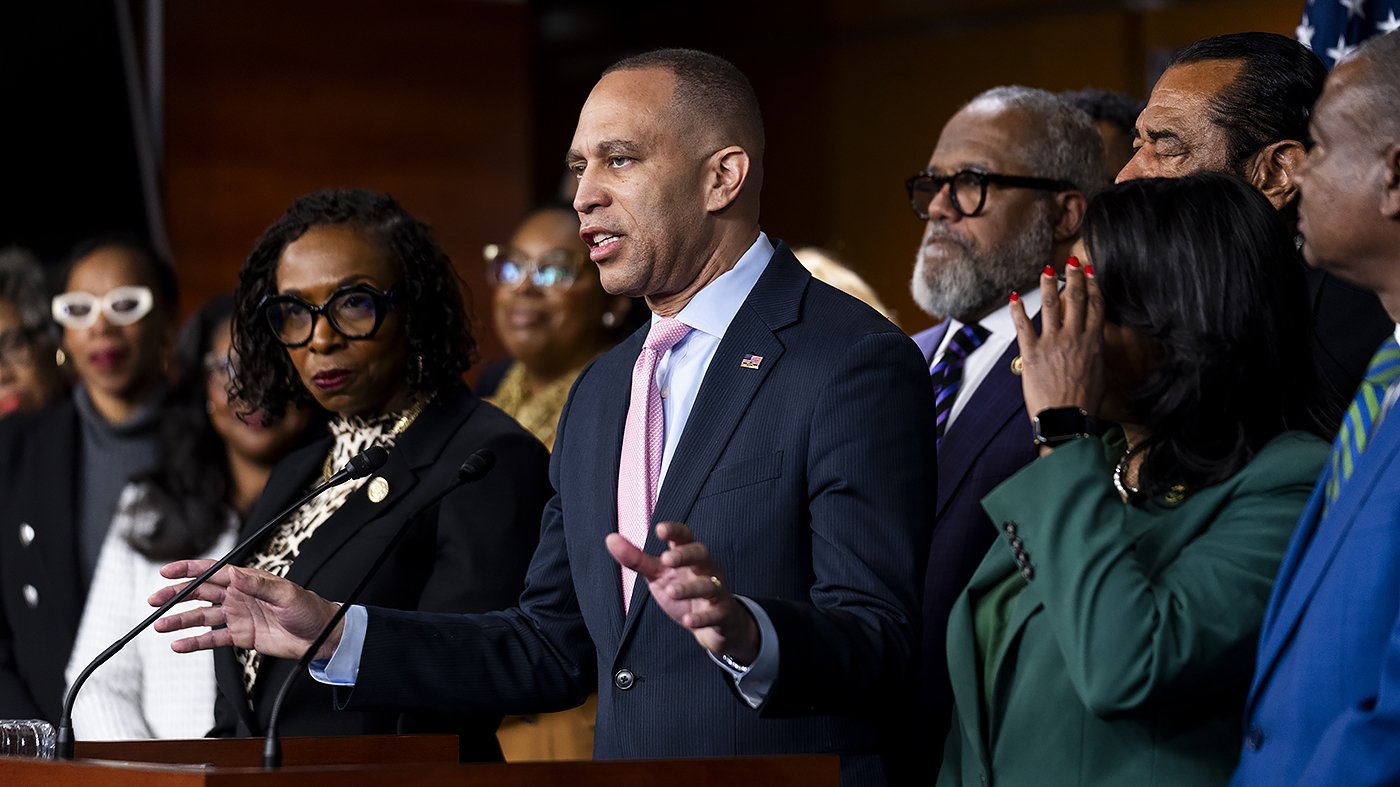
House Minority Leader Hakeem Jeffries (D-N.Y.) on Saturday dismissed a recent Virginia redistricting defeat as a mere hurdle, insisting Democrats can still flip the House in November. Speaking on MS NOW's Ali Velshi, Jeffries declared, “We’re going to take back control of the House of Representatives,” and outlined a broad agenda to address voter concerns.
“We’re going to continue to make clear to the American people that we will lower their high cost of living, fix a broken health care system and clean up the corruption that we’re seeing in the country, in the Congress, certainly with the Supreme Court and deal with the most corrupt administration in American history,” Jeffries said, tying economic pain to the Trump administration’s policies.
Republicans currently hold a razor-thin 217-212 majority in the House, with one independent who caucuses with the GOP and five vacant seats—three previously held by Democrats and two by Republicans. That narrow margin makes every seat critical, and the Virginia court ruling that scuttled a Democratic-drawn map has tightened the path to a majority.
Jeffries called for sweeping “nationwide” reforms to the judiciary, electoral processes, and campaign finance systems, arguing that structural changes are needed to restore democratic integrity. “Which is why we have to take the House back, take the Senate back, keep pressing forward, and then in 2028, take the presidency back as well,” he said, linking the midterms to a longer-term strategy.
Democrats are banking on voter frustration over rising costs, especially as President Trump’s military campaign in Iran drives up energy prices. According to AAA, the average price of regular gasoline hit $4.53 a gallon on Saturday—a 44% jump from a year ago—squeezing households and businesses alike.
The Trump administration has characterized these increases as temporary, part of a push for a new nuclear deal with Iran. During his first term, Trump withdrew from the 2015 accord negotiated by President Obama, and the current conflict has added to economic strains.
Former White House Legislative Affairs Director Marc Short, who served under Trump, warned that the financial pain could backfire politically. “The reality is that prices are going to continue to go up,” Short told CNN in March. “This is going to continue to ripple through … To say this is a short-term pain really sets an expectation for a lot of Americans that if it’s not, it’s going to create a bigger and bigger problem come November.”
Jeffries’ optimism comes amid a mixed landscape: while Democrats have mounted aggressive oversight of Trump administration actions, including alleged pay-to-play pardons, the redistricting ruling in Virginia underscores the structural hurdles they face. With the House majority hanging in the balance, every contested seat—and every policy debate—will matter in the months ahead.