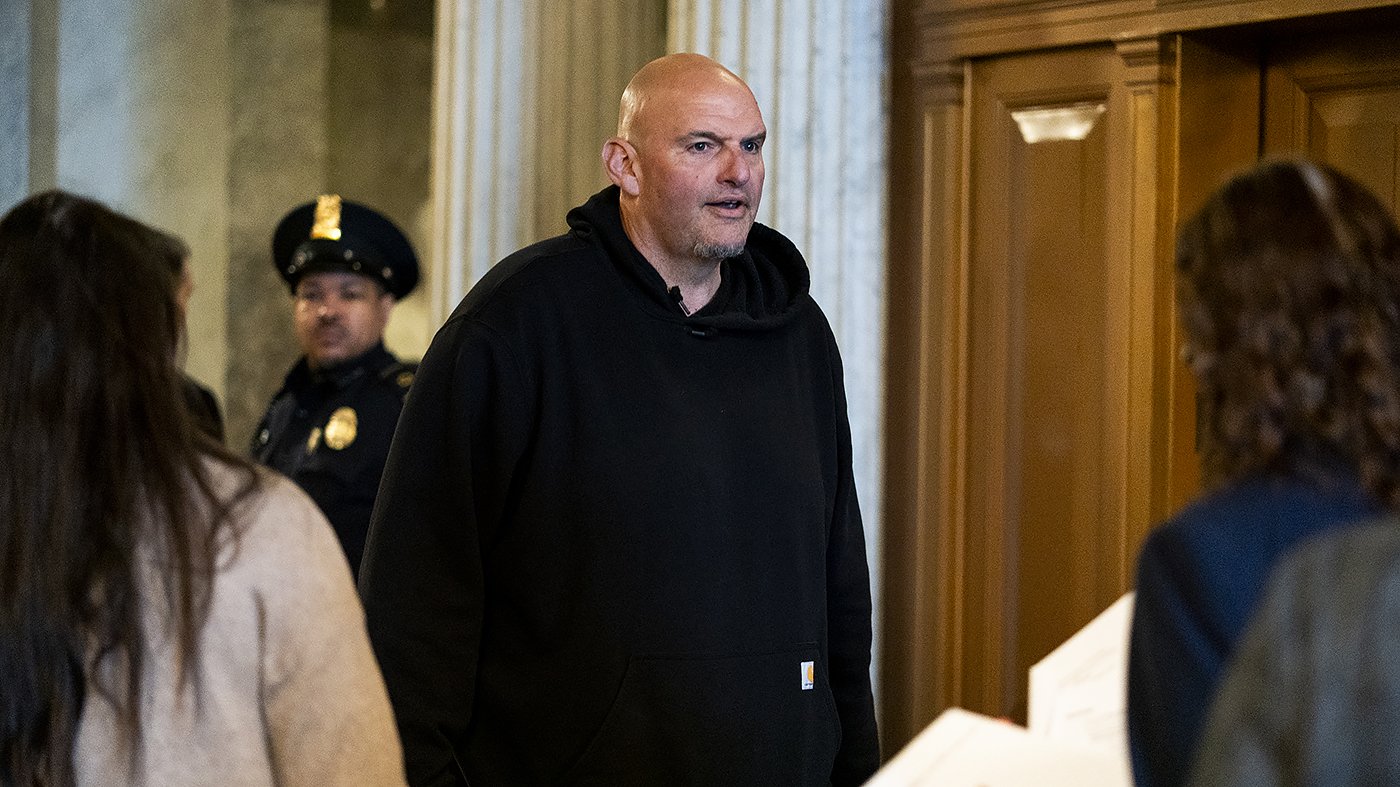
Sen. John Fetterman (D-Pa.) opened up to comedian Bill Maher on Friday about feeling increasingly isolated within his own party, but made clear he has no intention of changing his political affiliation.
During an appearance on HBO's "Real Time," Fetterman described a Democratic Party that has shifted away from its traditional stances on issues like Israel, border security, and government shutdowns. He pointed to his own votes against the party line as evidence of the growing distance.
"I've had to vote against the caucus," Fetterman said. "I don't enjoy that, but we used to be a party that would always refuse to shut the government down, and now we have shut it down and dropped a lot of mass chaos, and I just couldn't be a part of that."
The Pennsylvania senator has been a vocal critic of his party's role in the 76-day shutdown of the Department of Homeland Security, which he calls the longest in U.S. history. He broke with colleagues repeatedly to vote for reopening the agency and backed former Sen. Markwayne Mullin (R-Okla.) for DHS secretary.
Fetterman also sided with Republicans to block resolutions that would have limited President Trump's authority to conduct military operations in Iran under the War Powers Act, citing his strong support for the joint U.S.-Israeli campaign there.
These stands have drawn sharp criticism from Democrats in his home state, some of whom have branded him a "traitor." CNN analyst Van Jones recently defended Fetterman, arguing that holding moderate positions should not be considered a crime within the Democratic Party.
Behind the scenes, Senate Republicans and President Trump have reportedly been urging Fetterman to switch parties ahead of the midterms, but he has dismissed those overtures. "I'm a committed Democrat," he told Maher. "I thought we were supposed to be a big tent party. I'm not really sure how I have become an issue for any of the Democrats just having some different views on these other issues."
Fetterman also addressed the party's declining support among young men, a trend that contributed to Democratic losses in 2024. He blamed what he called an "anti-men" sentiment in some party wings. "Part of the Democratic Party became more and more anti-men, or describing that they were part of the problem, or they have toxic traits," he said. "That's why there's been such a migration away from the Democratic Party from young men."
Young voters have long been a reliable Democratic constituency, but the 2024 election showed a clear shift toward Republicans. "It's really why, one of the parts, why we lost in 2024," Fetterman said. "If you identify anyone as the problem, or blame them for some things, then you're going to lose."
He added: "We forgot that we are in the business of addition, not subtraction."
Fetterman's comments come as Democrats face an uphill battle in key races, including Florida's Senate contest and redistricting fights like the one in Virginia that could shrink their midterm hopes.