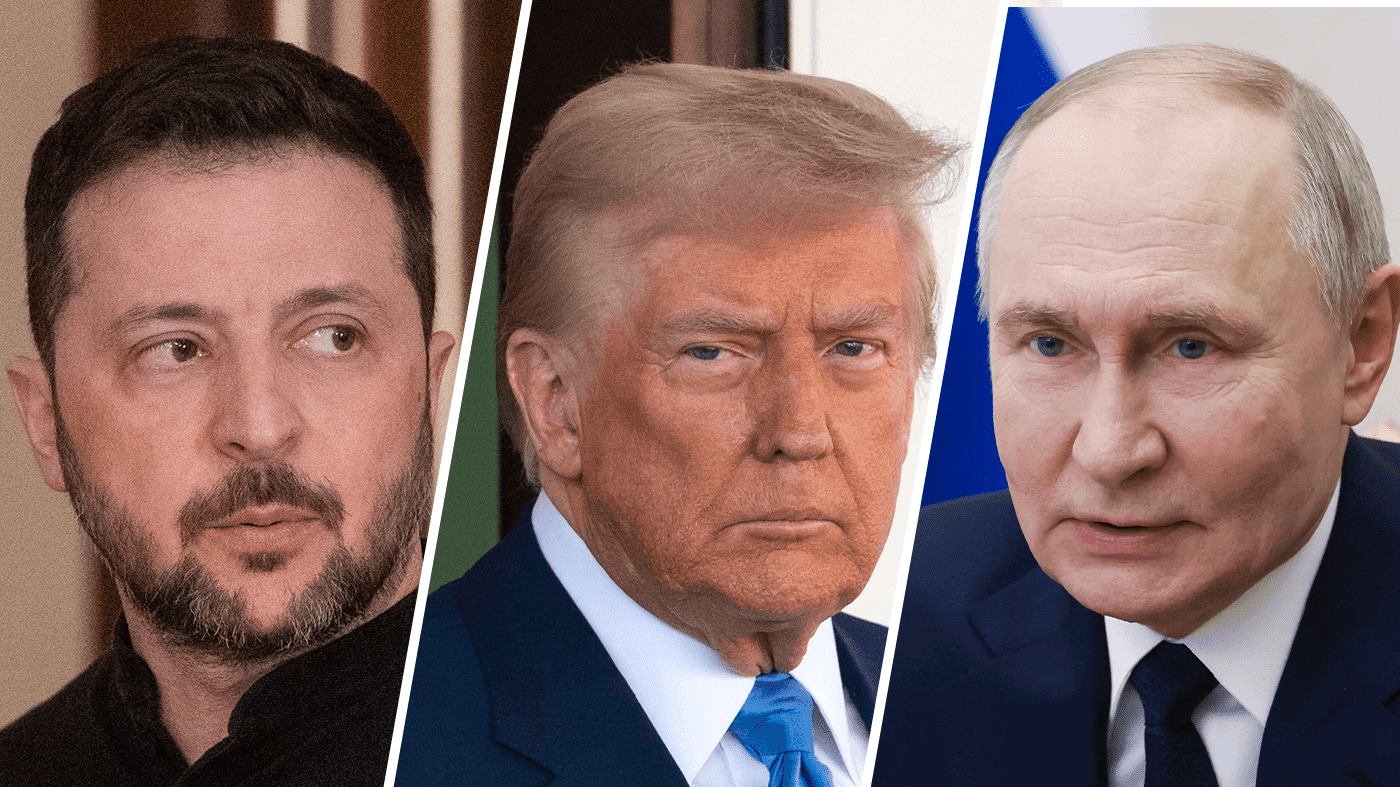
President Trump announced on Friday that Russia and Ukraine have agreed to a three-day ceasefire over the weekend, coinciding with Russia’s Victory Day celebrations. The pause in hostilities, set to run from May 9 to May 11, will also include a prisoner swap involving 1,000 captives from each side.
Trump, writing on Truth Social, framed the agreement as a personal diplomatic achievement. “The Celebration in Russia is for Victory Day but, likewise, in Ukraine, because they were also a big part and factor of World War II,” he stated. “This Ceasefire will include a suspension of all kinetic activity, and also a prison swap of 1,000 prisoners from each Country.”
The president emphasized that the request came “directly” from him and expressed appreciation for the cooperation of Russian President Vladimir Putin and Ukrainian President Volodymyr Zelenskyy. “Hopefully, it is the beginning of the end of a very long, deadly, and hard fought War,” Trump wrote. “Talks are continuing on ending this Major Conflict, the biggest since World War II, and we are getting closer and closer every day.”
Russia’s Defense Ministry had earlier announced a ceasefire for Friday and Saturday but warned of strikes if Ukraine disrupted Victory Day festivities. Zelensky confirmed Ukraine’s participation, citing the prisoner swap as the key motivator. “Red Square is less important to us than the lives of Ukrainian prisoners who can be brought home,” he posted on X. He thanked Trump and his team for “productive diplomatic involvement” and called on the United States to ensure Russia upholds the deal.
The ceasefire comes amid broader diplomatic efforts. Late last month, Trump told reporters he discussed a potential ceasefire with Putin, who offered to mediate on Iran. Trump declined, saying, “I said I’d much rather have you be involved with ending the war with Ukraine. To me that would be more important.” This exchange highlights the shifting priorities in U.S.-Russia relations, as the president pushes for an end to the conflict that has dragged on for years.
The announcement also fits into a pattern of high-stakes diplomatic moves by Trump, who has simultaneously pursued outcomes on other fronts. For instance, he recently insisted an Iran ceasefire holds after a Strait clash, threatening a “big glow” if violated. Meanwhile, his administration continues to review Mexican consulates amid escalating bilateral tensions, signaling a broad and aggressive foreign policy agenda.
Defense analysts note that the three-day pause is limited in scope but could serve as a confidence-building measure. The prisoner exchange, involving 2,000 individuals, represents a significant logistical effort. As Trump’s team hammers out details, the world watches whether this temporary truce can pave the way for a more lasting settlement.
Zelensky’s cautious optimism underscores Ukraine’s reliance on U.S. leverage. “We expect the United States to ensure that the Russian side fulfills these agreements,” he said, a reminder that trust between the warring parties remains fragile. For now, the guns may fall silent—but only briefly, and under the shadow of a still-uncertain peace.