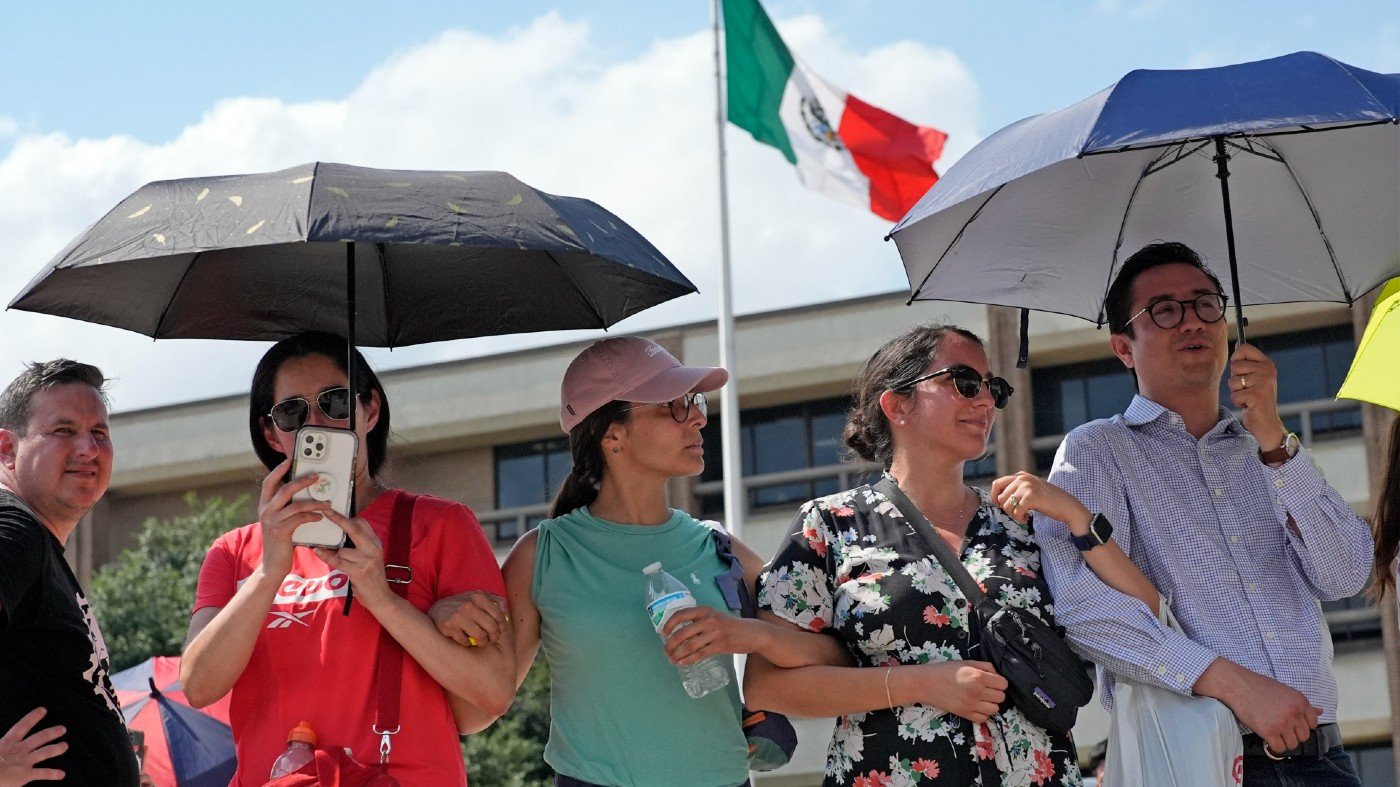
The State Department is conducting a review of Mexican consulates across the United States, signaling the possibility of closures that could further roil relations between the two neighbors. A department official confirmed the review to the Associated Press on Thursday but declined to specify the rationale behind it.
Assistant Secretary of State for Global Public Affairs Dylan Johnson told The Hill that the department is "constantly reviewing all aspects of American foreign relations to ensure they are in line with the President's America First foreign policy agenda and advance American interests." The move comes as the Trump administration intensifies pressure on Mexico to crack down on drug cartels, a key campaign promise for President Donald Trump.
Mexican President Claudia Sheinbaum has sought to improve ties with Washington while taking a harder line against the country's powerful drug trafficking organizations. But recent events have strained that effort. Last month, a crash in northern Chihuahua killed two CIA officials and two Mexican investigators after a drug lab was destroyed. Sheinbaum said her security Cabinet was not informed about the joint operation between the Chihuahuan state government and the U.S., demanding answers. The CIA declined to comment.
The Justice Department later indicted 10 current and former Mexican officials, including Sinaloa Governor Rubén Rocha Moya, on drug trafficking charges. Prosecutors accuse them of protecting members of the Sinaloa Cartel, particularly the faction led by the sons of Joaquín "El Chapo" Guzmán, and facilitating the flow of fentanyl, heroin, cocaine, and methamphetamine into the United States. Rocha and the other defendants, all members of Sheinbaum's Morena party, have denied wrongdoing.
Sheinbaum responded defiantly: "We will never subordinate ourselves because this is a matter of the dignity of the Mexican people," she said, as reported by The Guardian. The indictments have deepened political tensions, with critics accusing the Trump administration of targeting Sheinbaum's allies.
Trump's broader Latin America policy has been marked by aggressive intervention. He has involved the U.S. in elections in Argentina and Honduras and authorized the capture of Venezuelan President Nicolás Maduro. Meanwhile, sanctions and an oil blockade on Cuba have drawn condemnation from humanitarian groups. A recent report from the Center for Economic and Policy Research found that U.S. sanctions since Trump's first term were "likely the primary cause" of a 148% surge in Cuba's infant mortality rate.
The consulate review is the latest flashpoint in a relationship already strained by cartel violence and mutual accusations. As the Trump administration pushes for tougher action, Sheinbaum faces pressure to balance national sovereignty with the need for cooperation. The outcome of the review could signal whether Washington is willing to escalate its pressure tactics or seek diplomatic solutions.
For context, the Trump administration's approach to Mexico mirrors its broader Latin America strategy, which has included controversial moves such as proposing an overhaul of FEMA and engaging in high-profile disputes. Meanwhile, domestic political battles, like the Supreme Court ruling on Louisiana maps, continue to shape the midterm landscape.