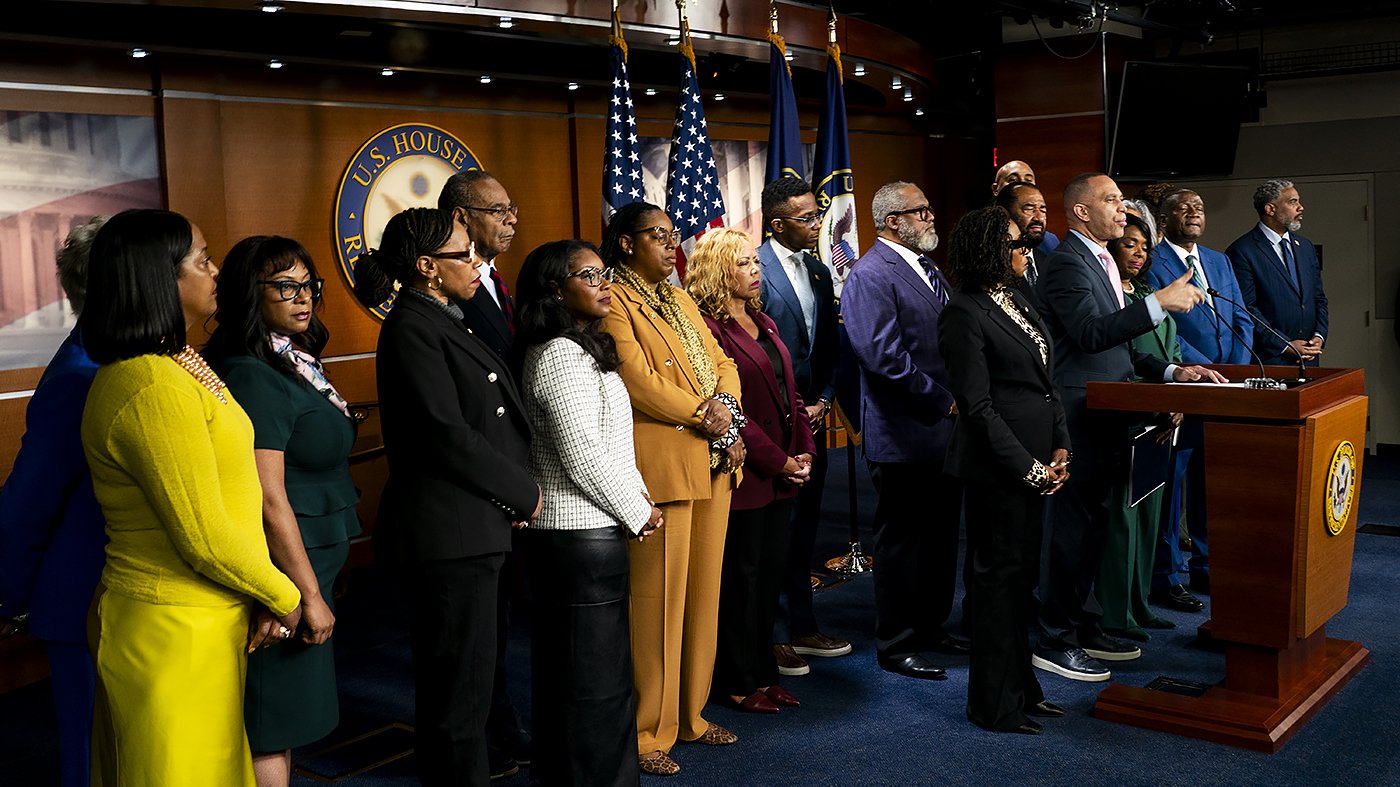
Democrats are reeling after the Virginia Supreme Court invalidated a newly drawn congressional map that was poised to deliver them four House seats in November, dealing a significant setback to their national strategy to counter Republican gerrymandering.
The 4-3 ruling, released Friday, nullifies a voter-approved referendum that would have redrawn districts in the Old Dominion, effectively preserving the current GOP-leaning configuration. Political analysts at the Cook Political Report estimate the decision, combined with last week's U.S. Supreme Court ruling weakening the Voting Rights Act, could cost Democrats a net six to seven seats nationwide.
House Minority Leader Hakeem Jeffries (D-N.Y.) condemned the verdict, vowing to fight on. 'No matter what it takes, House Democrats will win in November so we can help rescue this nation from the extremism being unleashed by Donald Trump and Republicans,' Jeffries said in a statement. 'Our fight is not over. We are just getting started.'
The ruling upended what had been a rare bright spot for Democrats in the ongoing redistricting war. Just weeks ago, party leaders celebrated after Virginia voters passed a hard-fought ballot measure to create an independent commission—a direct rebuke to President Trump's aggressive push to redraw maps in Republican-controlled states like Texas and Florida.
Now, Democrats face a stark reality: their options are limited. With the Nov. 3 election fast approaching and few blue states left to pursue counter-maps, the party's path to retaking the House has narrowed considerably. 'This is a setback that sends a terrible message to Americans—the powerful and elite will do everything they can to silence you,' said Rep. Suzan DelBene (D-Wash.), chair of the Democratic Congressional Campaign Committee.
The Virginia court's majority ruled that Democratic state legislators violated the state constitution by issuing the redistricting referendum on procedural grounds, specifically timing. 'This violation irreparably undermines the integrity of the resulting referendum vote and renders it null and void,' the majority wrote. Dissenting justices accused the majority of partisan overreach.
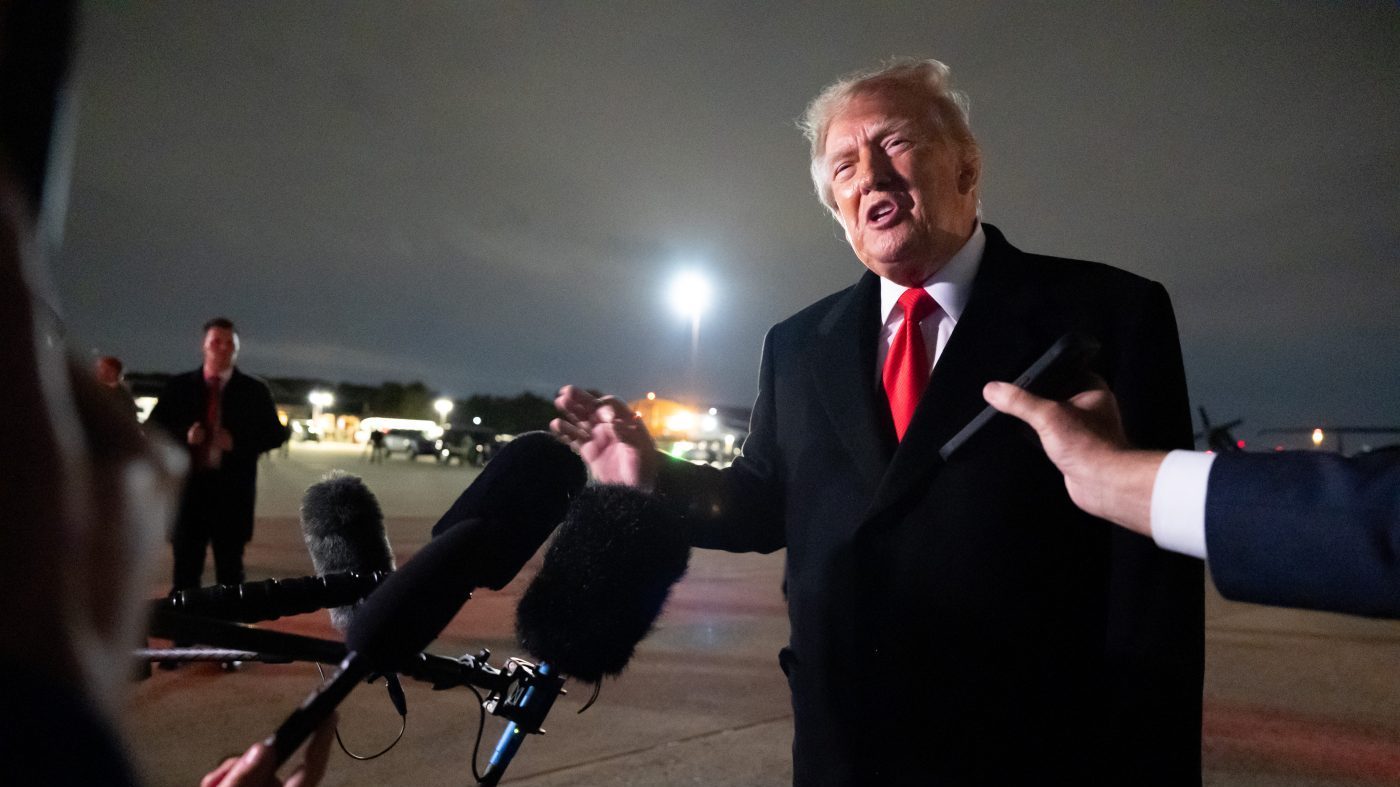
President Trump quickly hailed the decision as 'a huge win,' calling the Democratic map a 'horrible gerrymander.' Republicans on Capitol Hill echoed his praise. 'Violating the Virginia Constitution and bypassing the rule of law to further one's own political power is wrong,' said Rep. Jen Kiggans (R-Va.). 'Had Abigail Spanberger and the rest of Virginia's Democrats succeeded, they would have caused irreparable harm to our democracy.'
The ruling highlights a stark contrast in redistricting approaches: Virginia empowered an independent commission, while GOP-led states like Texas and Florida allow legislators to draw maps unilaterally—often without voter input. Democrats accuse Republicans of rigging the system. 'In effect, four unelected justices used semantics to justify a partisan decision that threw out the votes of three million Virginians,' said Rep. Don Beyer (D-Va.).
The decision adds to the whiplash from the U.S. Supreme Court's Voting Rights Act ruling, which has triggered new redistricting pushes in Alabama, Louisiana, and Mississippi. Tennessee this week finalized a map eliminating its only Democratic district. For Democrats, the cumulative effect is a steep uphill climb to serve as a check on Trump in his final two years.