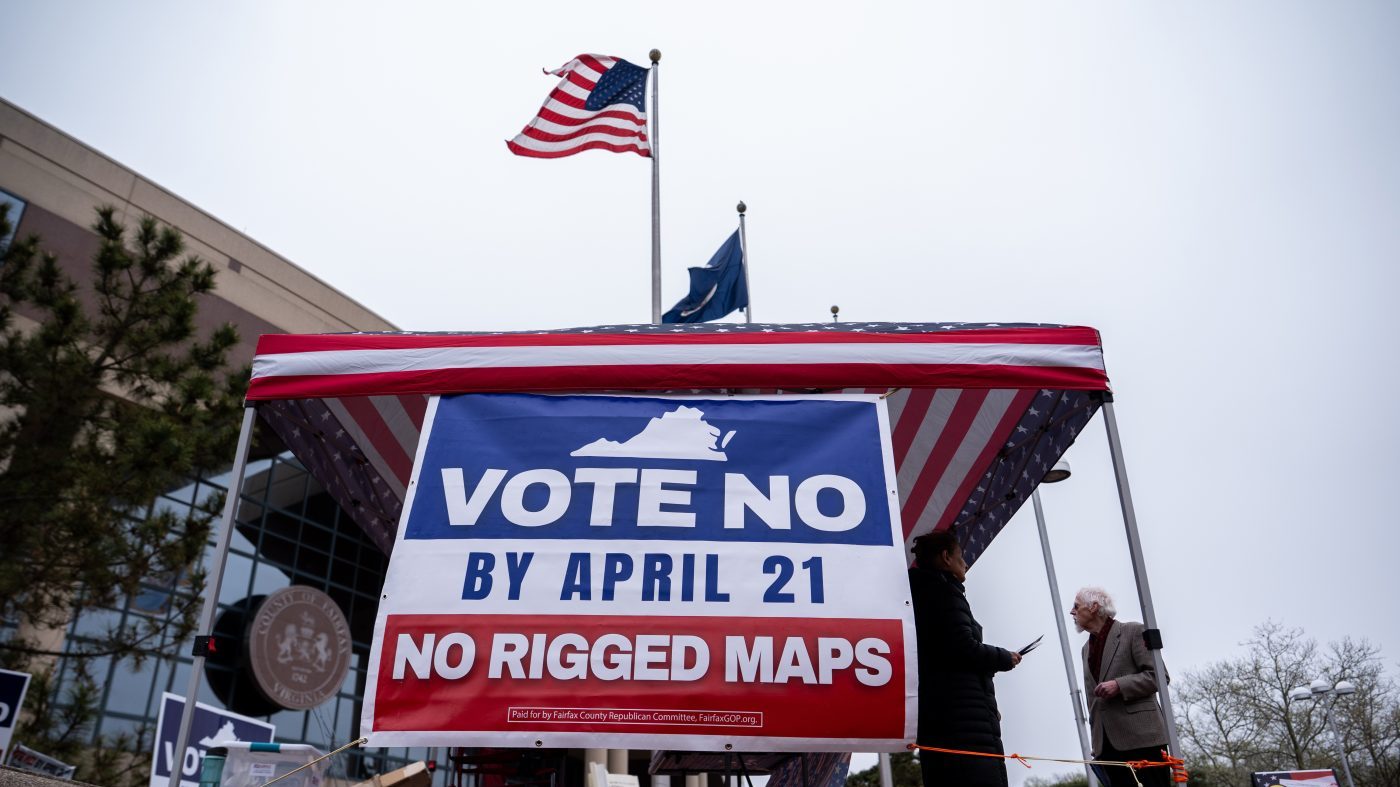
The Virginia Supreme Court dealt a major blow to Democrats' ambitions for the 2026 midterms on Friday, tossing out the party's redistricting referendum in a 4-3 decision that found the process failed to follow proper constitutional procedures. The ruling leaves the state's existing 6-5 congressional map intact, blocking a plan that would have given Democrats a 10-1 advantage.
Justice Arthur Kelsey, writing for the majority, declared that the procedural violation “irreparably undermines the integrity of the resulting referendum vote and renders it null and void.” The decision effectively erases the map approved by voters last month, which Democrats had championed as a response to aggressive redistricting by Republican-led states, including a recent redraw in Texas.

At the heart of the dispute was the timing of the amendment process. Under Virginia's constitution, any constitutional amendment must be approved by the legislature in two separate sessions with an intervening election. Democrats took the first vote on October 31 of last year, arguing that Election Day—still a week away—satisfied the requirement. But the court disagreed, noting that early voting was already underway, with 40% of ballots cast by that point.
“While the Commonwealth is free by its lights to do the right thing for the right reason, the Rule of Law requires that it be done the right way,” Kelsey wrote, underscoring the court's insistence on strict adherence to procedural rules.
Chief Justice Cleo Powell dissented, accusing the majority of stretching the definition of an “election” beyond reasonable bounds. “The majority's definition creates an infinite voting loop that appears to have no established beginning, only a definitive end: Election Day,” Powell wrote, arguing that the ruling sets a problematic precedent.
The decision drew immediate reaction from political figures. Former President Donald Trump celebrated on Truth Social, calling the ruling “a huge win for the Republican Party, and America, in Virginia” and adding, “The Virginia Supreme Court has just struck down the Democrats' horrible gerrymander. MAKE AMERICA GREAT AGAIN!”
Virginia House Speaker Don Scott (D) pushed back, saying in a statement, “No decision can erase what Virginians made clear at the ballot box. We respect the court. But we will keep fighting for a democracy where voters—not politicians—have the final say.”
The co-chairs of Virginians for Fair Maps, a group that opposed the referendum, praised the ruling, calling the redistricting push “an unconstitutional effort by Richmond Democrats to carve up the state for themselves.” They thanked the justices for upholding the rule of law.
The Virginia ruling is the latest flashpoint in a national redistricting battle. In recent weeks, Republicans in Florida advanced a map that offsets Democratic gains, while the U.S. Supreme Court issued a landmark decision on Louisiana's congressional maps that weakens a key provision of the Voting Rights Act. Tennessee lawmakers this week approved a map targeting the state's only Democratic-held House seat, and other Southern red states are considering similar moves. As Tennessee Democrats have protested what they see as racial gerrymandering, the broader fight over district lines is intensifying ahead of the midterms.
Virginia had already delayed its primary elections from June to August 14 to accommodate the referendum process. Early voting is set to begin next month, and the state's political landscape now remains unchanged—at least for this cycle.