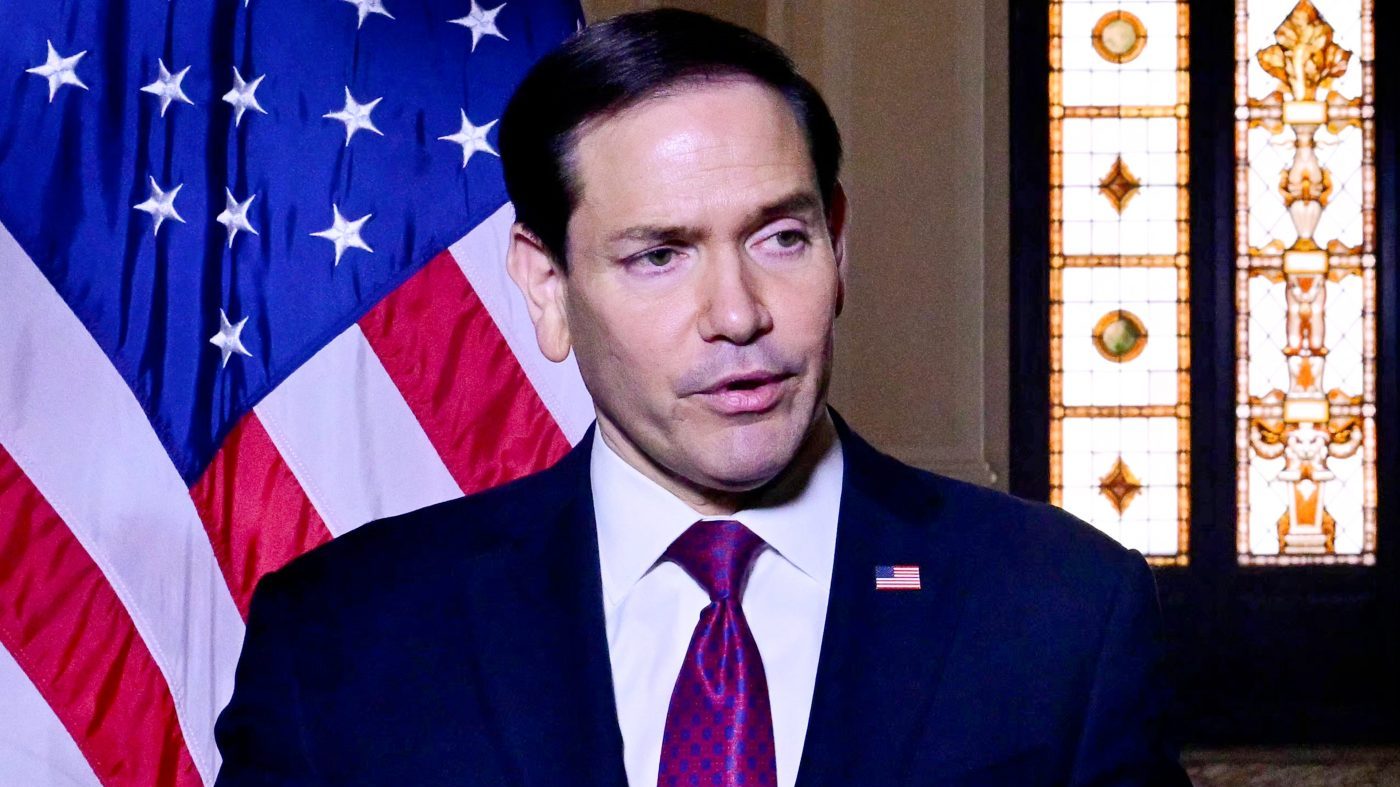
Secretary of State Marco Rubio said Friday that the Cuban government rejected a $100 million humanitarian aid package from the United States, even as the island struggles with the aftermath of a major hurricane, a battered economy, and severe fuel shortages. Rubio made the remarks while in Italy, where he met with Pope Leo XIV at the Vatican to discuss aid delivery.
“We’ve offered the regime there $100 million of humanitarian aid that, unfortunately, so far, they have not agreed to distribute to the people in Cuba,” Rubio told reporters. He noted that the U.S. had already delivered $6 million in assistance through Caritas, a Catholic Church-affiliated nonprofit, in February, but the Cuban government was blocking further relief.
“So, we did the hurricane relief, but we’re offering more, and it’s the regime that’s not accepting it,” Rubio added. “We do want to help the people of Cuba, who are being hurt by this incompetent regime that’s destroyed the country and the economy.”
Bruno Rodríguez Parrilla, Cuba’s foreign minister, quickly pushed back Friday night, calling the claim a fabrication. “Aware that he needs to lie to justify his criminal assault against the Cuban people, the U.S. Secretary of State fabricates the fable of an alleged offer of aid valued at 100 or more million dollars,” Rodríguez wrote on social media platform X. He pointed to the long-standing U.S. economic embargo, which he said costs Cuba billions of dollars annually, as the real driver of the humanitarian crisis.
The U.S. embargo, which bans most commerce with Cuba, includes exceptions for food, medicine, and disaster relief. After Hurricane Melissa struck last fall, Rubio pledged U.S. support for recovery, but fuel shortages have slowed distribution. In January, the Trump administration imposed an oil embargo on Cuba following a U.S. military operation in Venezuela that led to the capture of former leader Nicolás Maduro, warning other nations against doing business with Havana.
A United Nations report in April noted that sufficient fuel supplies have not reached Cuba in three months, despite some Russian shipments, plunging the country into an “acute and persistent” humanitarian crisis. The electrical grid has repeatedly failed, and access to food, water, and medicine is limited.
The Trump administration has intensified pressure on Cuba since taking office, using economic leverage to push for political reform. On Thursday, the State Department imposed new sanctions on two Cuban entities and one individual, including GAESA, a military-controlled conglomerate. “There’s the Cuban Government, and they have a budget, and then there’s this private company that has more money than the government does,” Rubio explained. “None of the money in that company goes to build a single road, a single bridge, provide a single grain of rice to a single Cuban, other than the people that are part of GAESA.” He described the sanctions as targeting a company “stealing from the Cuban people to the benefit of a few” and hinted at further measures.
Rubio’s Vatican meeting also touched on broader U.S.-Vatican tensions, as the Trump administration escalates its feud with the Pope over Iran policy. The aid dispute underscores the deepening rift between Washington and Havana, with each side blaming the other for the suffering of ordinary Cubans.