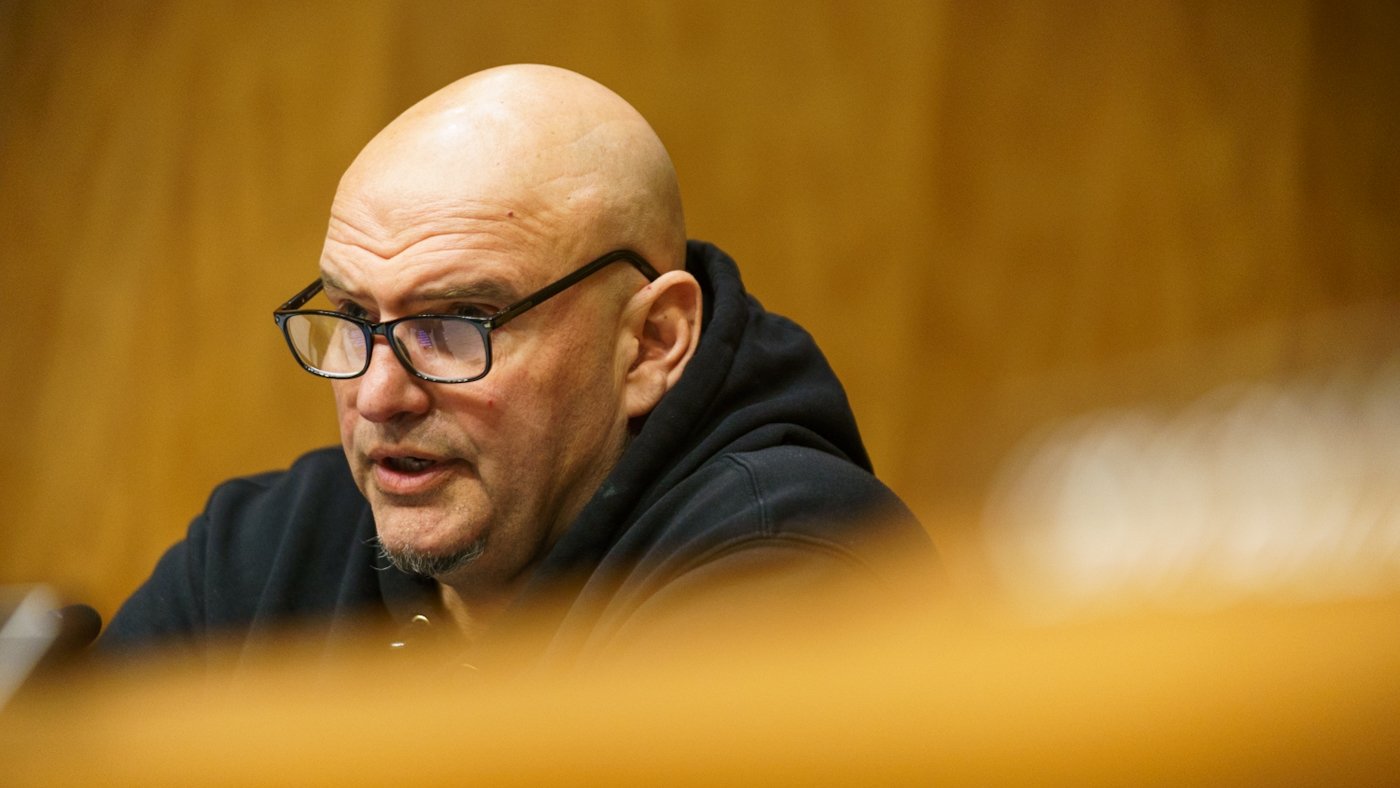
In a rare bipartisan move on Monday, Senators John Fetterman (D-Pa.) and Chris Coons (D-Del.) joined Republicans to advance Kevin Warsh's nomination to the Federal Reserve Board of Governors, setting the stage for him to become the next Fed chair as Jerome Powell's term expires Friday.
The Senate voted 49-44 to move Warsh's nomination forward, with no Republican opposition. Fetterman and Coons were the only Democrats to cross the aisle, highlighting a deepening rift within the party over economic policy and broader political alignment.
Warsh, 55, served as a Fed governor from 2006 to 2011, earning a reputation as an inflation hawk. His nomination had been stalled by Senator Thom Tillis (R-N.C.), who refused to advance any of President Trump's Fed nominees through the Senate Banking Committee while the Justice Department conducted a criminal investigation into Powell and the central bank. Tillis later dropped his objection after receiving assurances the probe was closed.
Fetterman, who has increasingly distanced himself from Democratic leadership, said last week he feels "lonely" among his party colleagues. In an interview with comedian Bill Maher, he described a shift in Democratic "values" on issues like Israel, border security, and government shutdowns. "I've had to vote against the caucus," Fetterman said. "I don't enjoy that, but we used to be a party that would always refuse to shut the government down, and now we have shut it down and dropped a lot of mass chaos, and I just couldn't be a part of that."
Fetterman has also backed Trump nominees for key posts, including Homeland Security Secretary Markwayne Mullin and former Attorney General Pam Bondi. His votes have drawn sharp criticism from progressives, but he remains unapologetic, framing his stance as a return to core Democratic principles.
Coons, a moderate from Delaware, has occasionally broken with his party on financial and judicial nominations. His support for Warsh underscores the ongoing struggle within the Democratic Party to maintain unity on economic issues as the 2024 election cycle intensifies.
The Senate is expected to confirm Warsh in the coming days, replacing Powell at a time when the Fed faces tough decisions on inflation, interest rates, and regulatory policy. Warsh's hawkish leanings could signal a more aggressive approach to monetary tightening, a shift that has alarmed some progressives but pleased business groups and conservatives.
The Senate cleared the path for Warsh to take the Fed chair as Powell's exit nears, with Fetterman and Coons providing the crucial votes. Their defection highlights a broader trend: a growing number of Democrats are willing to break with party orthodoxy, particularly on economic and national security issues. This internal friction could reshape the party's platform heading into 2028, as figures like Alexandria Ocasio-Cortez signal White House ambitions and others like Josh Gottheimer call out what they see as double standards on antisemitism.
Fetterman's recent comments about feeling isolated among Democrats echo a sentiment shared by some moderates who worry the party is drifting too far left. "I don't enjoy voting against the caucus," he reiterated, "but I have to do what I think is right."