Political journalism in America has a civics problem. It's not just occasional slip-ups; it's a recurring pattern of reporters and pundits failing to grasp the foundational documents they so often invoke. The latest example involves MSNBC host Katy Tur, who last week appeared baffled by House Speaker Mike Johnson's straightforward reference to the Declaration of Independence.
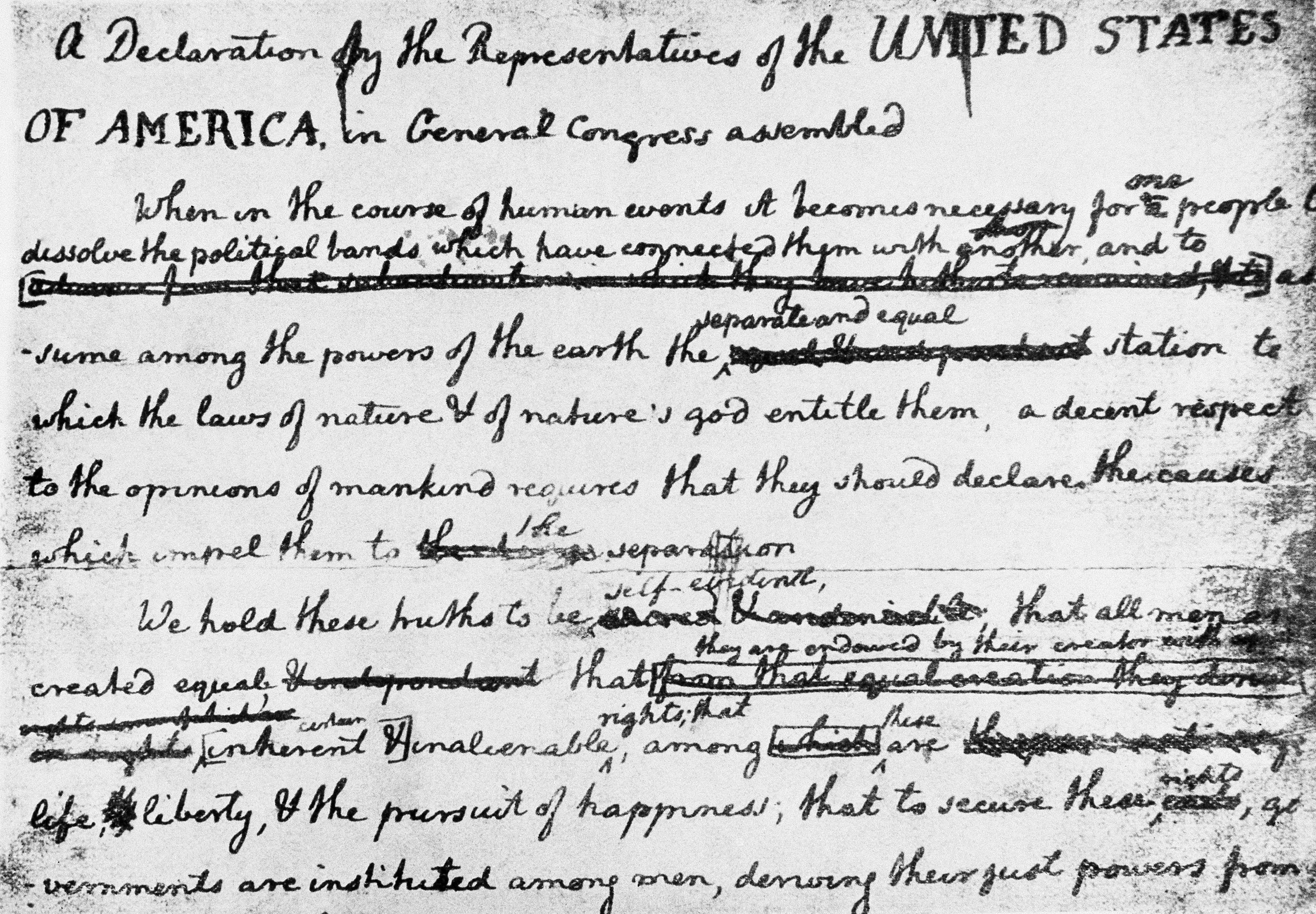
At a Washington event, Johnson prayed that "our rights do not derive from the government; they come from you, our Creator and Heavenly Father." This is a near-verbatim paraphrase of the Declaration's second sentence, which calls it "self-evident" that all men "are endowed by their Creator with certain unalienable rights." Yet Tur, hosting a politics program, asked her panel: "What about this passage from Mike Johnson declaring that our rights do not derive from government: 'They come from you, our creator and heavenly father?' Is this him putting God over the Declaration of Independence?" The question misses that the Declaration itself places God first, before any mention of government's purpose.
Tur is hardly alone. In 2025, Politico published a story labeling as "extremist" the idea that human rights derive from God. National correspondent Heidi Przybyla later told MSNBC that Christian nationalists and others in President Trump's orbit believe "our rights as Americans and as all human beings do not come from any earthly authority" and "come from God." She seemed unaware that this is exactly what Thomas Jefferson wrote. After widespread ridicule, Przybyla issued a weak correction, claiming she had "spoken clumsily."
The confusion extends beyond pundits to the judiciary and the press that covers it. In 2014, U.S. District Judge Arenda L. Wright Allen struck down Virginia's same-sex marriage ban, writing in her original opinion: "Our Constitution declares that 'all men' are created equal." The Constitution says no such thing; the Declaration of Independence does. Her office quickly amended the ruling, but many major outlets—including The New York Times, NBC News, ABC News, and The New Yorker—ran with the error without correction. To this day, their archived stories still quote the judge's mistake as fact.
These are not isolated incidents. Journalists regularly misstate the Second Amendment, misrepresent the Establishment Clause, and attribute false claims to the First Amendment. The cumulative effect erodes trust. If the media cannot get these basic facts right—facts that are trivially easy to check—how can readers trust their coverage of more complex issues? For instance, coverage of Christian nationalist allies often conflates religious belief with political extremism, missing the nuance of America's founding philosophy.
The problem is systemic. These mistakes are not rare or merely verbal; they make it into print past entire teams of fact-checkers. They reveal a deeper unfamiliarity with the ideas that underpin American self-governance. As Becket Adams, a Washington-based media critic, notes: "If they are this wrong about things so fundamental, how can you trust our media's coverage of anything else?"
The irony is that the same journalists who demand rigor from politicians often fail to apply it to themselves. The Declaration of Independence and the Constitution are not obscure texts; they are the bedrock of American political discourse. Knowing the difference between them—and what each actually says—should be a baseline requirement for anyone covering politics. Until the media addresses this civics gap, its credibility will remain in question. Meanwhile, political strategies and geopolitical rhetoric continue to be reported without the foundational context that voters need.