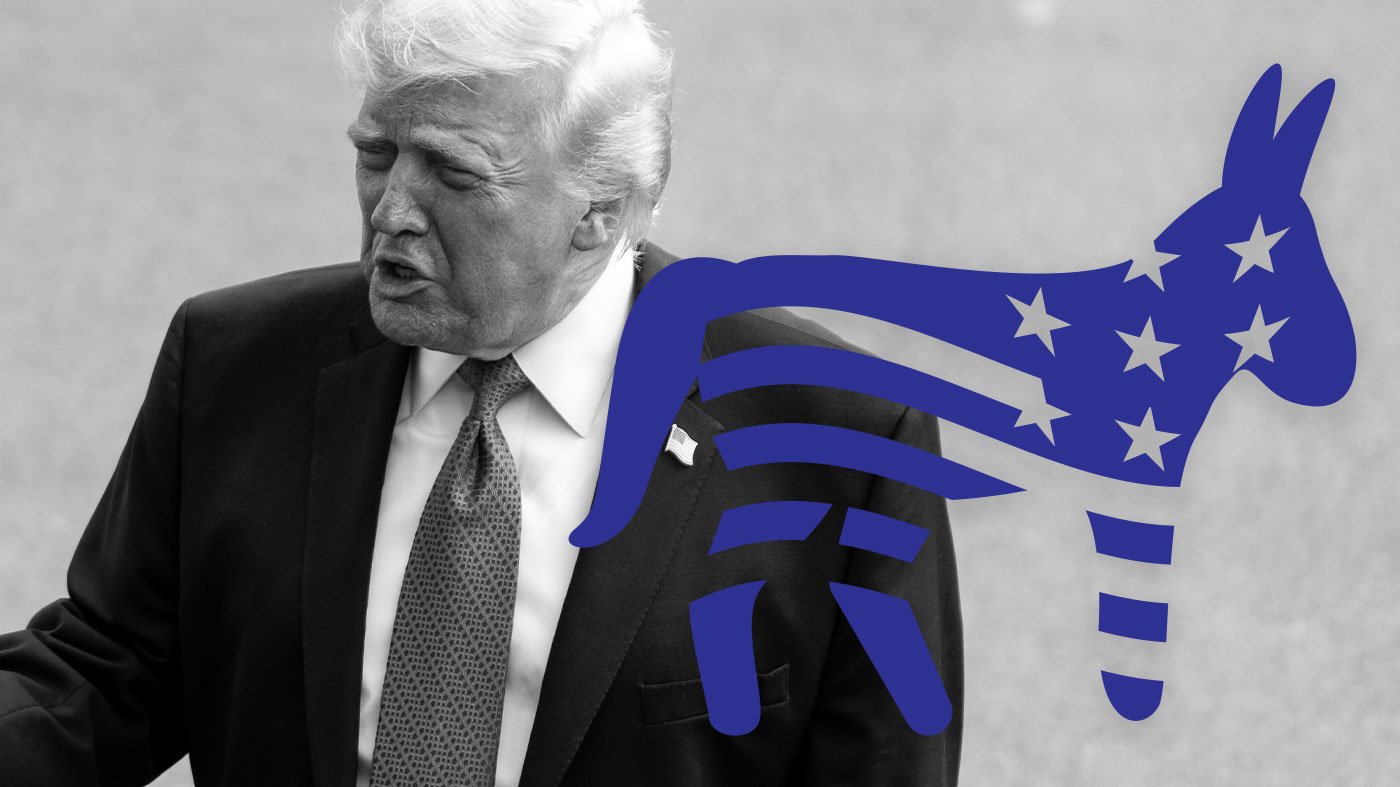
For nearly a decade, Democrats have defined themselves by their opposition to President Trump. But some party strategists now fear that relentless anger has boxed them in, leaving little room for a forward-looking agenda that can attract swing voters.
A post-election review released Thursday by the Democratic National Committee (DNC) confirms the concern: the party leaned too heavily on negative partisanship, making anti-Trump attacks the centerpiece of its messaging. The report cautions that “anti-Trump sentiment” has clear limits as a winning electoral strategy.
While Democrats hammered Trump, they failed to offer voters a compelling vision for what they would do with power. That gap is now seen as a key reason for the party’s 2024 losses, even as Trump’s own purge of GOP lawmakers reshapes the party ahead of the midterms.
This week at the Center for American Progress’s IDEAS Conference, anger was on full display. California Governor Gavin Newsom, a front-runner for the 2028 presidential nomination, urged Democrats to “fight fire with fire.” He told the crowd, “People want fighters. People want people with conviction and clarity.”
But Democratic strategist Joel Payne warned that while Trump is “the best base mobilizer for Democrats right now,” the clock is ticking on how long polarization can sustain the party. “I think there is a broad understanding that the clock is ticking on how much longer Democrats can rely on polarization because of Trump to galvanize our voters,” Payne said.
In a Substack post titled “Can D’s control their fury,” strategist Dan Turrentine described being “stunned by how consumed speakers and moderators were by raw fury against Donald Trump’s administration.” He noted that “time and again, they looked and sounded angry, no matter the topic, talked incessantly about losing our democracy and the country being genuinely destroyed.”
Turrentine warned that recent court rulings—the Virginia Supreme Court tossing a new congressional map and the U.S. Supreme Court weakening the Voting Rights Act—have only deepened Democratic fury. But he cautioned that “inside the Beltway and on BlueSky, we are becoming blinded again by our fury.”
The party’s reputation is suffering. A CNN poll in April found just 28% of respondents viewed the Democratic Party positively, while 56% saw it negatively. Even as Democrats are expected to retake the House and remain competitive in Senate races, internal alarms are sounding about the need to offer a positive plan beyond opposition.
The DNC autopsy urges candidates to “build affirmative cases for candidates to drive enthusiasm instead of relying on reductive messaging.” It bluntly states that anti-Trump sentiment alone is “insufficient to motivate voters.”
Steve Schale, a veteran Democratic strategist who ran Barack Obama’s Florida operation in 2008, said anger can motivate the base, but candidates must give skeptical voters a reason to vote for them—something beyond saying “Trump is a disaster.” He pointed to the contrast between Trump’s proposed D.C. arch and the real economic anxiety Americans feel over rising gas and food prices. “The contrast is always important,” Schale said.
Megadonor John Morgan disagrees, arguing that the party’s “obsession equals turnout” and will pay off in the midterms, potentially giving Democrats control of both chambers. He predicted such a result “would be the end of the [Trump] presidency as we know it.”
But Payne warned that while anger may work in 2026, the party must recalibrate by 2028. Newsom’s combative approach—trading fire with Trump on social media, launching redistricting fights, and delivering blistering speeches—may satisfy the base, but strategists say it won’t win back independents or disillusioned Republicans who worry Trump’s feuds risk the Senate majority.
As Democrats wrestle with their identity, the central question remains: Can a party built on fury ever build a positive case for governance, or will the anger trap hold?