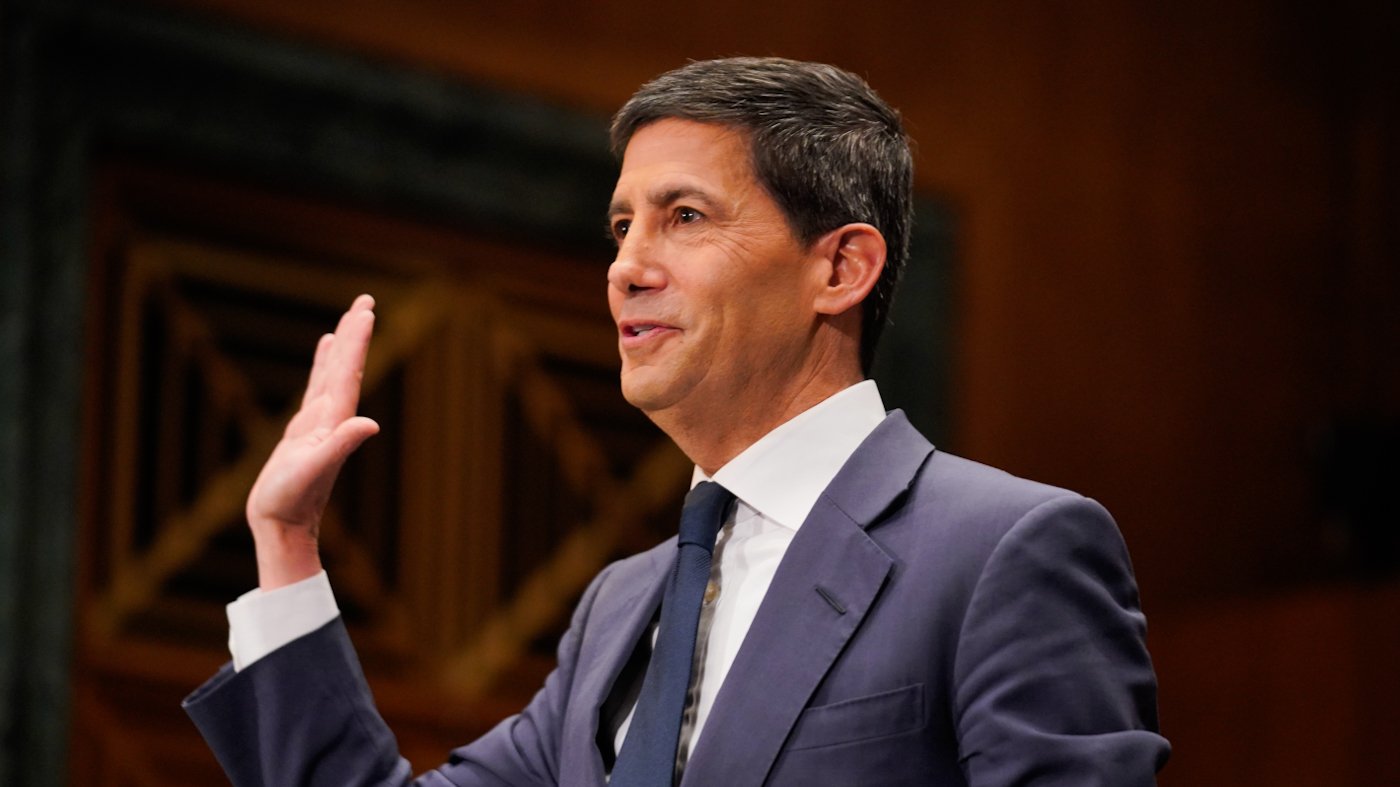
President Trump officially swore in Kevin Warsh as the next chair of the Federal Reserve during a ceremony at the White House on Friday morning, marking a new chapter for the central bank amid internal strife over monetary policy.
The Senate confirmed Warsh earlier this month in a 54-45 vote, largely along party lines, to succeed Jerome Powell, whose tenure was marked by frequent clashes with Trump over interest rate decisions. Powell will remain on the Fed's board of governors until his term expires in January 2028.
Warsh steps into a central bank grappling with a divided board of governors. Some members advocate for cutting interest rates to support a volatile job market, while others warn that easing too quickly could fuel rising inflation. The new chair will need to navigate these competing pressures without alienating either faction or the White House.
The swearing-in ceremony, which began at 11 a.m. EDT, was streamed live by the White House. It comes as Trump continues to press his economic agenda, including recent moves on trade and immigration that have drawn criticism from both parties. The administration is also dealing with a GOP revolt over a $1.8 billion compensation fund that derailed a key immigration bill, highlighting the political headwinds facing the president.
Warsh, a former Fed governor and Wall Street insider, is expected to bring a more market-friendly approach than Powell, but he inherits an institution where consensus is elusive. The Fed's next policy meeting, scheduled for next month, will be closely watched for signs of a rate shift.
The transition also occurs as Trump's approval ratings slip, raising questions about the GOP's midterm prospects. A recent analysis noted that Trump's primary dominance masks underlying GOP midterm weakness, with economic concerns weighing on voters.
Powell’s departure from the chair role ends a period of tension between the White House and the Fed. Trump had publicly lambasted Powell for raising rates in previous years, accusing him of undermining economic growth. Warsh, by contrast, has signaled support for a more accommodative stance, aligning more closely with the president's calls for lower borrowing costs.
As Warsh takes the helm, the broader economic picture remains uncertain. Inflation has ticked up, the job market shows signs of cooling, and global trade tensions persist. The new chair will also face scrutiny from Democratic lawmakers who opposed his confirmation, arguing he is too close to Trump and Wall Street.
The ceremony itself was a brief, formal affair, but it underscored the high stakes for the Fed under Warsh's leadership. With a divided board and a volatile economy, his first moves will set the tone for monetary policy in the months ahead.