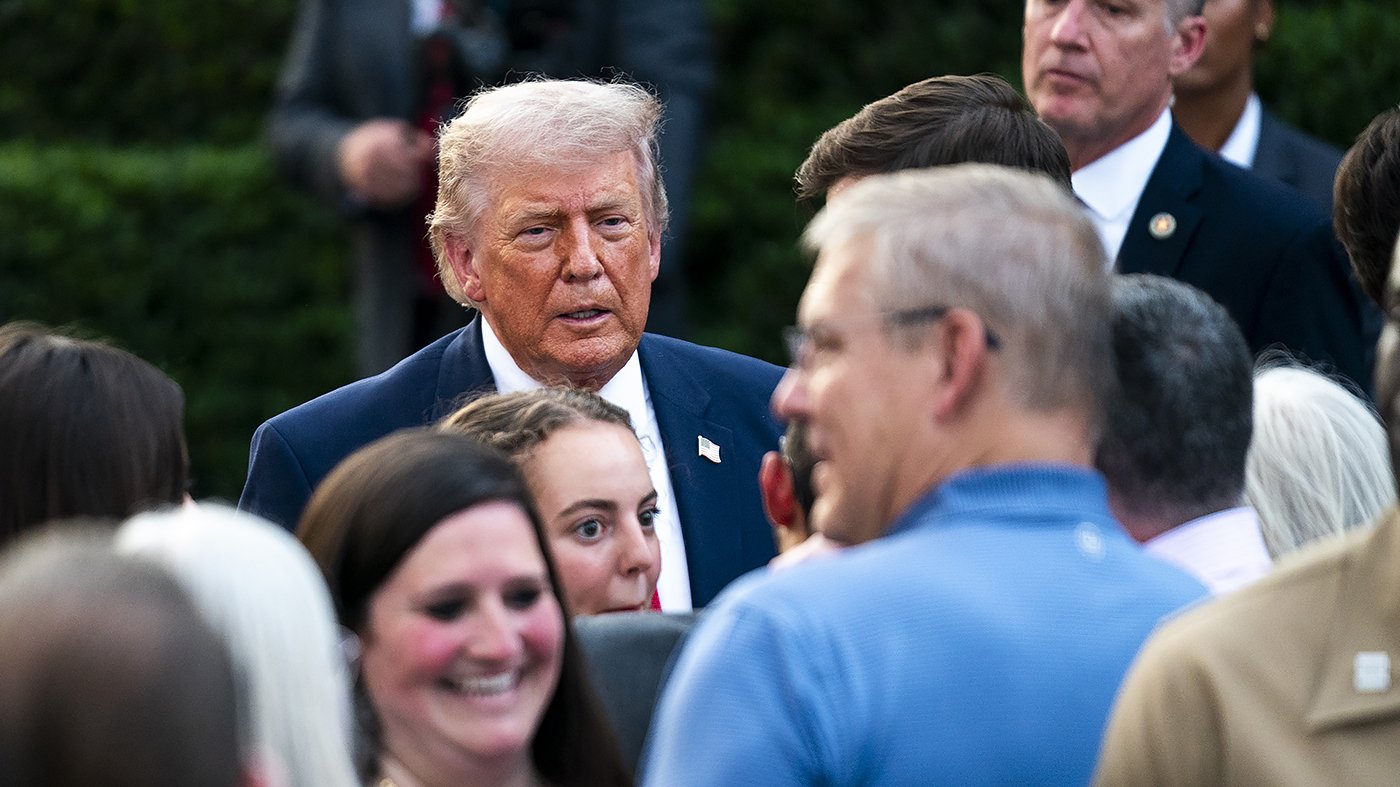
President Trump’s command over Republican primary races has never been stronger, with a series of GOP incumbents he targeted losing in Indiana, Kentucky, and Louisiana over the past month. But this success masks a growing disconnect for the party as warning signs flash ahead of the midterm elections.
Trump’s approval ratings are declining, driven by voter discontent over the ongoing conflict in Iran and a sluggish economy. His ability to sway primary voters may not translate to general election success when independents and Democrats turn out in larger numbers for House and Senate races—especially with Trump himself not on the ballot.
“It’s simple: He has a hold on the Republican base, which you see come out in primaries,” said Susan Del Percio, a veteran GOP strategist who opposes Trump. “Most primary voters are Donald Trump voters, but not all Donald Trump voters are primary voters. They only show up every four years for Donald Trump.”
Republican strategist Doug Heye echoed that concern: “The MAGA base is not the broader electorate.”
Polling Signals Trouble
A New York Times/Siena poll released this week highlights the party’s dilemma. While Trump-backed candidates continue winning primaries—securing victories or runoff spots in six states on Tuesday—more than a third of Republican voters say they want a new direction for the party. The same survey found 37 percent prefer the next GOP nominee to diverge from Trump’s approach.
Decision Desk HQ’s polling aggregates show the Republican Party’s favorability sitting 16 points underwater, compared with Democrats at 12 points underwater. Trump’s own approval stands at 37 percent in the Times/Siena poll, down from 40 percent earlier this year, and DDHQ’s averages put him more than 20 points underwater.
Trump’s base is also showing anxiety over the economy and foreign entanglements in Iran, Venezuela, and potential intervention in Cuba. Despite campaign promises to end foreign wars, Trump has defended the Iran conflict as necessary.
Internal GOP Fears
“It’s a very challenging environment for Republicans. It’s live by the sword, die by the sword,” said a Republican consultant aligned with Trump. “Trump is not the leader of the Republican Party; he is the Republican Party.” The consultant noted that a Trump endorsement typically boosts primary candidates by 35 to 40 percent, but called it “a 1,000-pound albatross around your neck in the midterms.”
The consultant warned that even if Trump’s die-hard supporters turn out, the GOP will likely need independent voters to win close races—and many independents are put off by Trump’s policies. “Our system today is built on so much attention around the president, so referendums are bigger than before,” he said.
A second Trump supporter agreed: “In a way, the president hasn’t done us any favors. We need independents to turn out for us. We don’t need the base.”
Headwinds and Hope
Republicans face historical headwinds: the president’s party typically loses seats in midterms, and Democrats need only a few House seats to retake the majority. Democrats have also posted a string of off-year and special election wins and hold a nearly 7-point lead on the generic congressional ballot, per DDHQ.
Redistricting could offer the GOP some relief. Recent rulings by the Supreme Court and the Virginia Supreme Court may allow more favorable congressional maps, potentially offsetting some Democratic gains.
Ford O’Connell, a Republican strategist and former Trump surrogate, expressed cautious optimism: “Despite how people doom and gloom on the Republican side, there is a lot to be optimistic about. It’s just going to be an all-hands-on-deck effort to keep both chambers. But it is feasible, contrary to the precedent of history.” He pointed to redistricting and poor Democratic brand polling as silver linings.
But Del Percio predicted heavy losses. “Republicans are in bad shape. The primaries will have very little effect on what happens in November, except for the candidates Trump put up. At the end of the day, candidate selection will be where his influence begins and ends.”
For more on internal GOP dynamics, see our coverage of the GOP revolt over Trump's $1.8B compensation fund that derailed an immigration bill and the president's visit to a key swing district with Rep. Lawler amid economic headwinds.