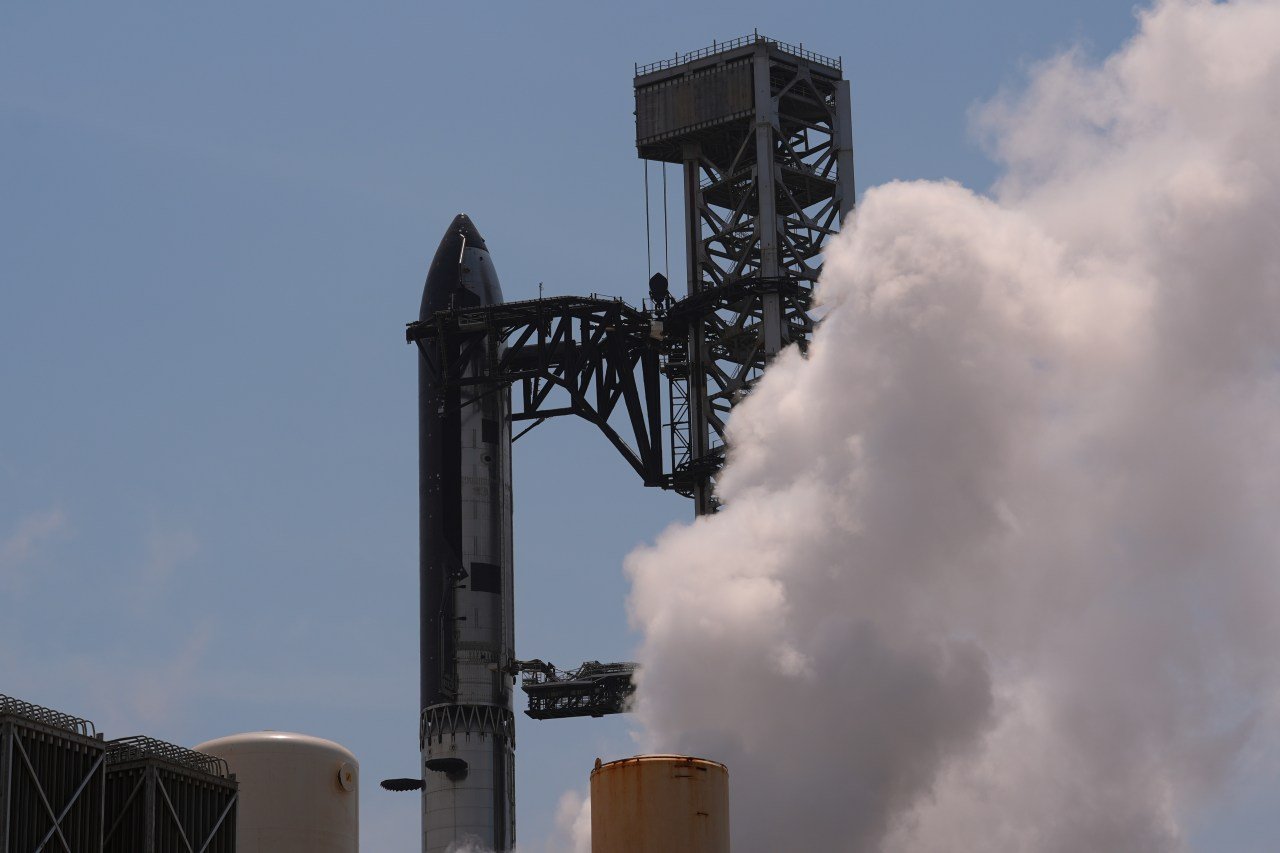
SpaceX has filed for what could be the largest initial public offering in history, aiming to raise roughly $75 billion even as the company bleeds cash. The prospectus, made public Wednesday, reveals that Elon Musk's space venture lost $2.6 billion from operations last year on $18.7 billion in revenue, with losses continuing into 2025.
The offering would easily eclipse the current record holder, Saudi Aramco, which raised $26 billion when it went public seven years ago. SpaceX, formally Space Exploration Technologies Corp., plans to use the proceeds to fund ambitious projects including lunar and Martian colonization, framing the effort as existential insurance for humanity.

“We do not want humans to have the same fate as dinosaurs,” the filing states. The document reads at times like a science-fiction script, detailing how Musk's compensation depends on establishing "a permanent human colony on Mars with at least one million inhabitants."
Musk's Trillion-Dollar Payday
Forbes currently estimates Musk's net worth at $839 billion, but the IPO could push him past the trillion-dollar mark. His annual salary remains a nominal $54,080, unchanged since 2019. Instead, the bulk of his compensation comes from stock grants tied to market cap milestones. To receive the full award, SpaceX's valuation would need to reach $7.5 trillion—a figure that would require the Mars colony to be operational.
Additional stock awards are tied to building giant data centers in orbit, the size of football fields. Musk and certain other shareholders will hold a special class of stock granting 10 votes per share, allowing them to elect a majority of the board. "This will limit or preclude your ability to influence corporate matters," the filing warns investors.
Starlink Shines, Other Units Struggle
SpaceX's Starlink division, the world's largest satellite communications company, is a rare bright spot. It generated $4.4 billion in operating income last year, using 10,000 low-orbit satellites to serve 10 million customers across 150 countries. However, two recently acquired units—the social media platform X (formerly Twitter) and the AI business xAI—are dragging down results. The AI unit alone lost $6.4 billion in operations last year. Some investors have criticized these purchases as bailouts for Musk's struggling ventures.
The core rocket and launch business has been buoyed by massive government contracts, raising ethical questions. Given Musk's close ties to the Trump administration—he was the largest donor to Trump's campaign and led the cost-cutting DOGE initiative—watchdogs have questioned whether SpaceX received preferential treatment. The company noted that a fifth of its revenue last year came from federal sources, with $6 billion in contracts from NASA, the Defense Department, and other agencies over the past five years, according to USAspending.gov.
These relationships could become a liability once Trump leaves office. Meanwhile, a new poll reveals growing financial anxiety under Trump's economic policies, adding uncertainty to the IPO's timing.
Road Show Set for June
SpaceX can begin pitching the offering to investors—known on Wall Street as a "road show"—15 days after the prospectus was made public, which falls on June 4. The company's filing also highlights risks from Musk's outsized control and the speculative nature of its Mars goals, but the promise of interplanetary expansion may be enough to lure investors.