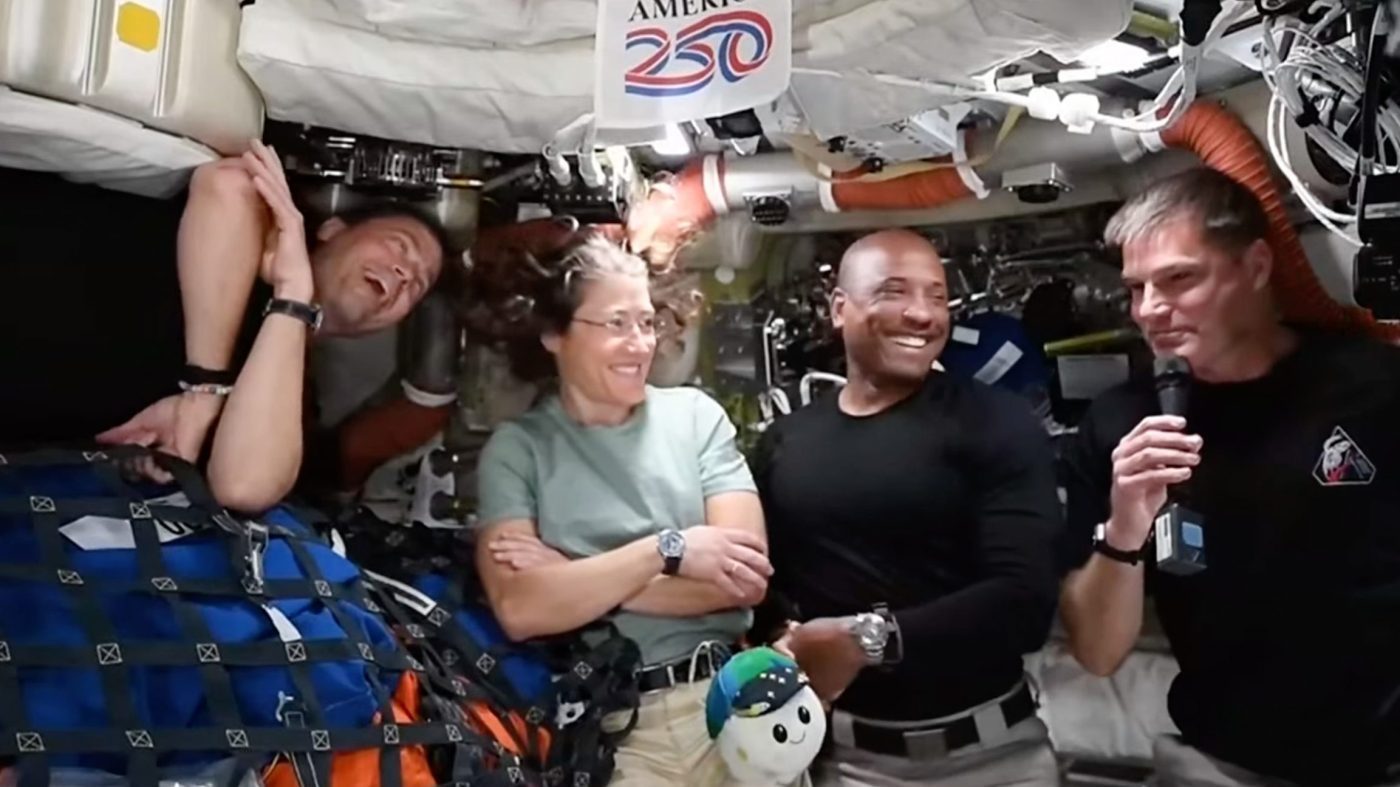
The four astronauts of NASA's Artemis II mission will address the public in a live press conference from the Orion spacecraft on Thursday evening. This comes as the crew, having traveled farther from Earth than any humans in history, begins its return journey ahead of a scheduled Pacific splashdown on Friday.
Crew and Mission Profile
The mission is commanded by Reid Wiseman, with Victor Glover serving as pilot. Mission specialists are Christina Koch and Jeremy Hansen of the Canadian Space Agency. The quartet embarked on their ten-day lunar flyby mission on April 1, a critical test flight preceding planned lunar landings later this decade.

Their journey has taken them around the moon, providing unprecedented views and allowing them to conduct observations of the lunar far side, a region never before seen directly by human eyes. The crew recorded detailed data during this phase, contributing to the scientific objectives of the Artemis program.
Presidential Recognition and Geopolitical Context
Earlier this week, President Donald Trump called the crew to congratulate them on the mission's success. "Everybody's talking about this, and I look forward to having you in the Oval Office at the White House, and we will celebrate your incredible achievements and triumphs," the president told the astronauts.
The high-profile mission unfolds against a complex geopolitical backdrop where the administration is managing multiple international pressures. The White House has recently been engaged in hosting delicate ceasefire talks between Israel and Lebanon, while simultaneously vowing to maintain military pressure on Iran to uphold international agreements. The Artemis success offers a moment of unified national achievement amid these foreign policy challenges.
Technical and Program Significance
Artemis II represents the first crewed mission of NASA's flagship lunar program, designed to return humans to the moon and establish a sustainable presence. The performance of the Orion spacecraft and its systems during this flight is being closely scrutinized, with data informing the final preparations for Artemis III, which aims to land astronauts near the lunar south pole.
The mission also highlights continued international partnership in space exploration, with Canada's contribution through Jeremy Hansen. This cooperation stands in contrast to terrestrial tensions, coming just days after the U.S. command declared Iran suffered a 'generational defeat' in recent regional conflicts, underscoring the divergent arenas of U.S. international engagement.
Cultural and Domestic Echoes
Beyond its technical and political dimensions, the mission has captured public imagination. NASA and Spotify recently released the official Artemis II wake-up playlist, continuing a decades-long tradition of connecting spaceflight with popular culture. The crew's experiences also resonate domestically, where economic pressures are reshaping fundamental aspects of American life, including family planning.
The press conference is scheduled to begin at 6:10 p.m. Eastern Daylight Time. The crew's remarks are expected to cover their experiences of deep space travel, the sights of the lunar far side, and the status of their return operations. The event will be broadcast live from the spacecraft as it travels back toward Earth.
This mission occurs as the administration balances other high-stakes domestic priorities, including a contested Federal Reserve nomination facing Senate hurdles and internal GOP dynamics, where Speaker Johnson navigates party revolt on surveillance and funding bills. The successful splashdown will mark a significant milestone for NASA and the administration's space policy agenda.